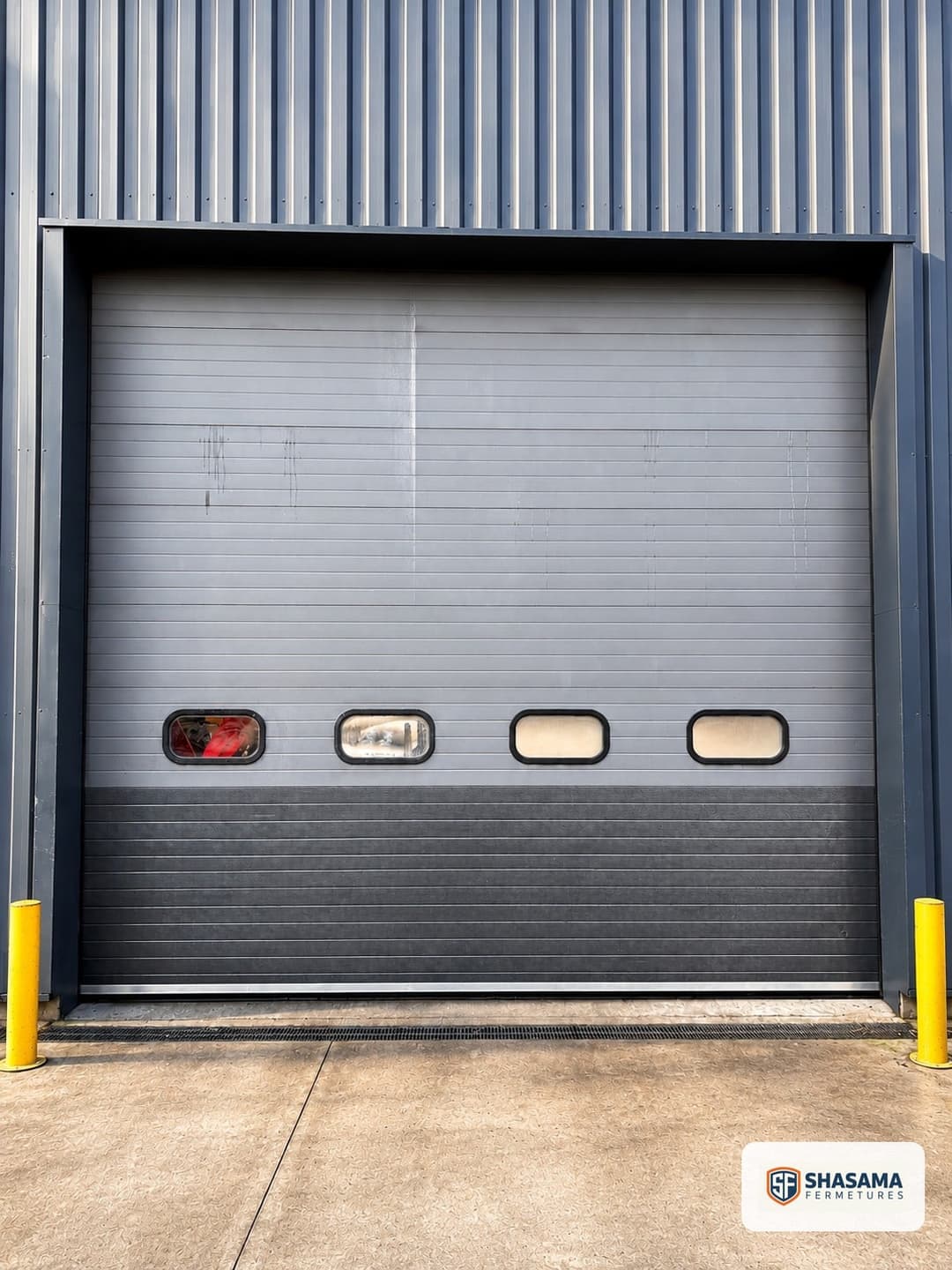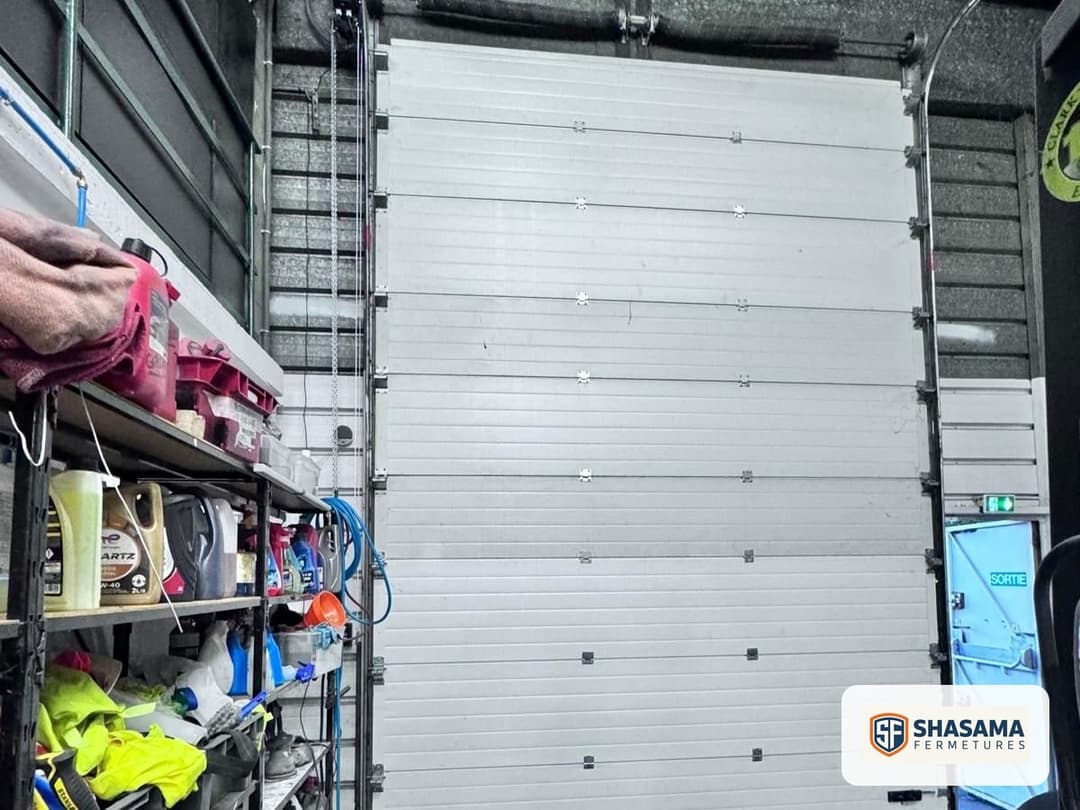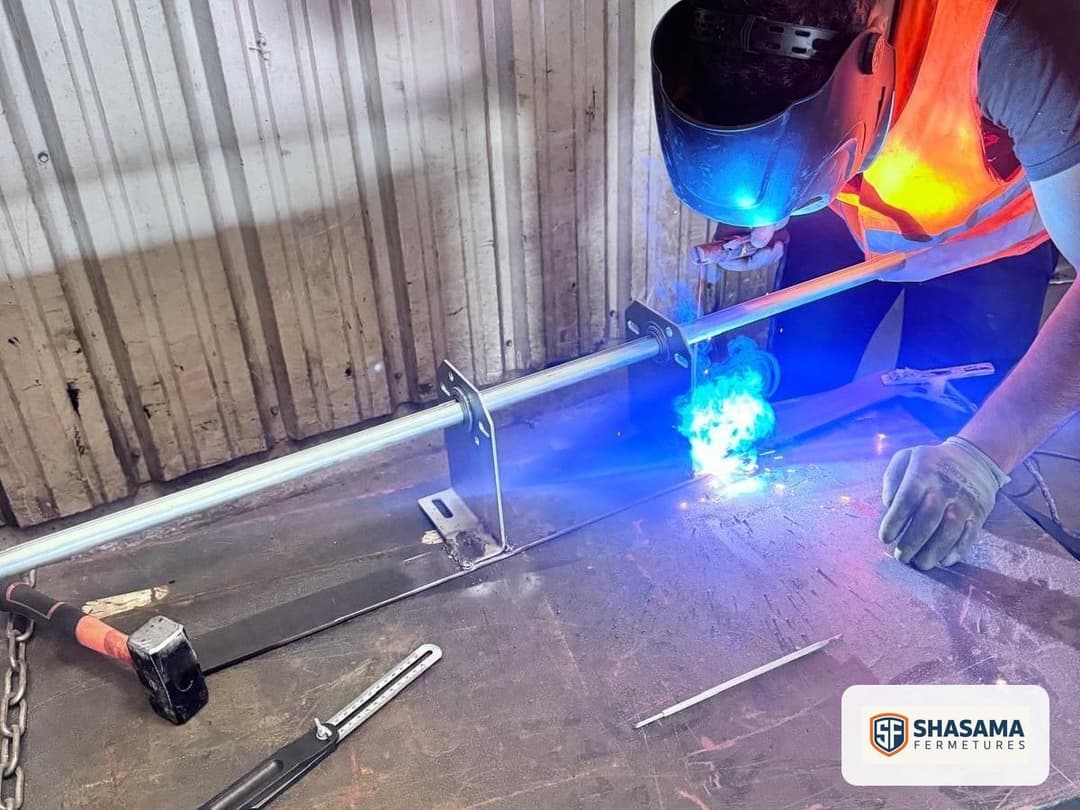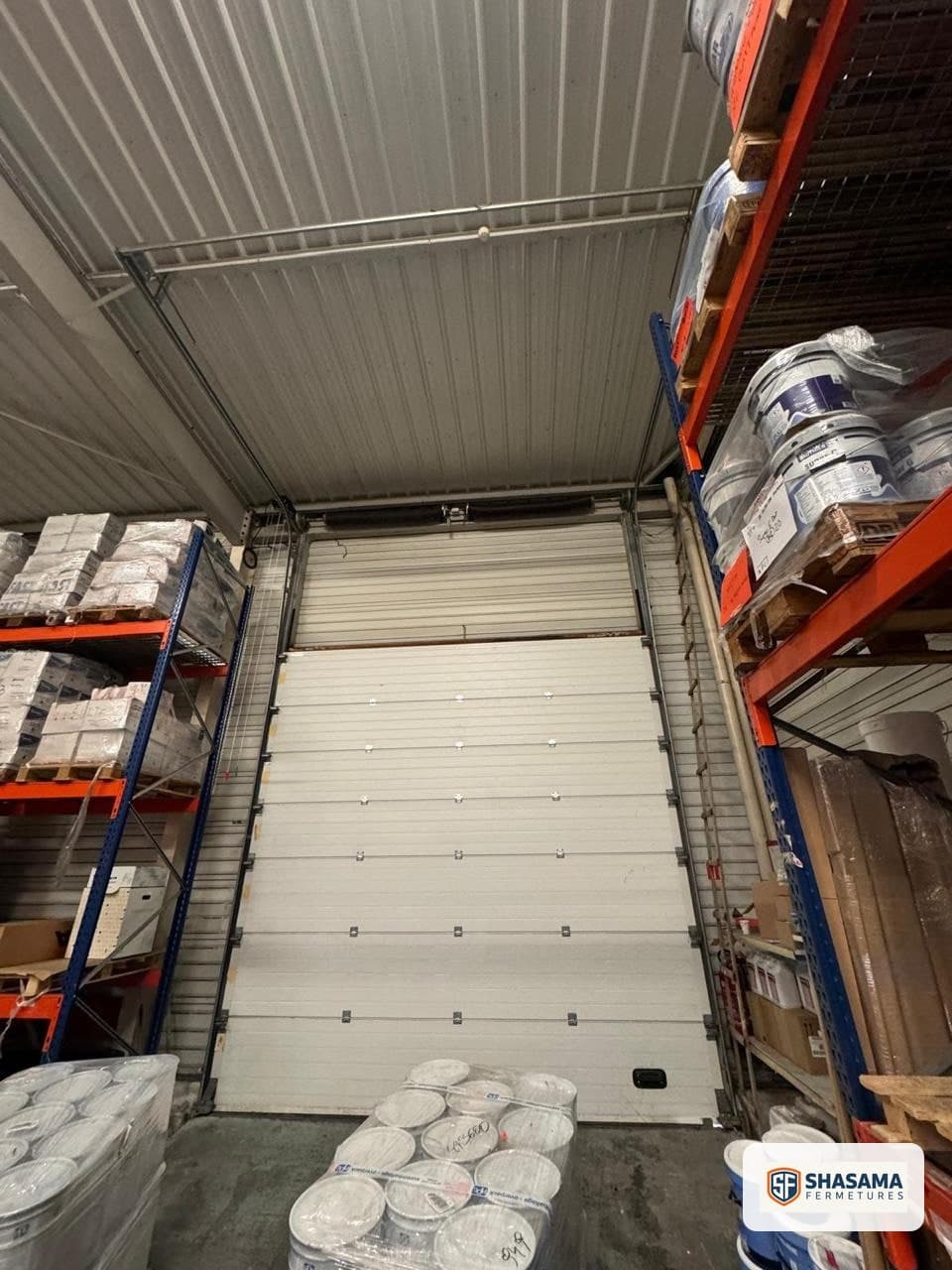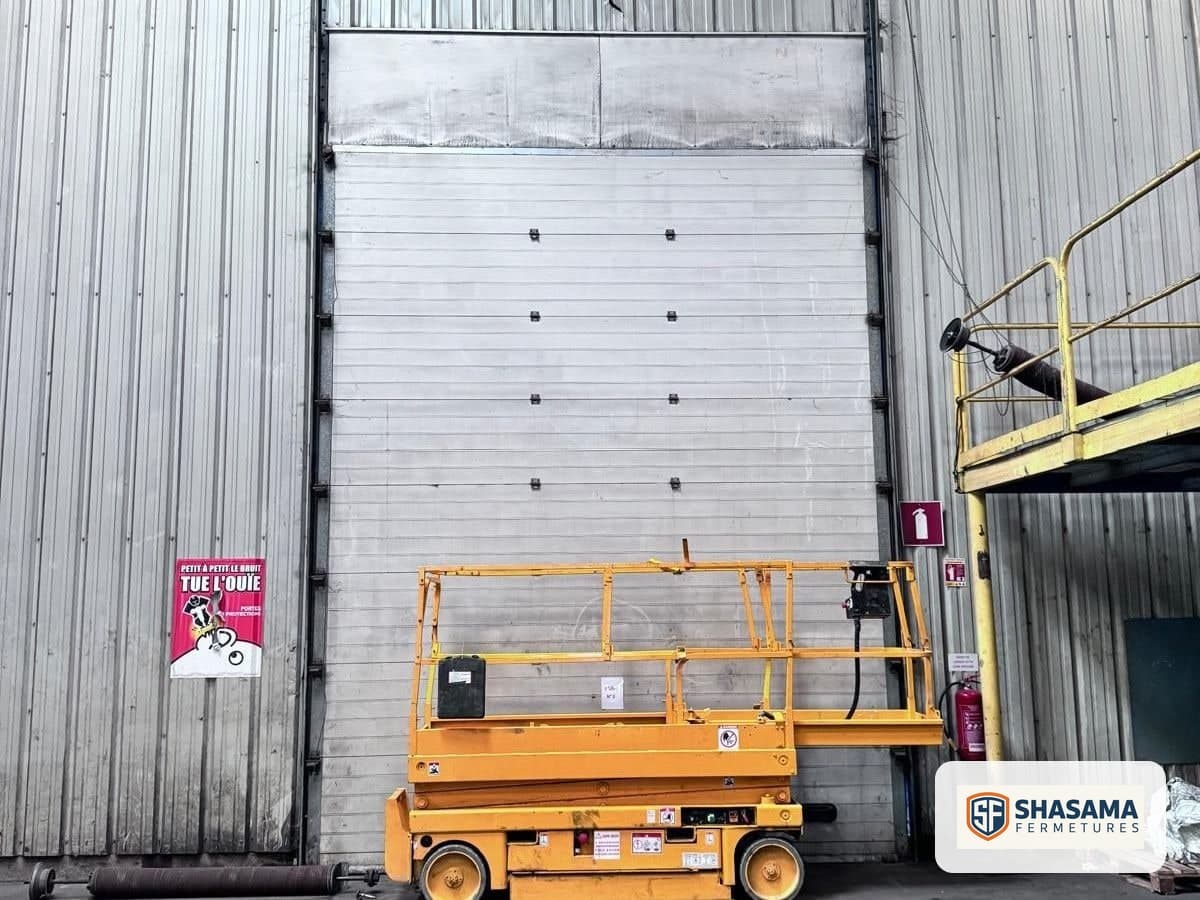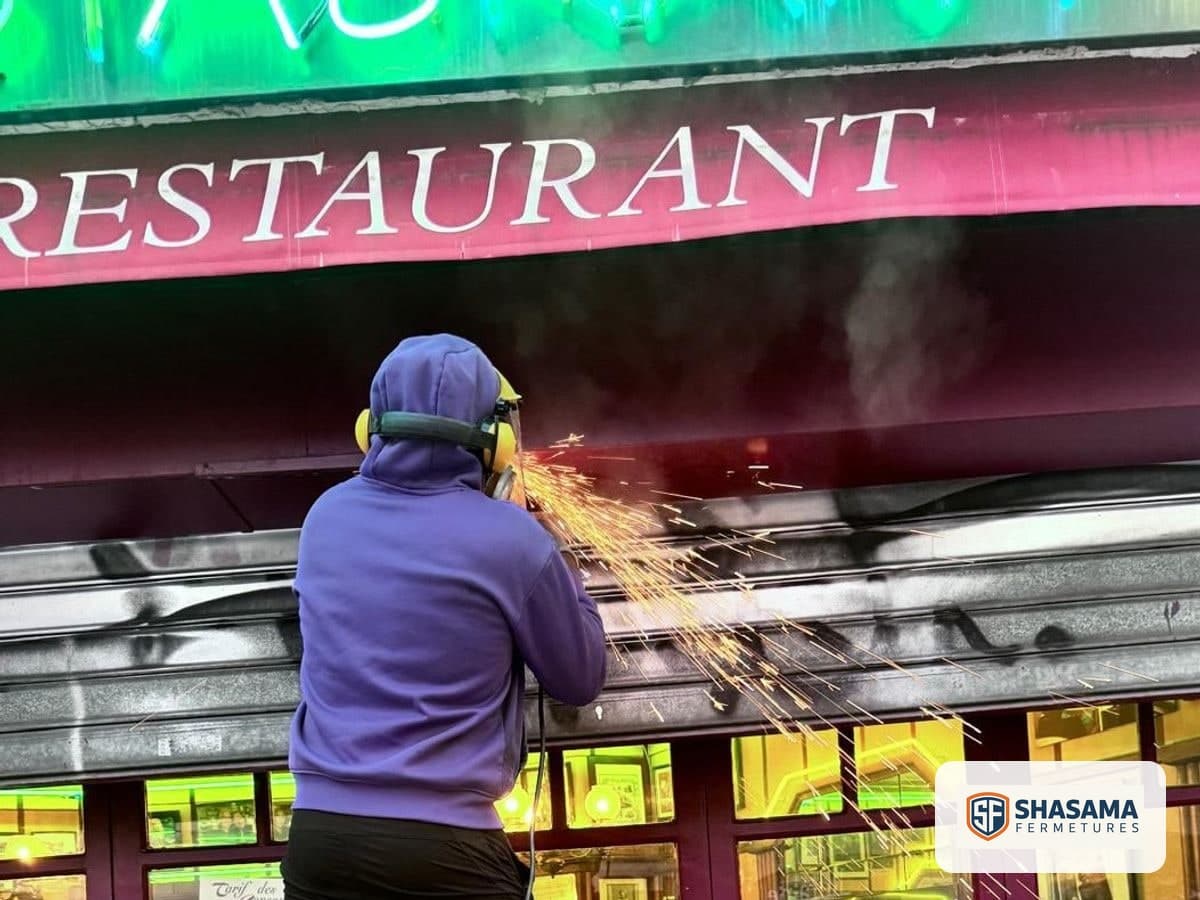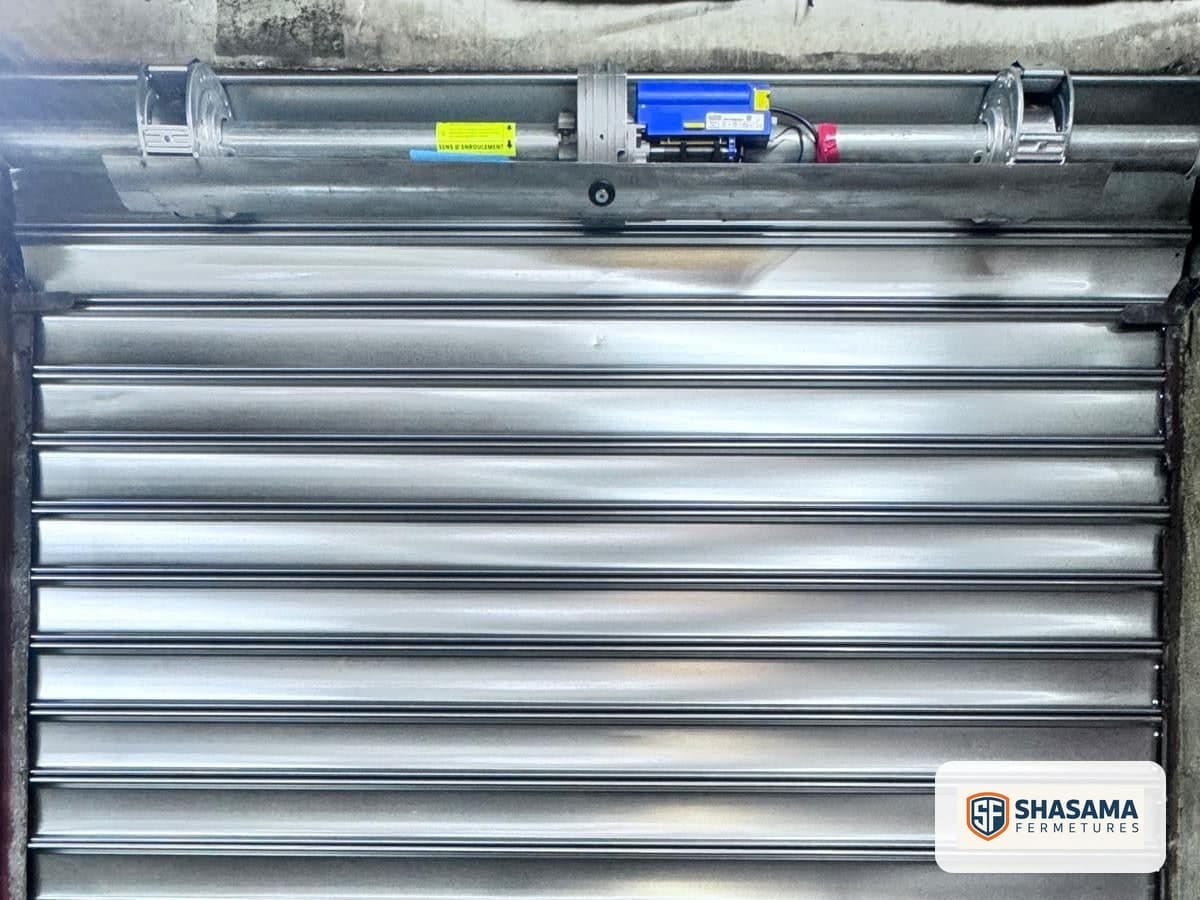

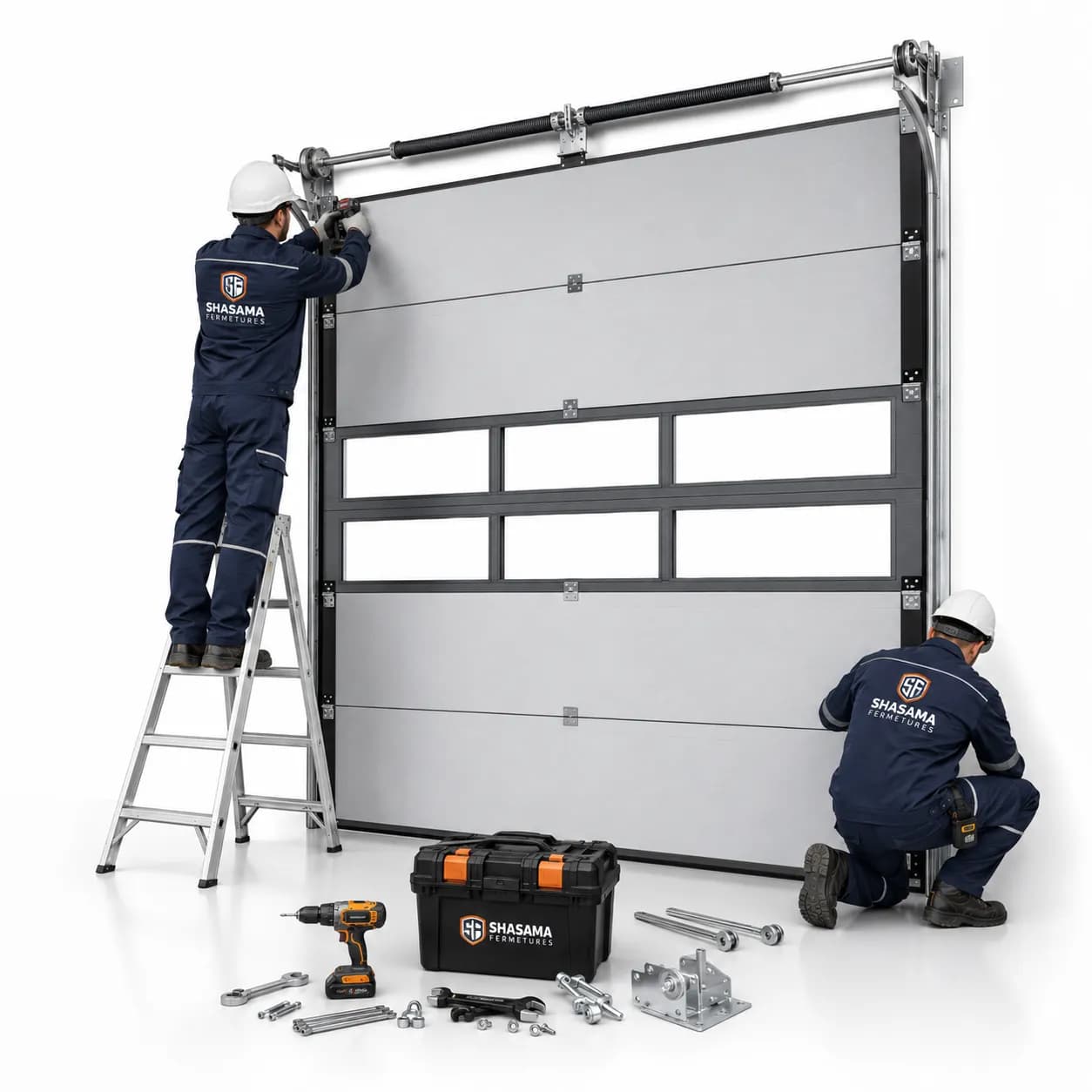
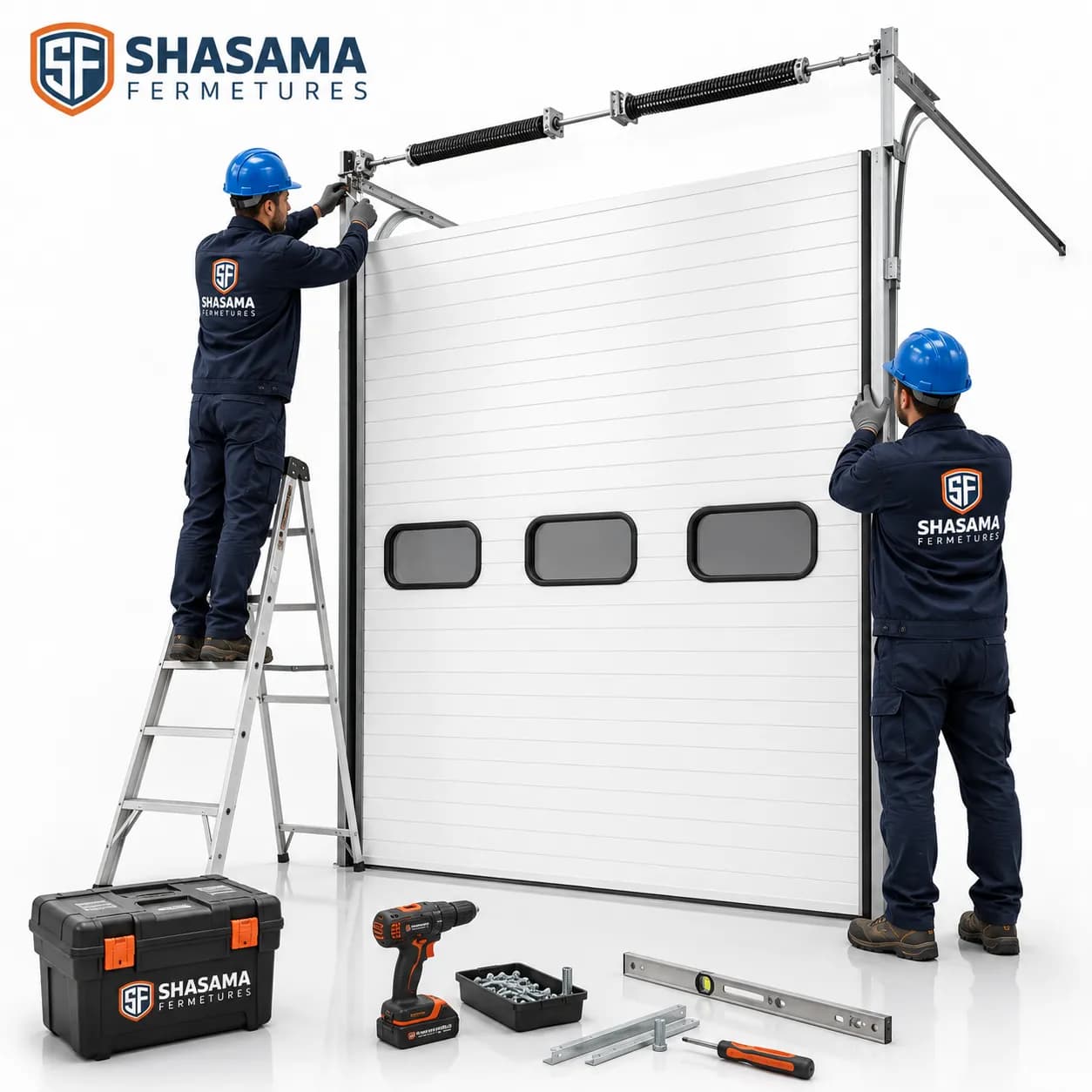
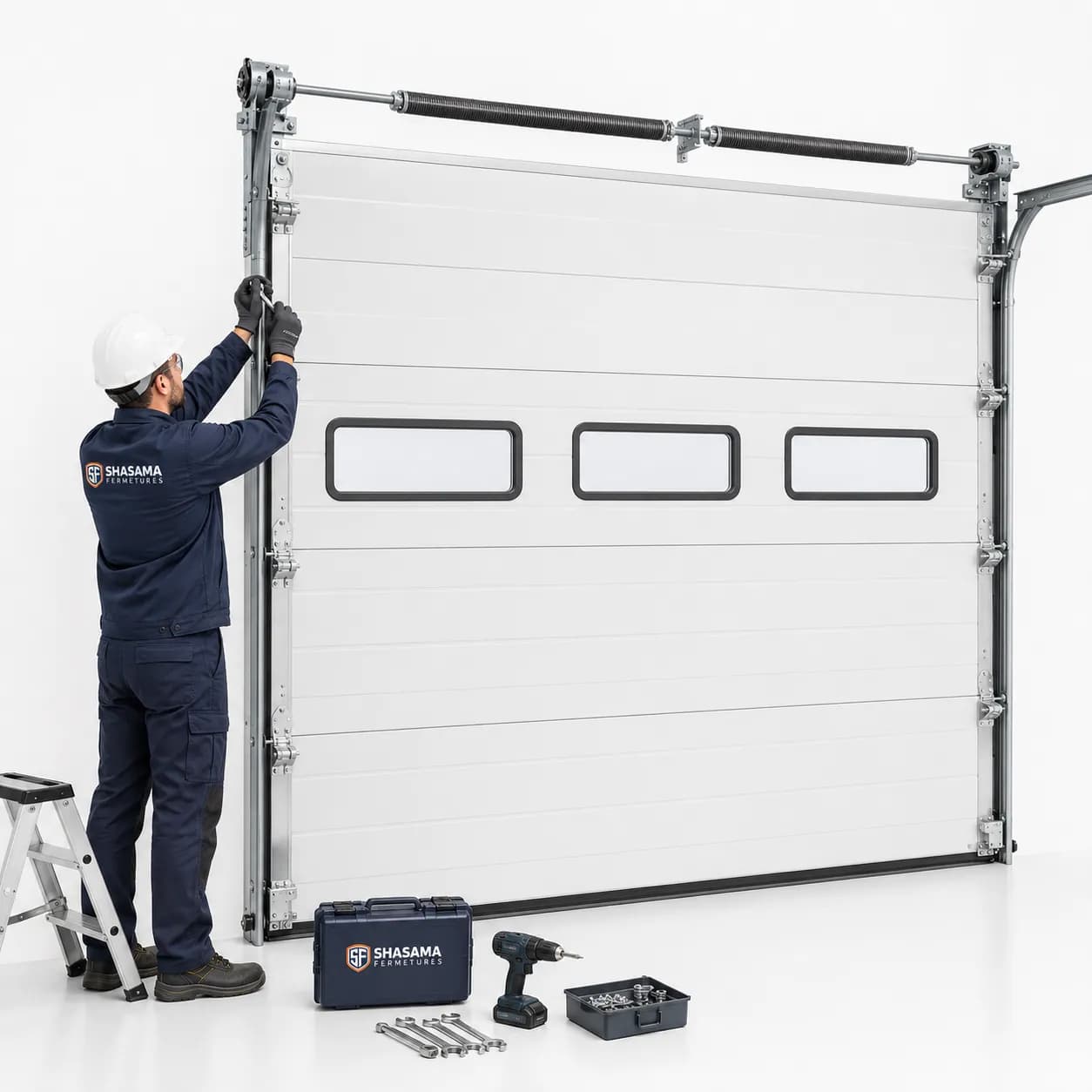
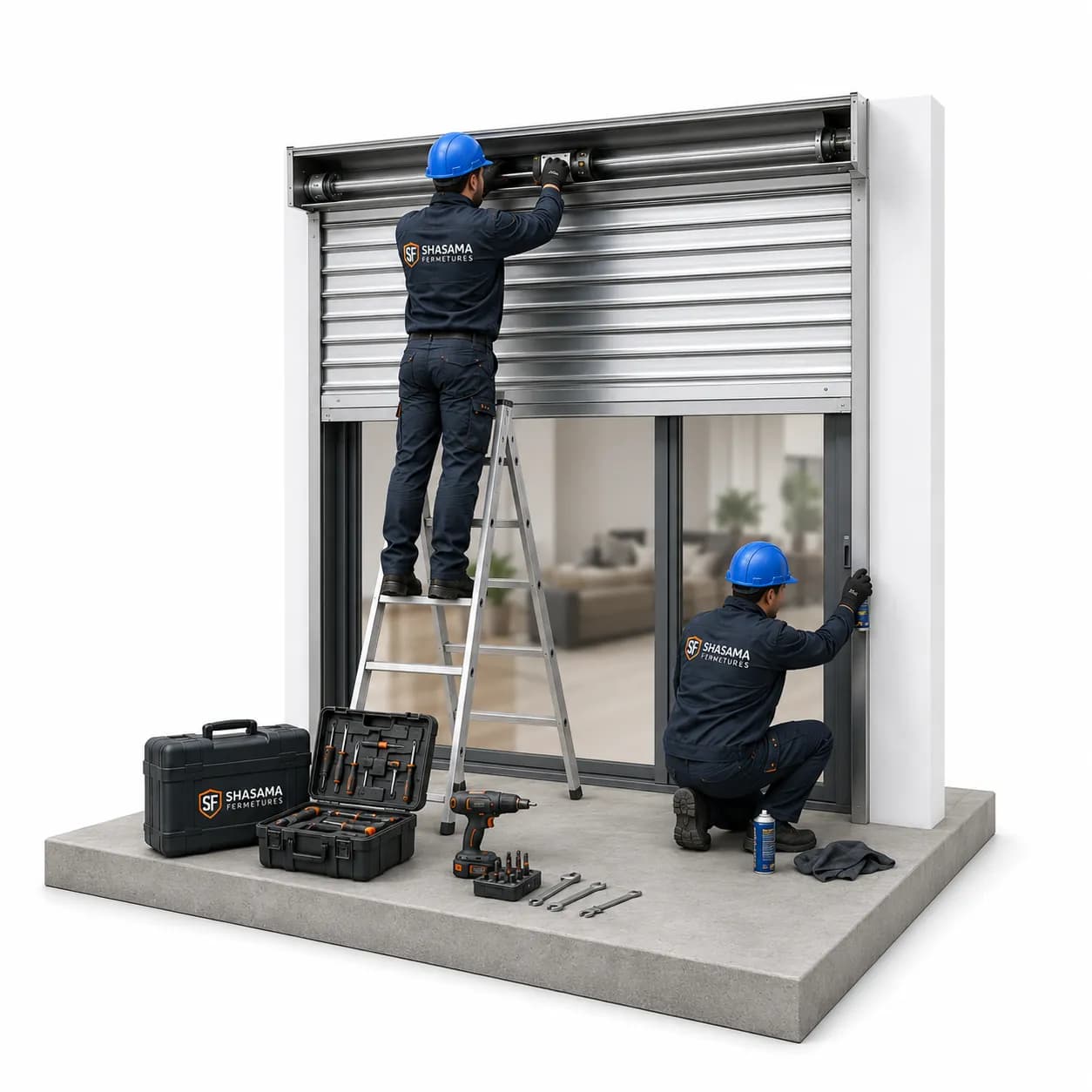
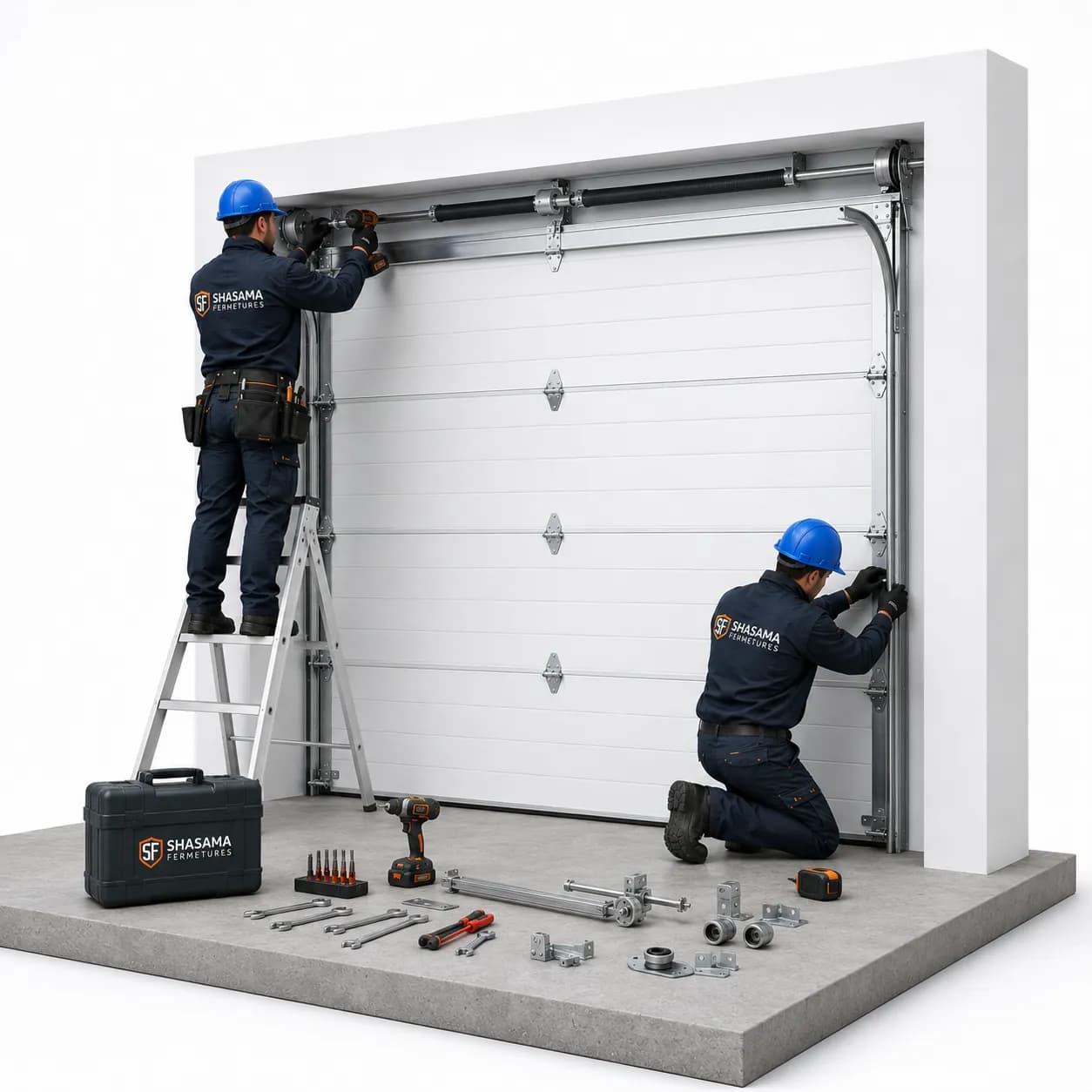
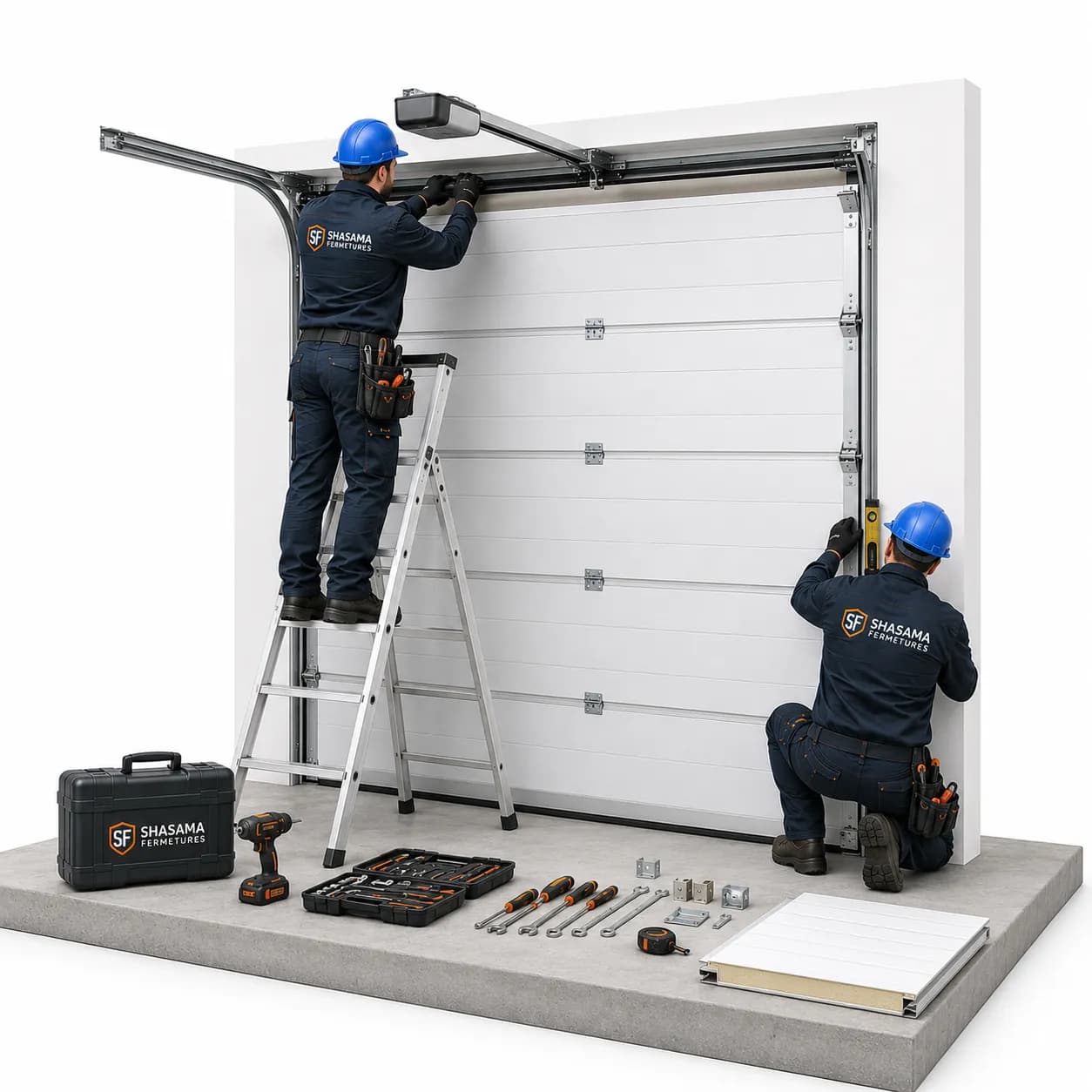
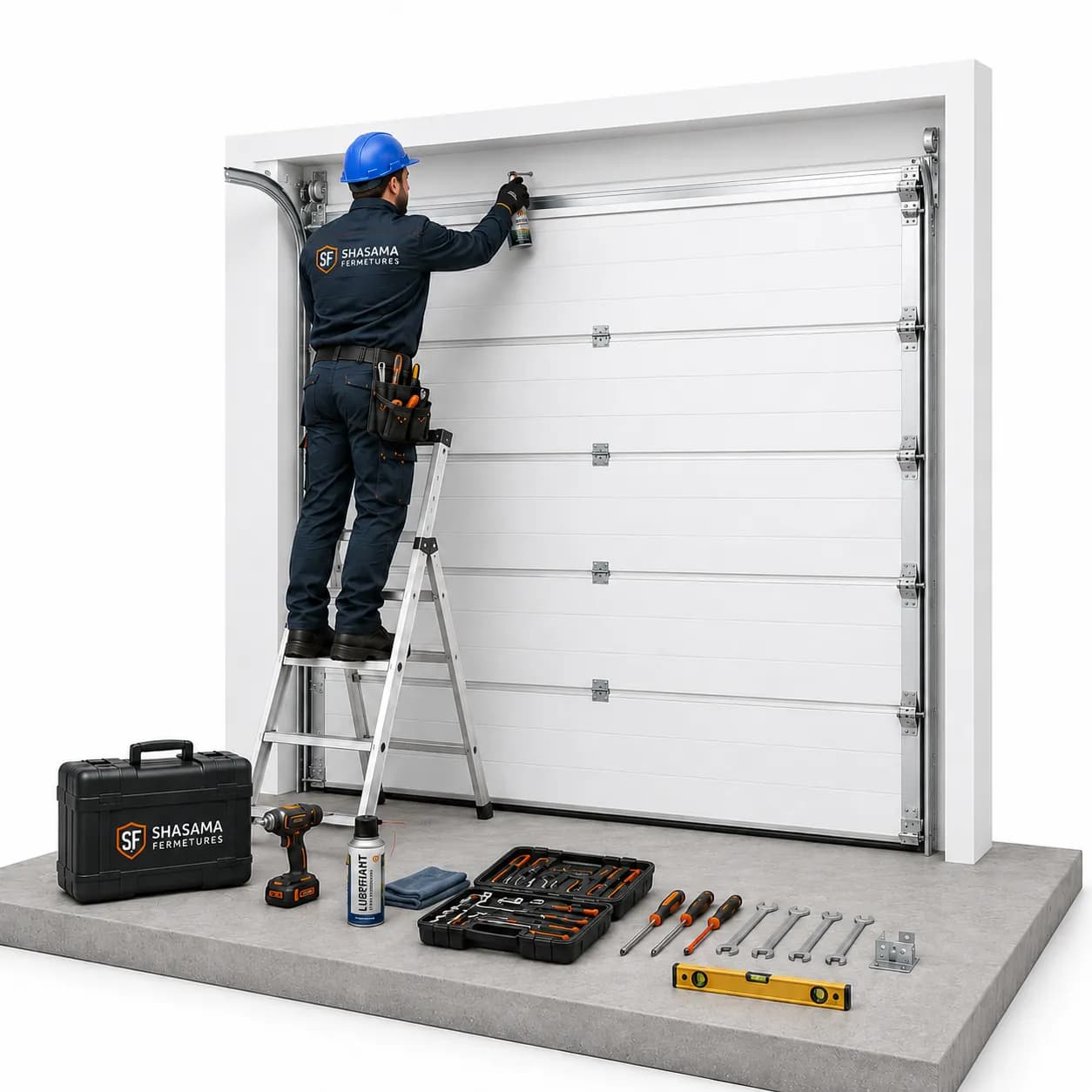
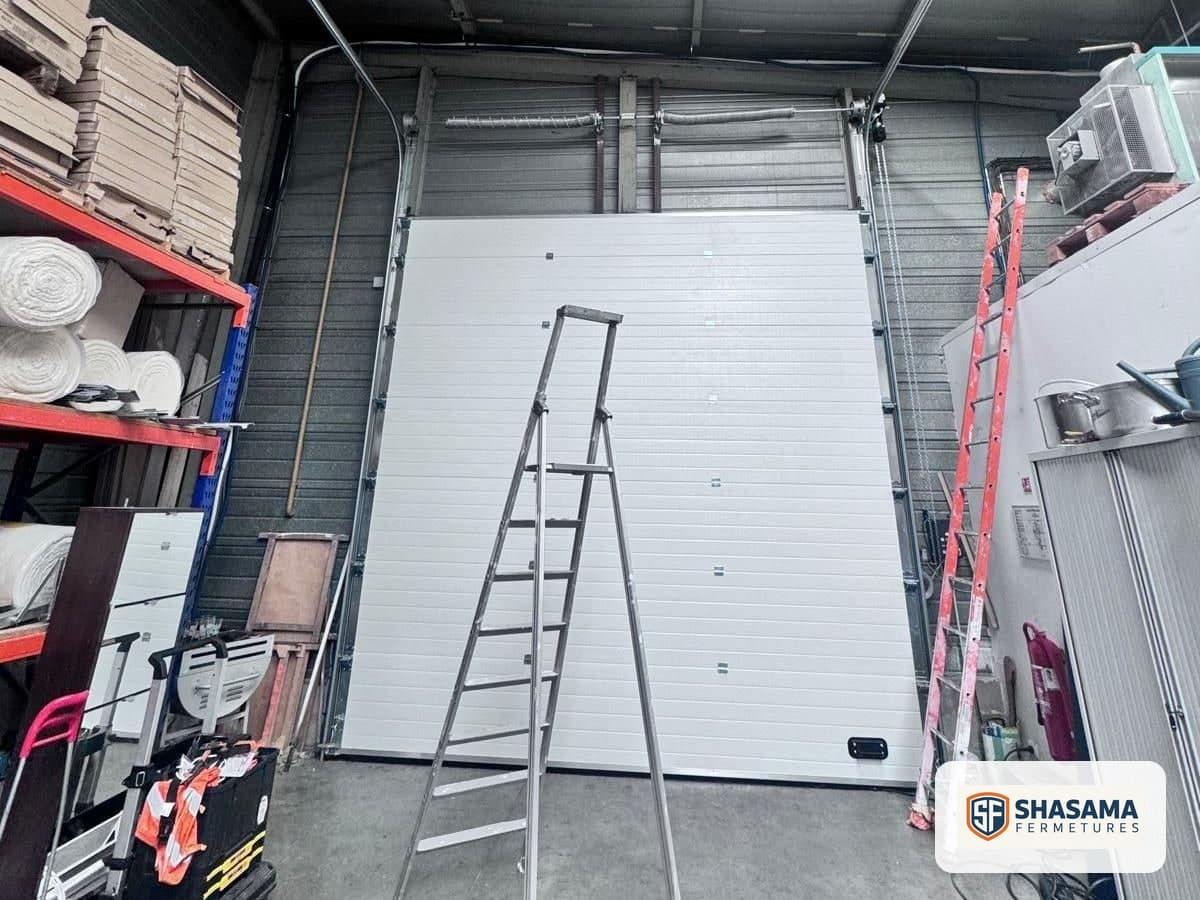
If an industrial sectional door breaks down, stop using the controls, cordon off the area and isolate then lock out its power supply. Leave the torsion springs, cables and drums alone. Switch the flow to another dock, note the symptom and the warning light on the control panel, then have the door checked before it goes back into service.
Sectional door out of order: the first steps on site
The year-end logistics peak is close: Black Friday falls on Friday 27 November 2026, and on 1 October Amazon France announced more than 9,500 seasonal hires for the period. A dock door out of action never costs more than it does then. What happens in the first few minutes still decides the outcome: a door stopped properly can be diagnosed safely, while a forced door can drop or break another part.
Stop the controls
Release the button, put the remotes aside and tell forklift drivers not to operate the door. Persisting with a door that strains can throw a cable or damage the control board.
Cordon off the area
Keep pedestrians and forklifts from passing under the door, with clear barriers on both sides of the opening.
Isolate and lock out
Switch the door off at its isolator, then lock it off under your lockout procedure so that nobody can power it up again.
Report and record
Report the fault to the site manager or maintenance team, with the time, the position of the door and what happened just before.
This is not about skill. INRS advises that production staff should, as far as possible, avoid carrying out repairs, and reminds employers that priority goes to controlling energy sources, with machines locked out. Its guide ED 6109 on lockout and release sets out the method.
Black Friday 2026 and the year-end peak: keeping the docks running
A failed door does not have to stop work. On a site with several docks, the faulty door is taken out of service and the flow switched to a neighbouring dock while it is diagnosed or a part arrives.
- Move inbound and outbound loads to another dock, and warn the hauliers you are expecting.
- A lorry already at the dock stays secured under your docking procedure, which INRS describes in its guide ED 6059 on vehicle docking; if it has to leave, it does so without anyone operating the door.
- A door stuck open at the end of the day is not forced shut: have it made safe and the opening secured for the night.
- Manual operation only uses the means the manufacturer provides, chain or winch, and only if the door is balanced. A heavy or crooked door is not operated.
For new installations, Article 2 of the French order of 21 December 1993 on automatic and semi-automatic doors and gates requires that the door can be opened manually to free an injured person. That emergency operation exists for that purpose, not to get production moving again on an unbalanced door.
Reading the symptoms to brief the technician
The technician saves time when the call describes exactly what the door is doing. Note the symptom, without dismantling anything, and how urgent it is:
| Symptom | Possible causes | Note for the call | Urgency |
|---|---|---|---|
| Will not open | Possible causesPower, controls, an active safety device, motor or broken spring | Note for the callMotor noise, control panel light, door position | UrgencyHigh if the dock is blocked |
| Stuck open | Possible causesPhotocell blocked, safety edge, limit switch or controls | Note for the callVisible obstacle, state of the photocells, last impact | UrgencyHigh at the end of the day |
| Hanging crooked | Possible causesCable slack or broken on one side, roller out of the track | Note for the callWhich side is lower, height where it stopped | UrgencyImmediate: stop and cordon off |
| Cable slack or off | Possible causesBroken spring, worn cable, drum | Note for the callWhich side, photo taken from a distance | UrgencyImmediate |
| Loud bang | Possible causesProbable torsion spring failure | Note for the callWhen the noise happened, door moving or at rest | UrgencyImmediate: no further commands |
| Door heavy by hand | Possible causesSpring worn or broken, balance lost | Note for the callManual or released door, effort felt | UrgencyHigh |
| Fall arrest device triggered | Possible causesCable or spring failure, door dropping too fast | Note for the callPosition where it locked, noise when it stopped | UrgencyImmediate: do not reset |
| Error code or panel light | Possible causesFault in a safety device, limit switch, board or motor | Note for the callCode shown, light colour and flashing pattern | UrgencyDepends on the door position |
| Dented panel | Possible causesForklift or lorry impact, hinge, roller | Note for the callPanel hit, track distorted or not | UrgencyHigh if the track is hit |
Add the make and model, the rating plate if you can reach it, the reference of the control panel or motor, the width and height of the opening and the site access times. Photos taken from a safe position complete the brief.
On doors fitted with one, the fall arrest device described by Novoferm stops the descent when the door curtain falls too fast because a cable, spring or other suspension part has failed. A door held by its fall arrest device therefore signals a breakage: it stays where it is until the technician arrives.
Spring, cable, panel, motor: repair or replace
A breakdown does not condemn the door: each part is dealt with on its own terms, and industrial sectional door repair replaces what has failed while keeping the rest.
- Torsion springs and lifting cables: replaced and adjusted by a technician only, with the balance checked afterwards.
- Dented panel: it can be replaced on its own without changing the door, like a hinge or a return pulley.
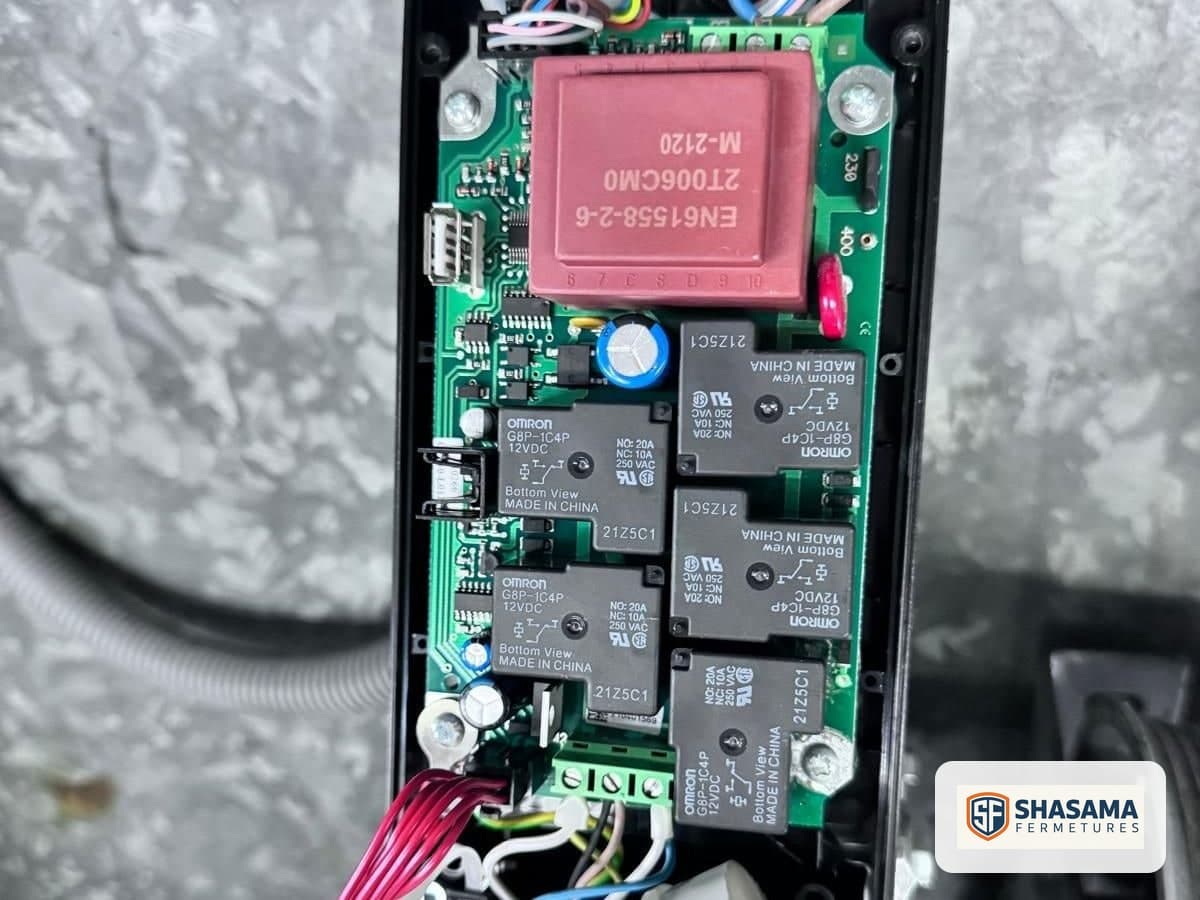
- Operator: a capacitor or control board can be replaced on its own; the complete motor is changed when it is beyond use, including during an emergency call-out.
- Ceiling-mounted operator: the belt and rail carriage can be changed without replacing the motor.
- Wear parts: seals, bearings and rollers are replaced individually.
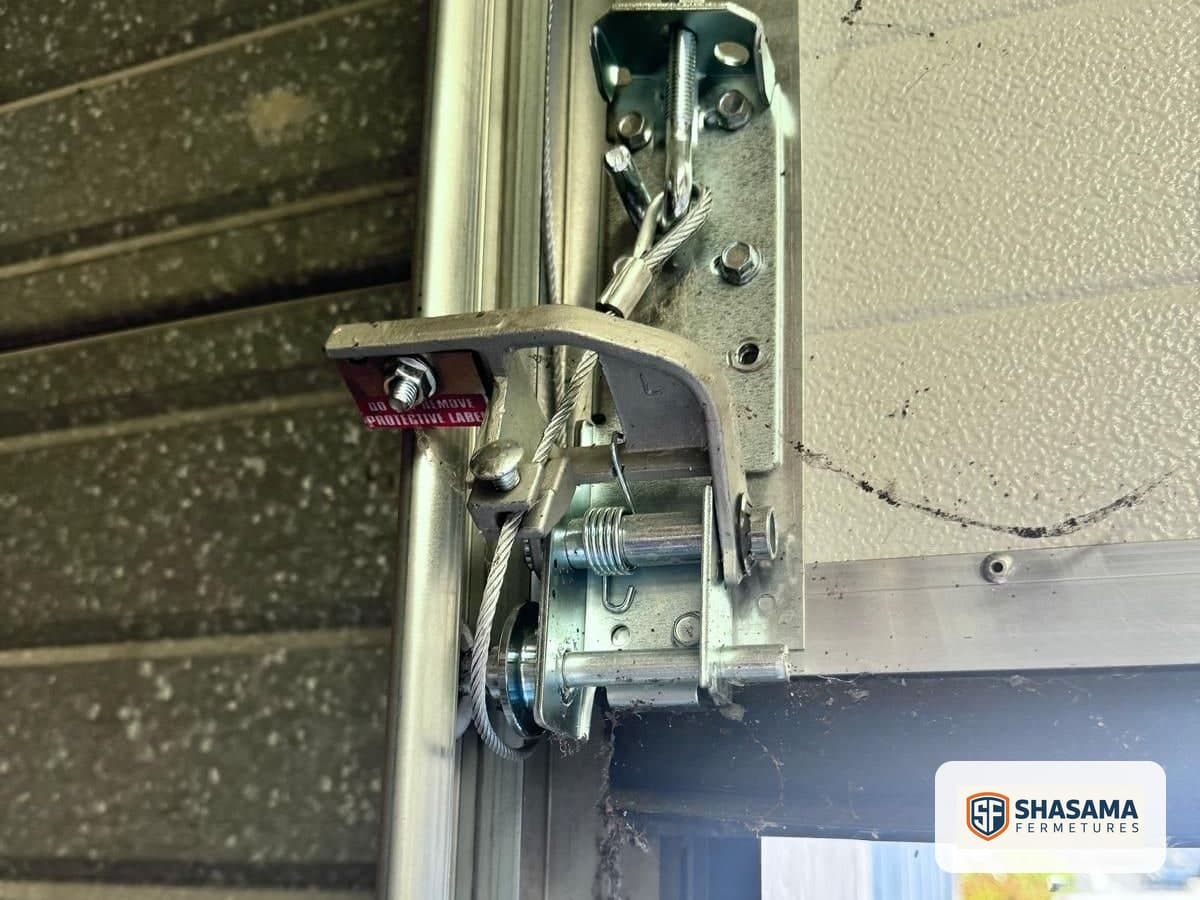
Choosing between repair and replacement does not delay the basic duty. Article R4224-17 of the French Labour Code requires any defect likely to affect workers’ health and safety to be eliminated as quickly as possible, and Article R4224-13 of the same code requires automatic doors and gates to operate without risk of accident for workers.
What the technician does, and what goes in the log
Make safe
Door held, area cordoned off, power locked out, work carried out under your prevention plan and site rules, with personal protective equipment.
Diagnose
Springs, cables, drums, tracks, rollers, panels, motor, control panel and safety devices are checked to find the cause, not just the symptom.
Repair
The part is replaced or adjusted on site when it is available. If not, the door is made safe or taken out of service until the part arrives, while the other docks stay open.
Return to service
Balance, limit switches, photocells, safety edge and emergency operation are tested before the door is handed back.
For automatic or semi-automatic doors covered by the order of 21 December 1993, Article 9 requires an inspection after any failure and repair work to be recorded in the maintenance log. After the repair, we provide a written report and enter the work in the door maintenance log. The texts, inspection intervals and log contents are covered in our guide to industrial sectional door maintenance requirements.
Our industrial sectional door emergency repair answers 24 hours a day, 7 days a week, with an announced arrival within 20 minutes in Paris and Île-de-France, and call-outs before 6 am are possible to free a dock before work resumes. We work on Hörmann, Novoferm, Dynaco, La Toulousaine, Assa Abloy, Safir and BMP France doors up to 6 metres wide, with technicians who hold electrical authorisation for the motor, control panel and wiring. Travel included, diagnosis free if the work is accepted, repairs guaranteed for 2 years on parts and labour, no night or weekend surcharge.
Avoiding the next dock stoppage
Forklift and lorry impacts are a cause of breakdown you can prevent. A few pieces of equipment and habits protect the door day to day:
- protection posts in front of the door frame, supplied, fixed, straightened or replaced after an impact;
- dock bumpers, so that lorries do not strike the building and the door;
- wheel chocks, so that a lorry does not creep away from the dock during loading;
- foam, curtain or inflatable dock seals, replaced when they are torn;
- trained forklift drivers who report every impact, however slight, and never raise the forks under a moving door;
- an industrial sectional door maintenance contract that spots wear on springs, cables and rollers before they break.
On a heavily used manual door, industrial sectional door motorisation with its safety devices avoids forcing the door by hand. And a damaged door does not always need replacing: during the replacement of two panels and the cables in Bussy-Saint-Martin, the door was kept and only the damaged parts were changed, then adjusted and tested.
To prepare the call-out, send the make, the dimensions and photos of the door through the quote request form, or call 01 87 66 40 33.