







A stuck metal shutter motor that hums without turning is receiving power but cannot start. On a single-phase motor, a weak capacitor is often the cause; a brake that stays applied, the thermal cut-out, a limit switch or a jammed curtain make the same noise. Release the control and have the motor tested. In Paris, we have replaced motorised axles in six arrondissements.
Metal shutter motor humming: stop pressing the control
It nearly always happens the same way: in the morning you turn the key switch or press the remote, the motor starts to hum or buzz and the curtain does not move. The natural reaction is to try again, then to hold the control down for longer. That is exactly what you should avoid.
If the hum continues after you release the control, switch off the shutter at its identified, accessible circuit breaker without opening any box. A shutter stopped at an angle, halfway or out of its guide rails is a different emergency: follow the safe checks for a stuck metal shutter instead, which also cover manual emergency operation.
Why the shutter motor is stuck while it hums
A metal shutter motor that hums without turning has five possible causes: a weak capacitor, a brake that stays applied, a tripped thermal cut-out, a limit switch out of adjustment or a mechanical overload on the curtain. The hum proves that power is reaching the motor, so the remote or its battery, which usually cause no reaction at all, are rarely to blame. Only an on-site check can tell these causes apart.
In our repair work, the main cause of a motor humming without turning is a worn capacitor, followed by a curtain that binds.
| What you notice | Possible cause | What the technician checks |
|---|---|---|
| Humming as soon as you press, no movement, on a motor visible in the middle of the axle | Possible causeWeak or failed capacitor (single-phase motor) | What the technician checksVoltage at the terminals, condition and value of the capacitor |
| Humming without the usual small click at start-up | Possible causeBrake that does not release, on a motor fitted with one | What the technician checksBrake power supply and wiring |
| The shutter was used a lot just before, then nothing | Possible causeThermal cut-out tripped | What the technician checksCooling time, then test cycles |
| The motor refuses one direction only, at a precise position | Possible causeLimit switch out of adjustment or safety limit switch triggered | What the technician checksSetting and condition of the limit switches |
| The curtain seems held back, or the shutter had become slow and noisy | Possible causeMechanical overload: spring, guide rail, slat, obstruction | What the technician checksBalancing, guiding, attachments and curtain weight |
| The motor runs with its usual sound, but the curtain does not follow | Possible causeManual release left engaged after manual operation, or damaged drive | What the technician checksManual release, gearbox and link between the motor and the axle |
| The shutter circuit breaker trips while the motor hums | Possible causeFailed start tripping the protection, or an electrical fault | What the technician checksProtection, wiring and motor windings |
An electric metal shutter that has failed without making any noise calls for a different diagnosis: for a shutter that no longer works electrically, La Toulousaine advises checking the power supply first, then contacting the installer if the problem persists.
The brake holds the curtain in place when the motor stops. The Nice RONDO central motor manual says that, when the motor does not start, the electronic brake wiring should be checked on versions fitted with one. The same manual describes a thermal cut-out that cuts the power when the motor overheats and restores it once the temperature is back to normal. The SIMU T8S manual gives the same instruction for a motor on thermal cut-out: wait for it to cool down.
Finally, the motor may be sound and simply overloaded. For a motor that struggles to lift the curtain, the Nice RONDO manual asks you to check that the shutter dimensions and weight suit the motor and that the spring boxes work. A broken balancing spring, a bent guide rail, a caught slat or ice in the guides is enough to turn a normal start into a hum.
Metal shutter motor capacitor: what it does and signs of wear
The capacitor is found on single-phase motors, including central motors, which SIMU describes as single-phase only. It supplies the extra torque the motor needs to start. As it ages, the motor still receives power but can no longer get the axle turning: hence that typical hum.
Several clues, which you can note without opening anything, point to it rather than to the thermal cut-out:
- the motor hums at the first press of the day, before the shutter has been used;
- over the previous days, starting had become hesitant or slower, a sign of weakening starting torque;
- the shutter circuit breaker trips while the motor hums, which Fluke links to a motor that cannot start.
These clues point the way without proving anything: a brake that stays applied or an overweight curtain produce the same signs. The technician decides by measuring, with the power off and the capacitor discharged, and compares the reading with the value marked on the part. Whether the shutter is a La Toulousaine, a SIMU or another make, the replacement capacitor has the same value and voltage.
Central or tubular motor: the same noise does not mean the same thing
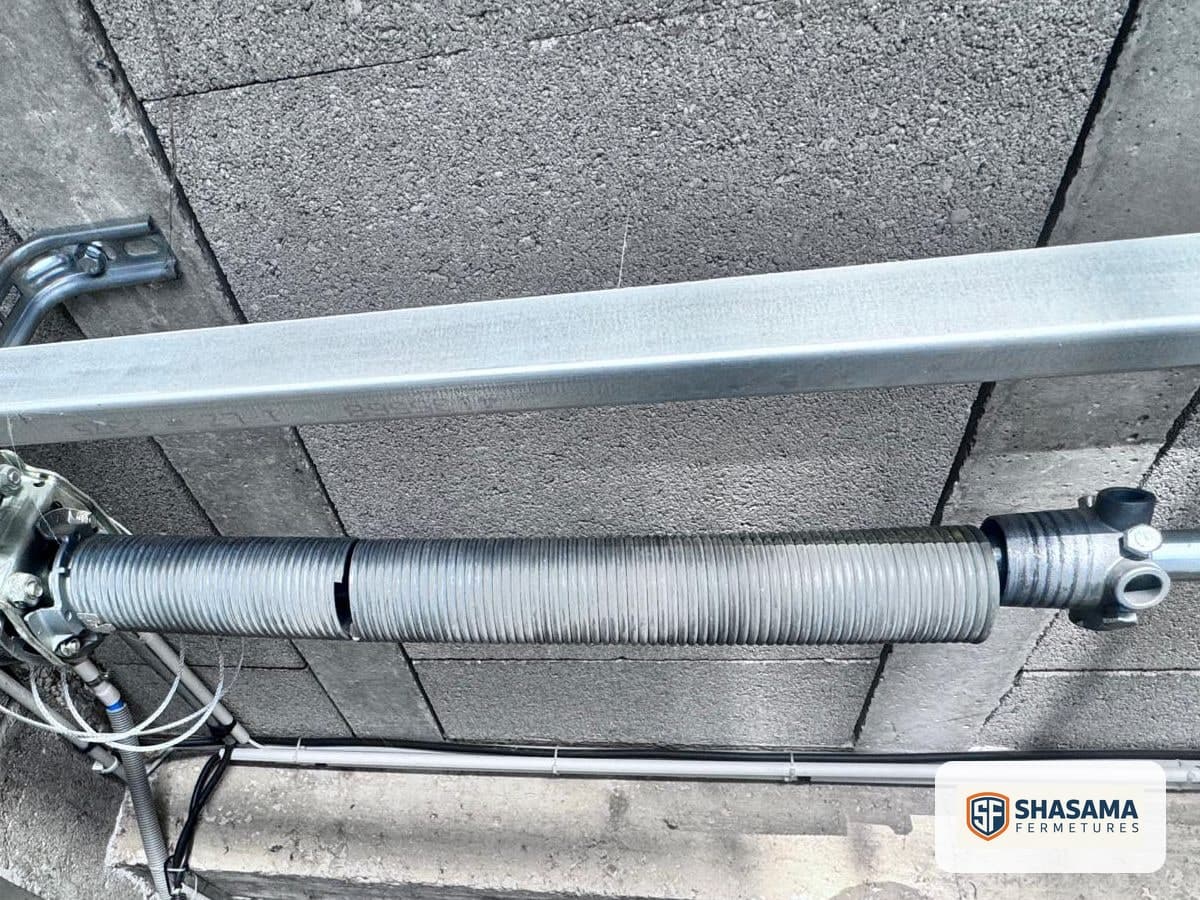
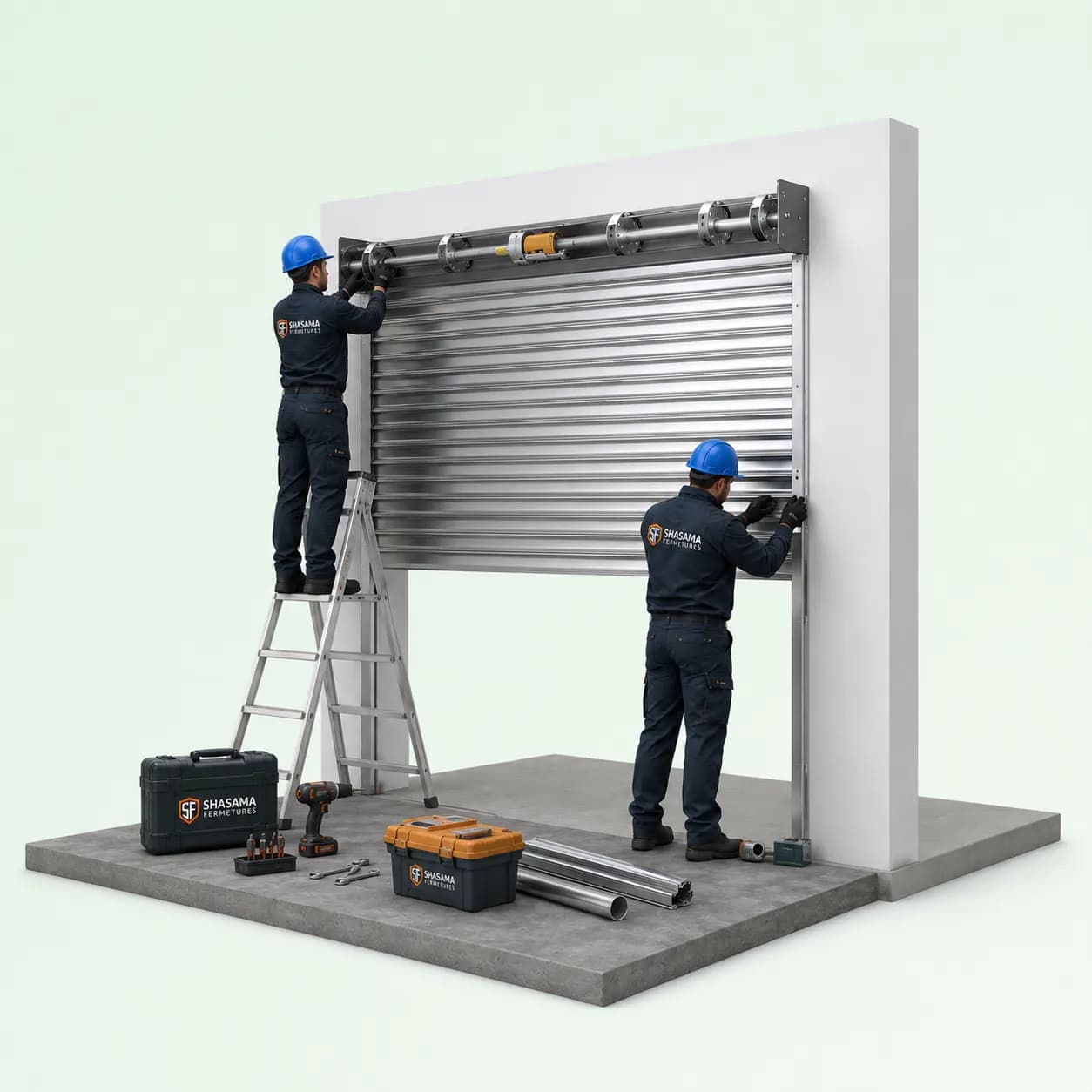
Knowing which motor drives your shutter helps you describe the fault. A central motor is visible: a block in the middle of the axle, between the spring drums that balance the curtain weight. A tubular motor sits inside the roller tube, so all you see is the axle. The heaviest industrial shutters sometimes have an external motor fixed at the end of the shaft.
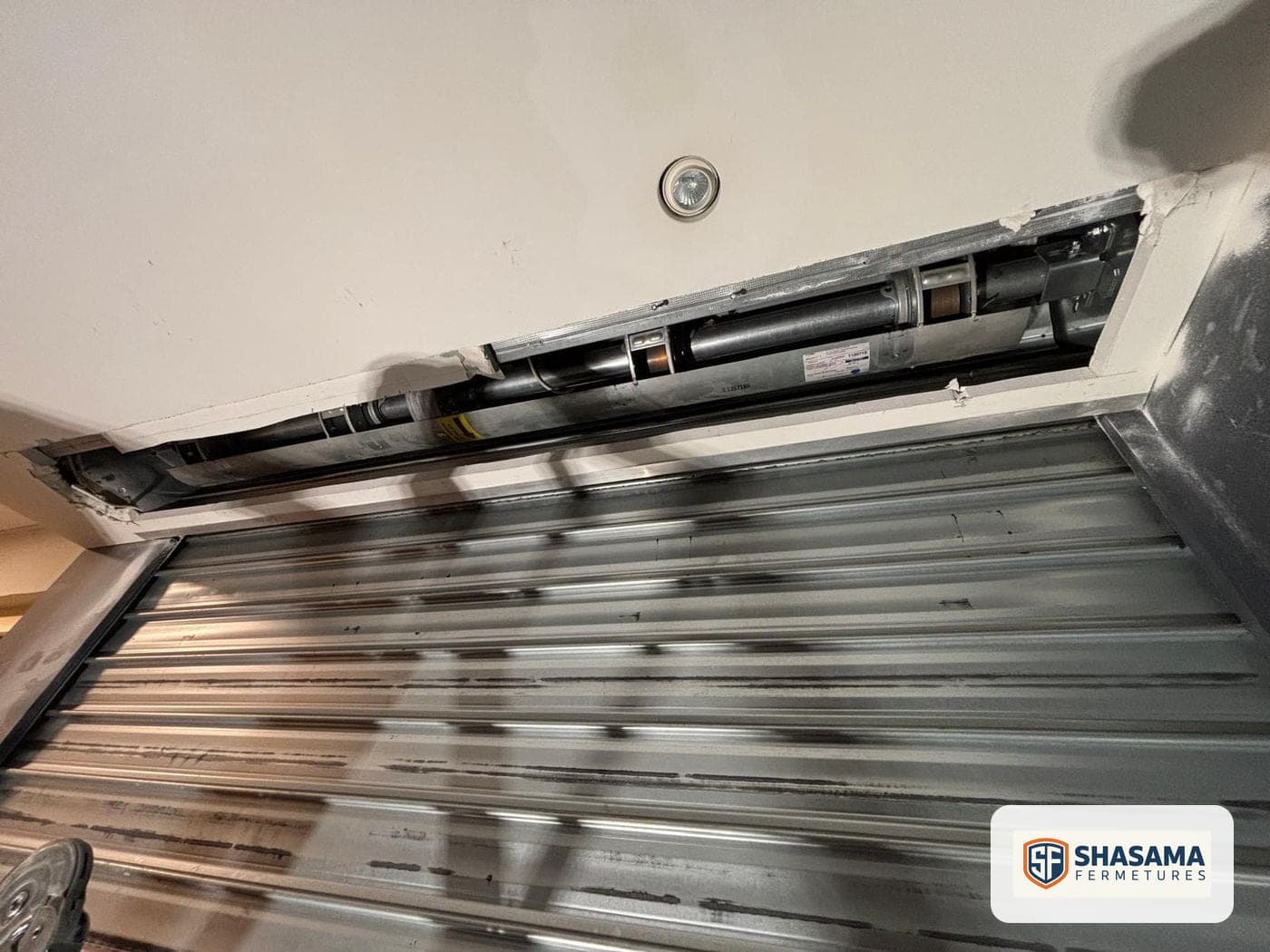
- Central motor: it works together with the axle springs. A broken spring shifts part of the weight onto the motor, which may then hum without managing to lift the curtain. SIMU recommends it for light use, a few cycles a day.
- Tubular motor: according to SIMU, it works without spring drums and can be single-phase or three-phase. It therefore carries the full curtain weight; a hum points to the motor itself, its power supply or a jammed curtain.
- External motor: SIMU reserves it for industrial shutters weighing up to one tonne; it comes in single-phase or three-phase and is recommended for intensive use. Diagnosis follows the same logic, with easier access to the motor.
If you do not know which one is fitted, do not dismantle anything to find out: a photo of the axle taken from the ground, with the shutter open, is often enough for the technician.
What you can observe without risk
Your job is not to find the faulty part but to note clues the technician will not be able to hear on arrival. Everything is done from a distance, without tools and without opening any box.
Note when the noise happens
Does the motor hum from the first press, after several operations during the day, or only when opening? Did it work normally in the other direction just before? These answers point towards the capacitor, the thermal cut-out or a limit switch.
Recall how long it lasted
Think back to whether the hum stopped by itself after a few seconds and whether you used to hear a slight click at start-up. Rely on the last attempt: do not make another one just to listen.
Look at the identified breaker
Check whether it has tripped and whether other appliances in the premises still work. Do not keep resetting it: a breaker that trips while the motor hums is information to pass on, not a problem to force.
Look at the curtain and the threshold
From a safe position, look for an object caught at the threshold, a slat out of line or a guide rail marked by an impact. Only remove a loose object outside the fall zone.
Let it cool before trying again
If the shutter has been used a lot, leave the motor to rest as its manual says before one single new attempt. If it still hums, stop for good and call.
What the technician measures on site
A sound diagnosis separates electrical from mechanical causes before suggesting a part. The technician first makes the shutter safe, then checks in this order:
- the voltage at the motor terminals, which Fluke places normally within 10 % of the voltage on the rating plate;
- the capacitor, after isolating and discharging it: appearance, leaks, swelling, measured value against the marked value;
- the brake and its wiring on a motor fitted with one, then the limit switches;
- the balancing: springs, drums, curtain attachments, and how the curtain moves once the motor is off load;
- the guiding in the rails and the bottom slat;
- the controls: key switch, radio receiver, control board, connection box.
The result decides what comes next. A capacitor on its own is replaced with the same model and value, without changing the motor. The price list of our metal shutter emergency repair service shows the rate for diagnosing and repairing the motor or its controls. A motor with a damaged winding, or one too weak for the curtain, is replaced: the choice between a central and a tubular motor is then made with the technician.
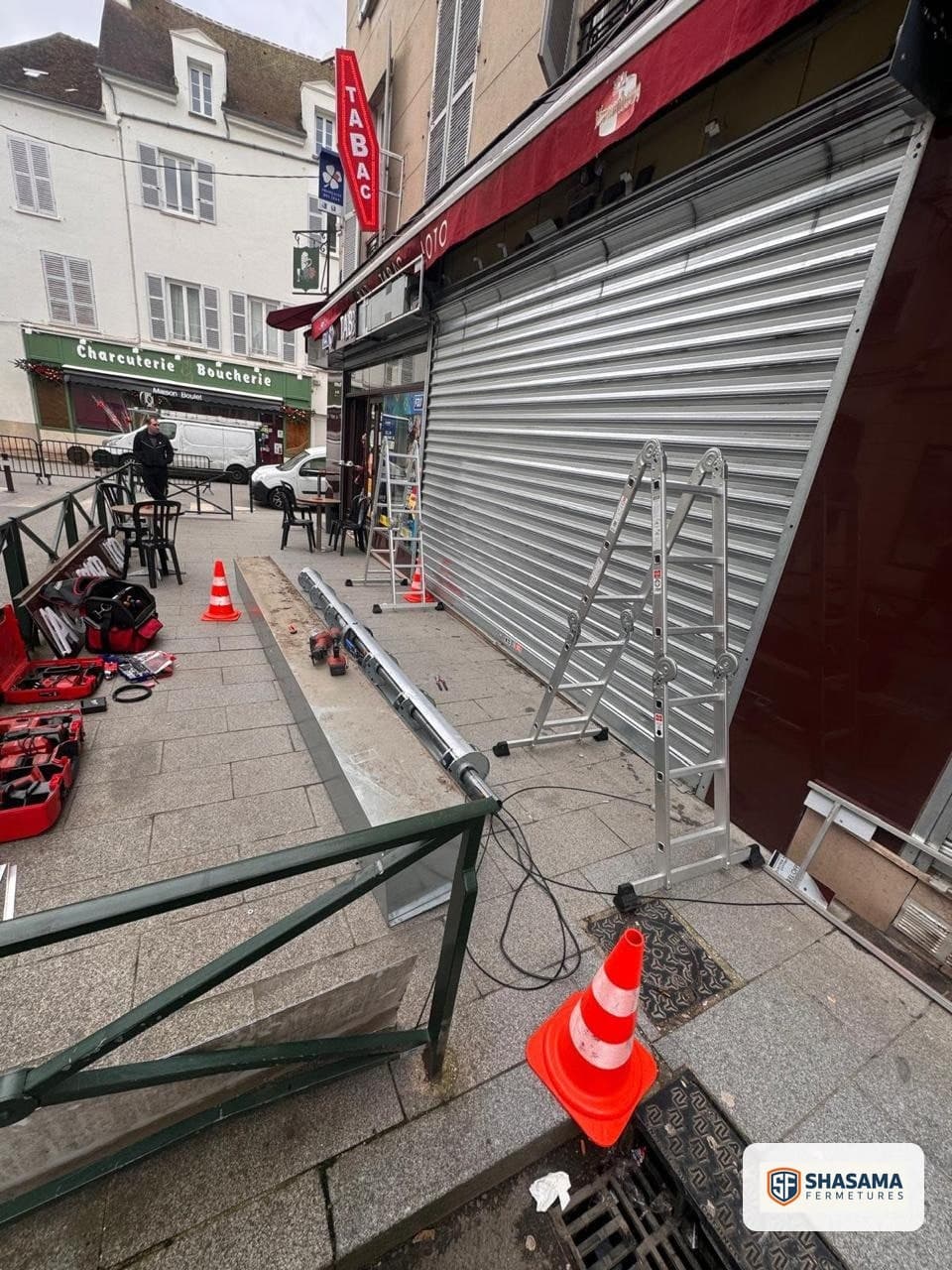
When the fault comes from the axle, metal shutter repair deals with the springs, the axle or the guide rails. The tubular axle replacement on a Paris shop shutter shows the steps, from removal to testing.
Stuck metal shutter motor in Paris: headbox, axle and access
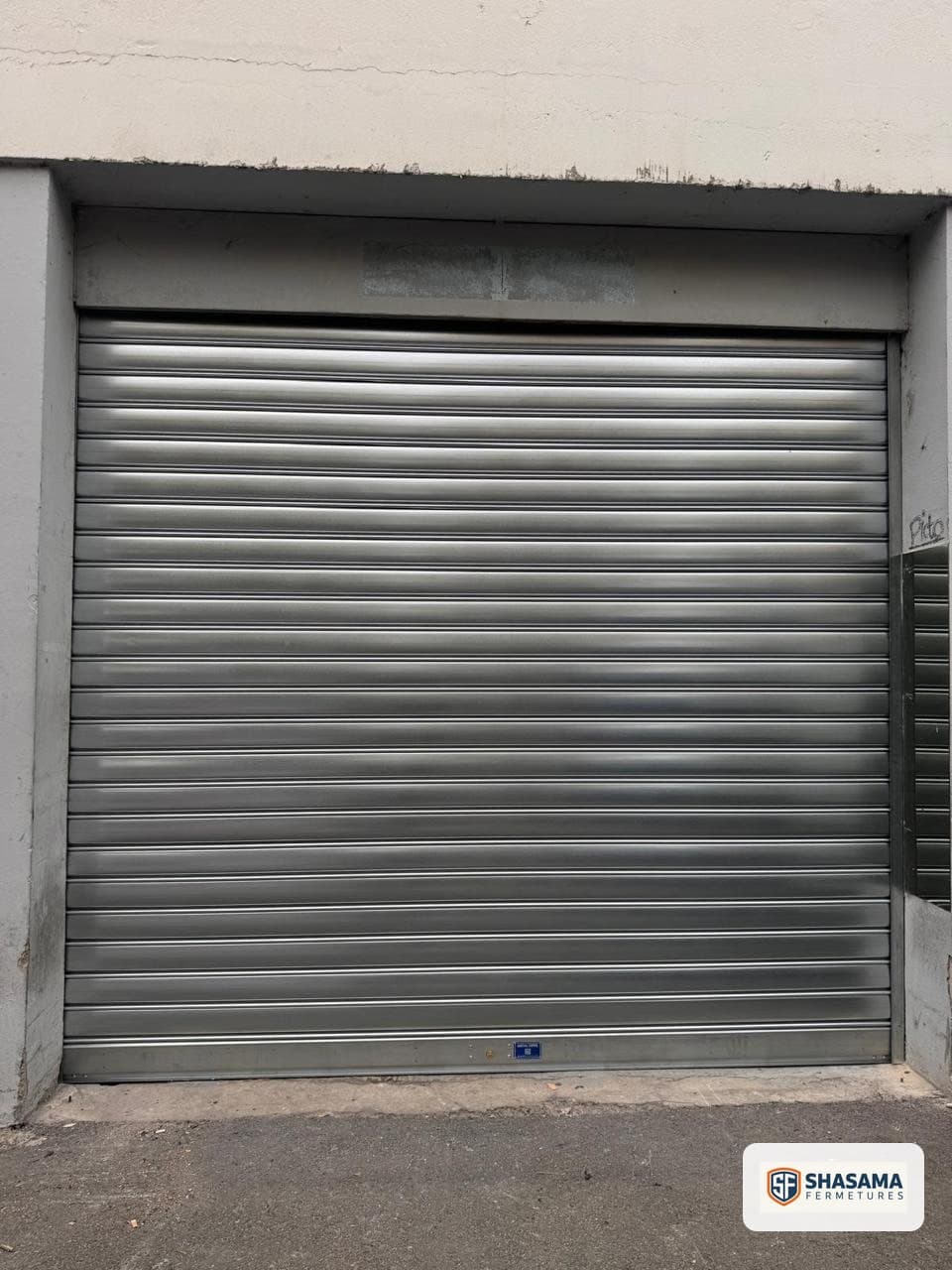
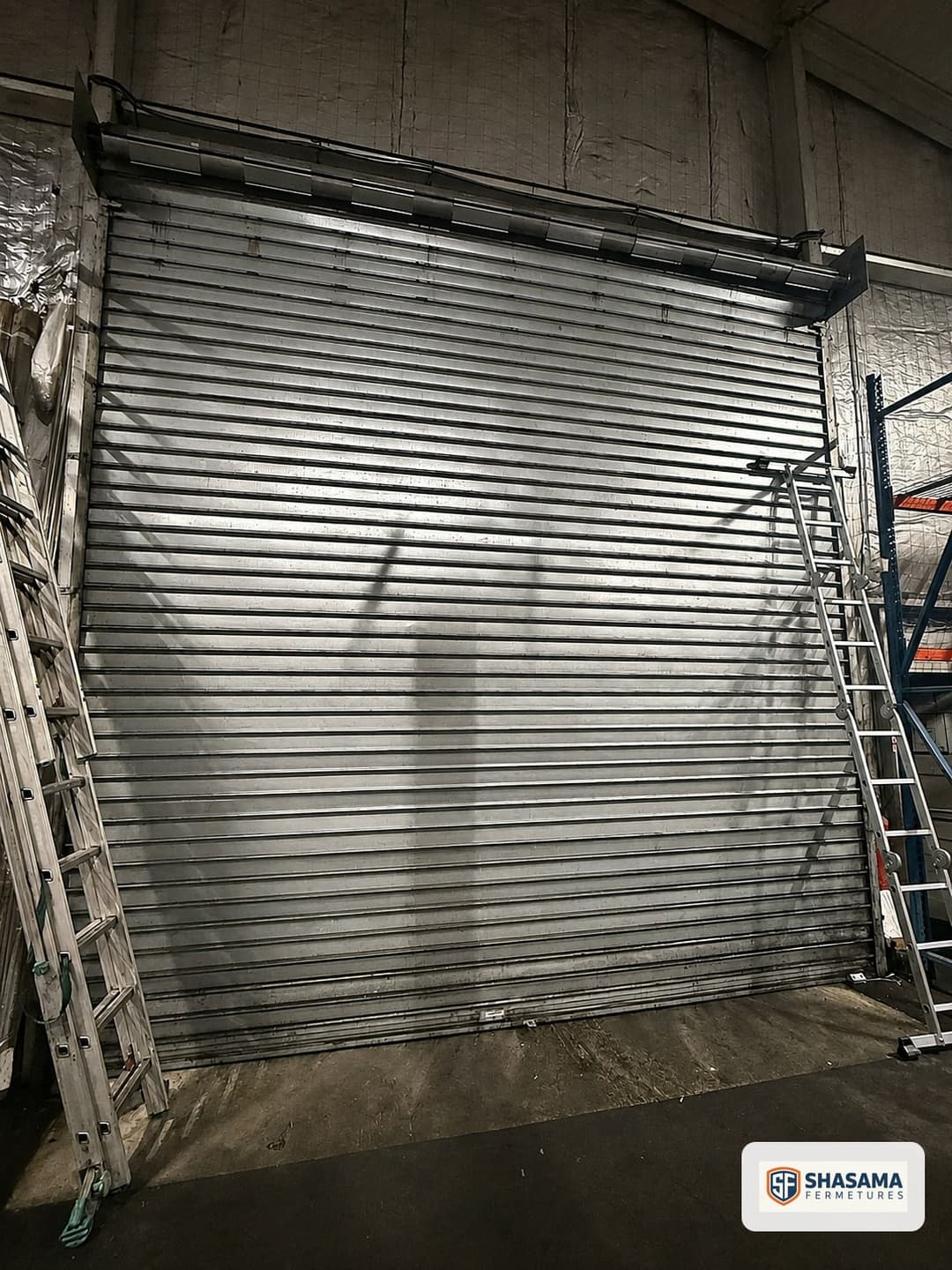
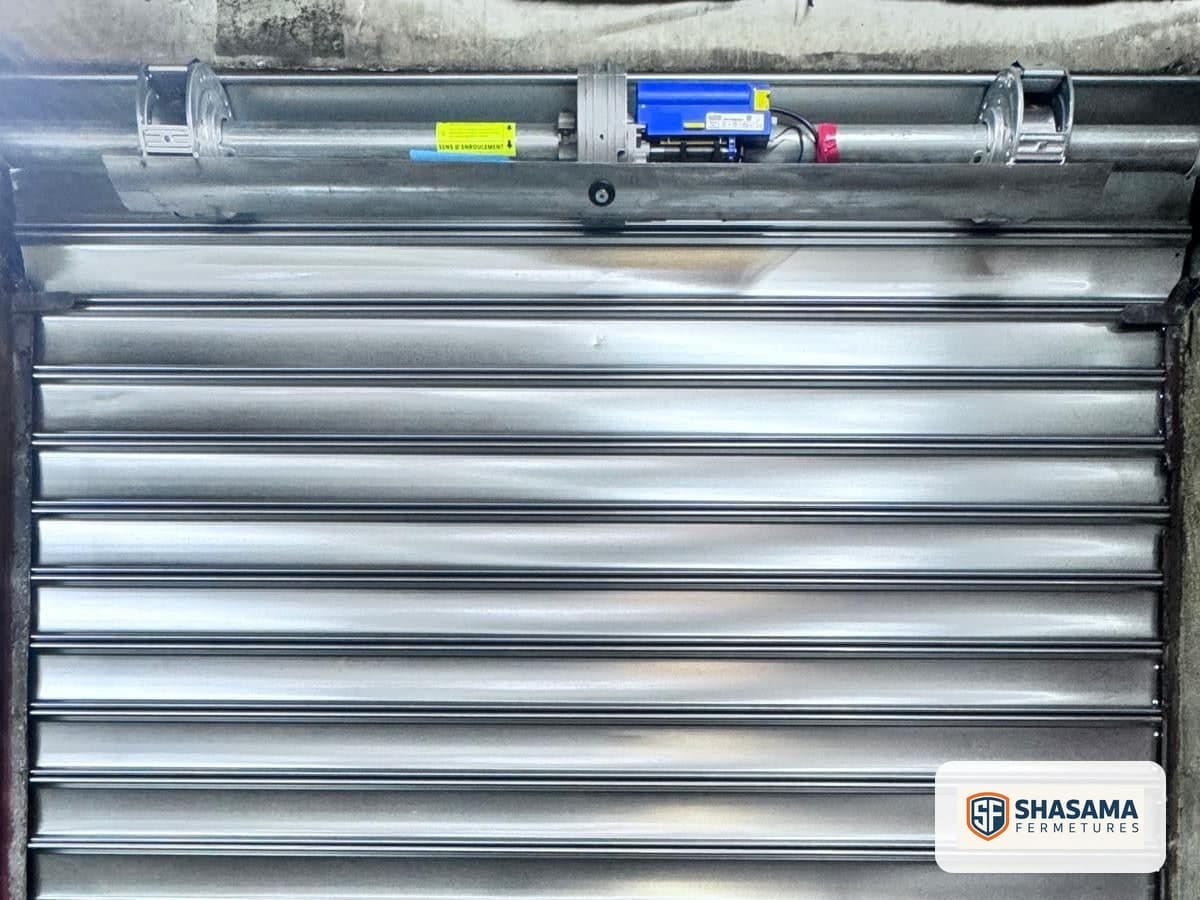
On the Paris shopfronts where we work, the headbox that houses the motor is not always in the same place. To replace the axle of a shop shutter in Paris, our technicians removed the sign before opening up the mechanism housing. In Paris 4e, the motorised axle was changed with the headbox open at ceiling level; in Paris 10e, the galvanised headbox is fitted as an interior tunnel. Knowing where the headbox is helps prepare the job.
When the diagnosis points to the motor or the axle that carries it, the repair may mean a new motorised axle. In Paris 18e, the new motorisation had its limit switches set and was tested before start-up; in Paris 3e, the motorised axle was made to measure to the recorded dimensions; in Paris 11e, the motor and the curtain of a shop shutter were replaced together. Our work is presented arrondissement by arrondissement, for example metal shutter emergency repair in Paris 11e.
Preparing your call: what saves time
- The shutter position: closed, open or stopped part-way, straight or at an angle.
- Where the headbox is: behind the sign, under the lintel or at ceiling level inside the premises.
- The motor type if you know it, or a photo of the axle taken from the ground.
- How long the hum lasts, the direction affected and how many attempts you have made.
- The last time it worked normally and any warning sign: slowness, a new noise, stops.
- The state of the circuit breaker and any power cut in the area or the building.
- The motor reference or manual, if you can reach them without dismantling anything.
With this information, our metal shutter emergency repair team arrives knowing whether to bring a capacitor, carry out an adjustment or plan a replacement. To keep a tired capacitor from catching you out one opening morning, metal shutter maintenance checks the motor, the limit switches and the balancing.