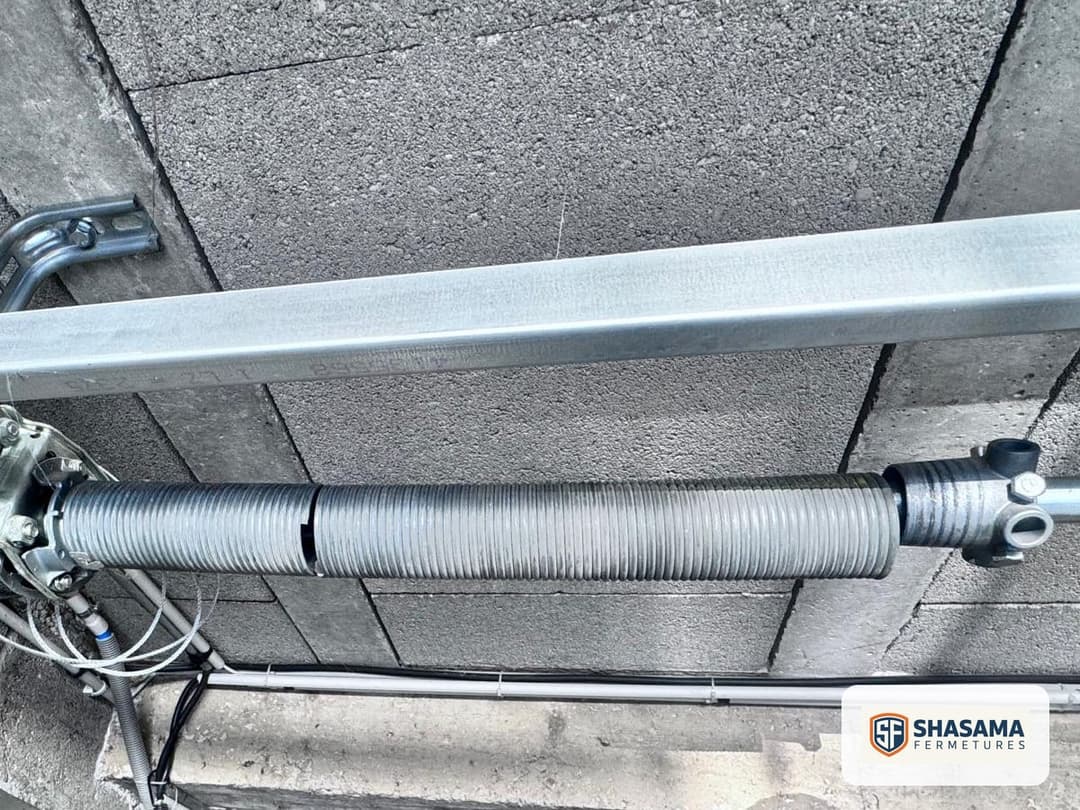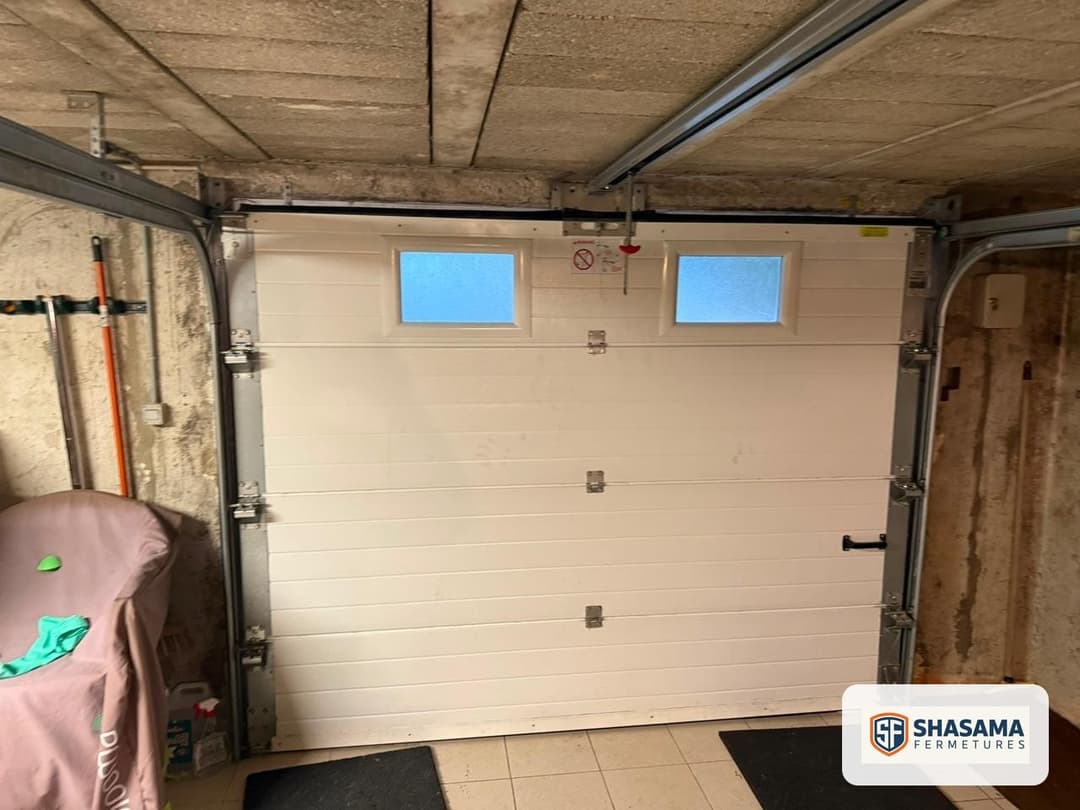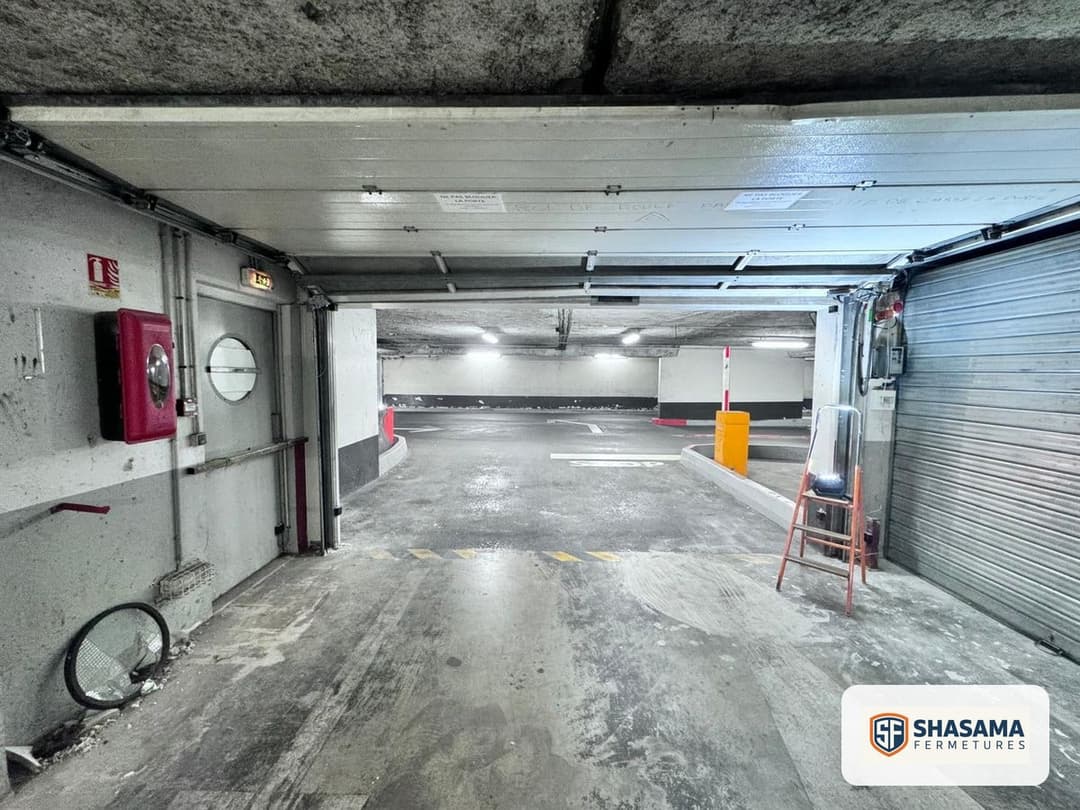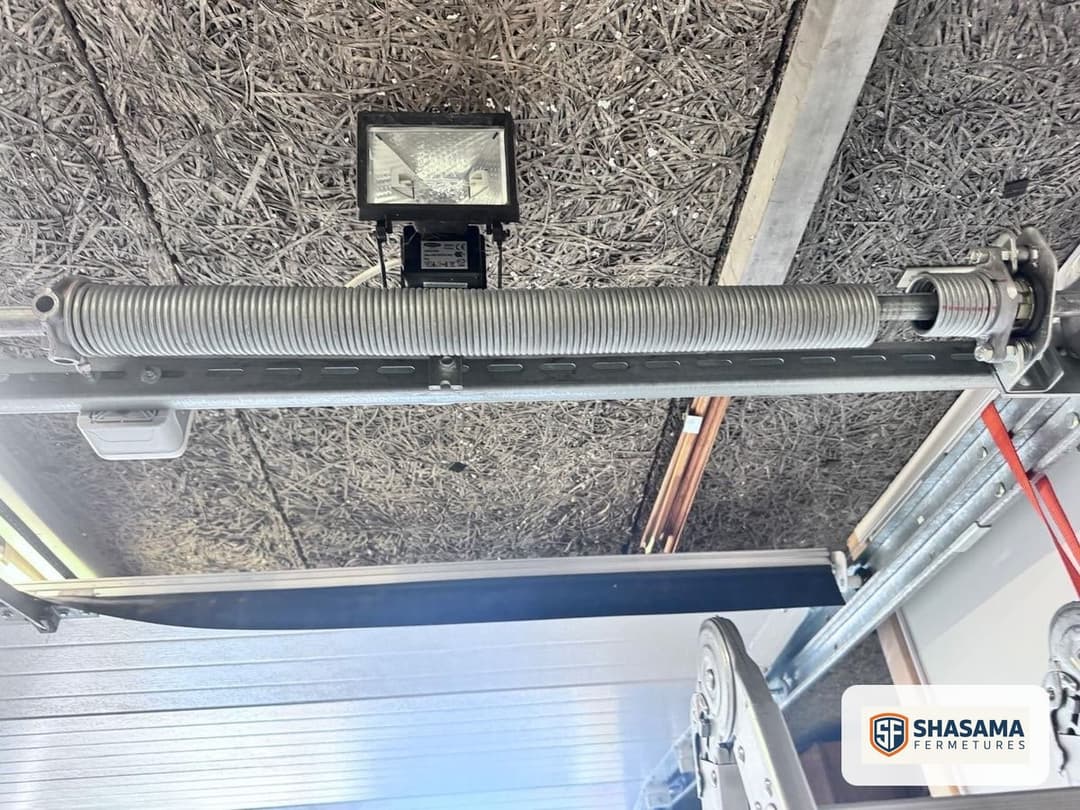

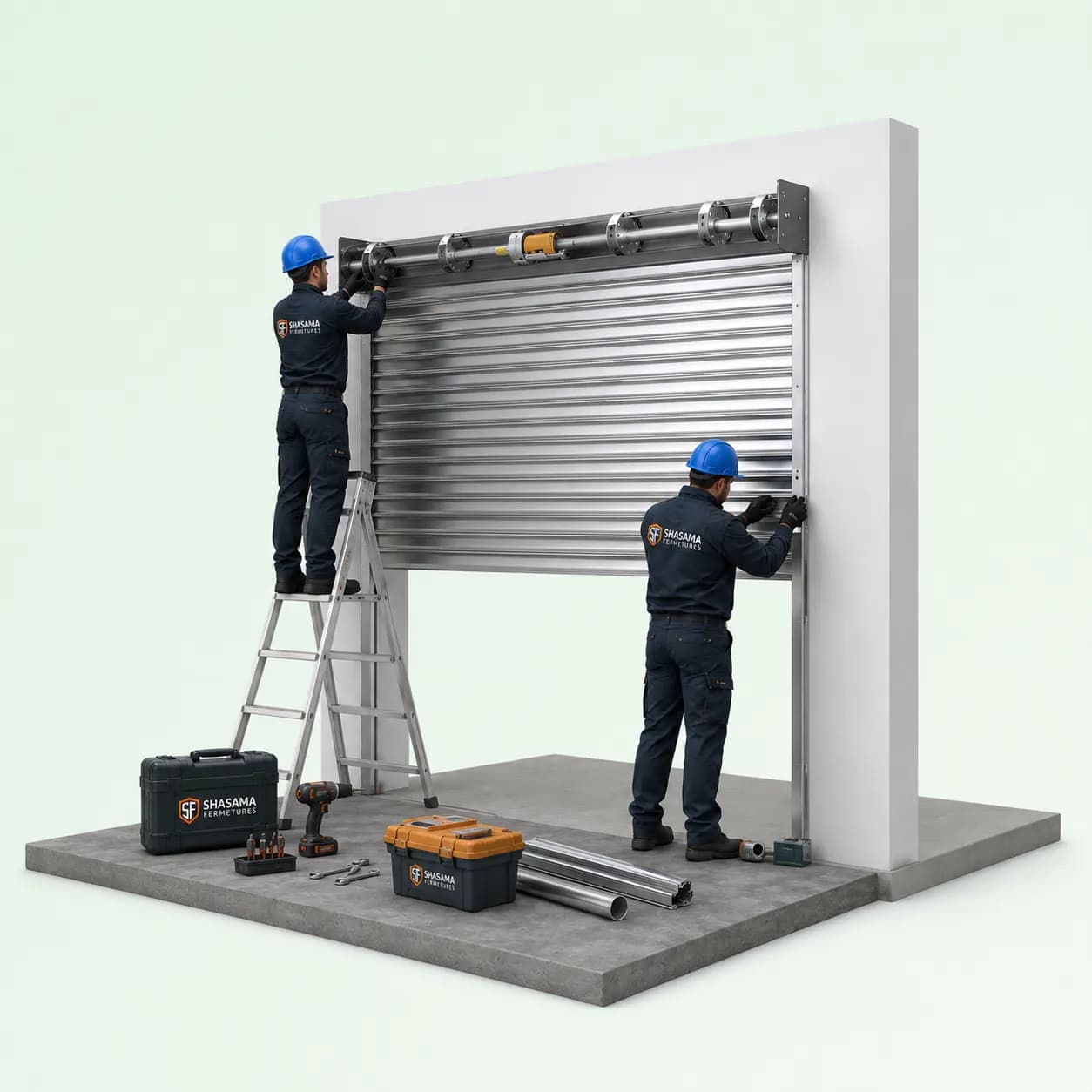
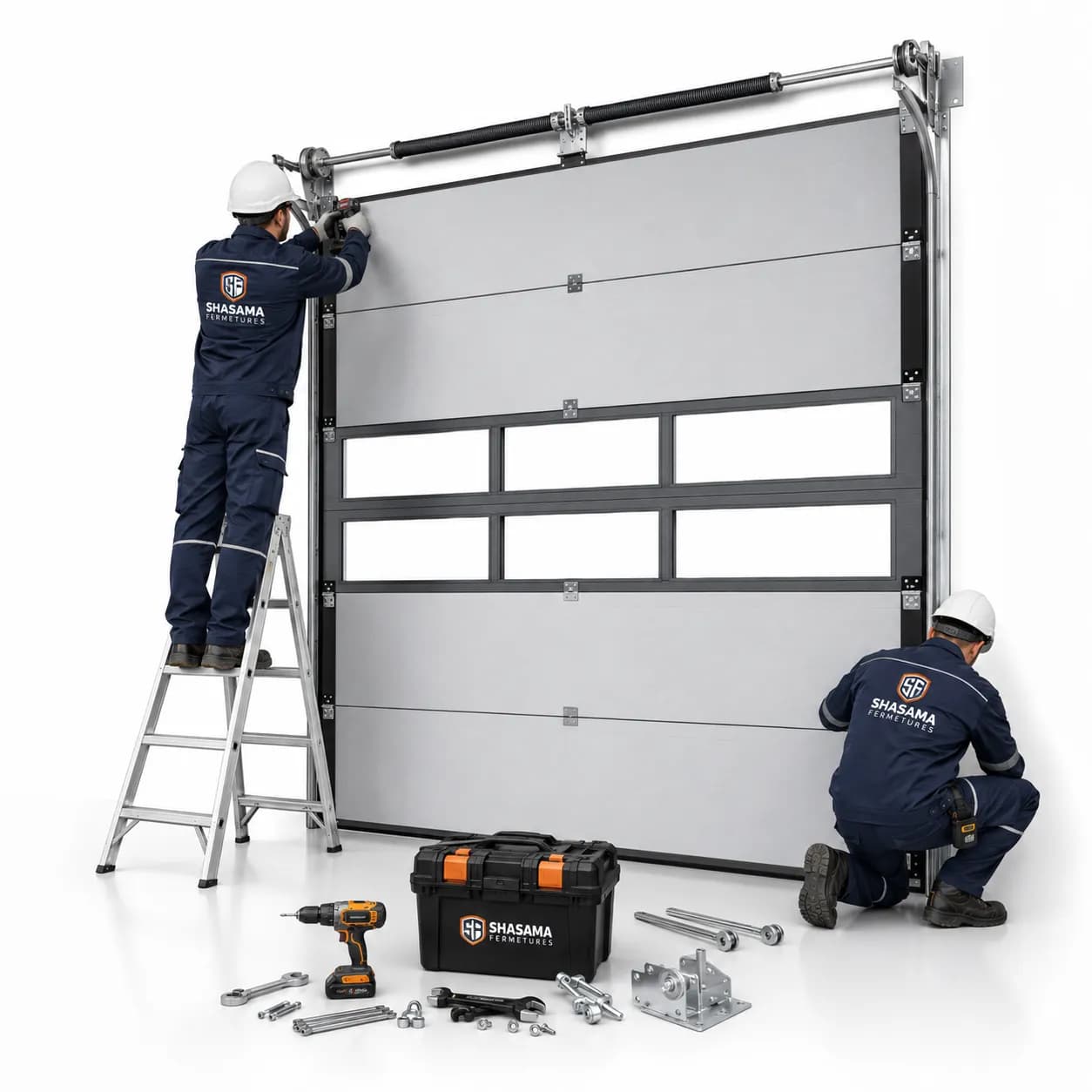

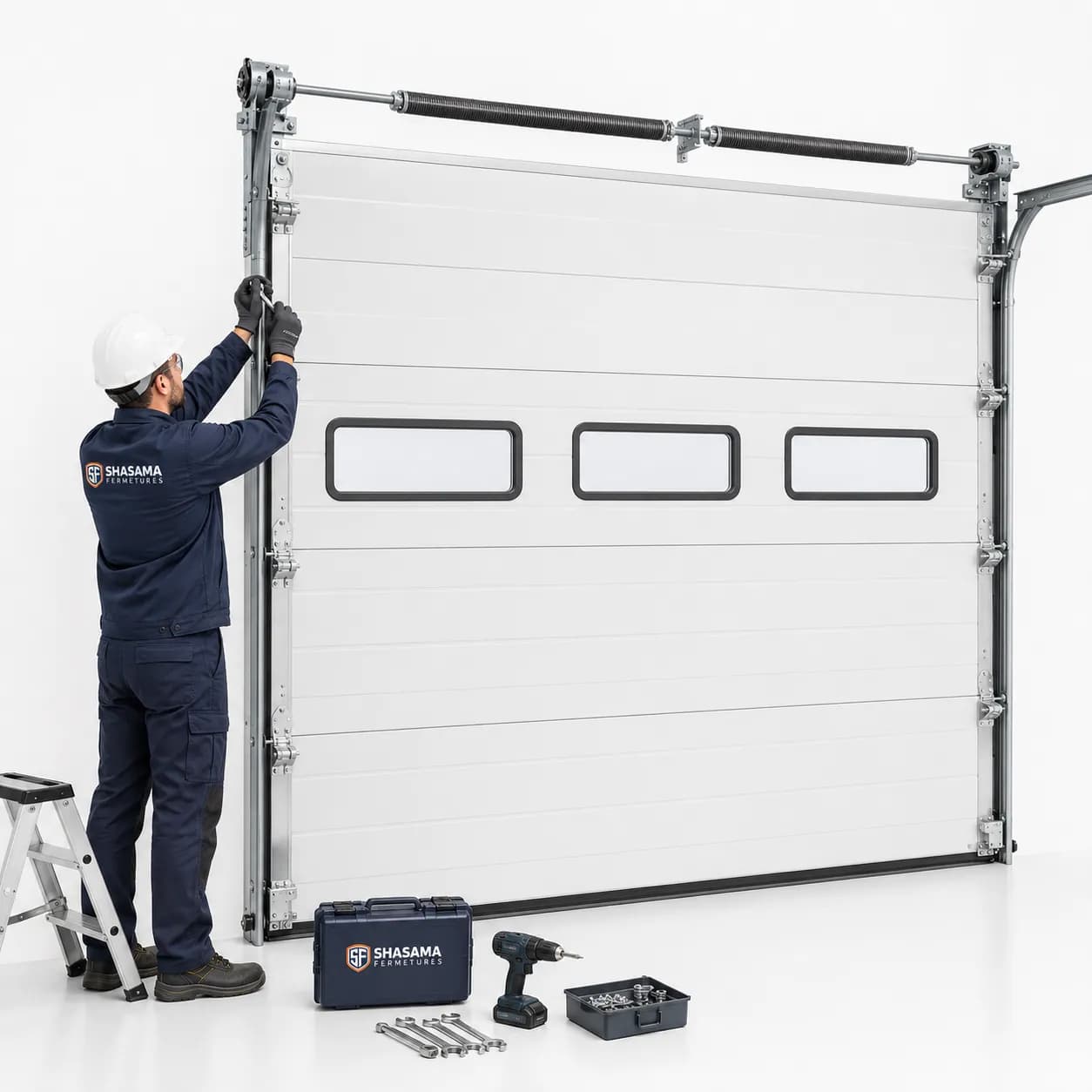
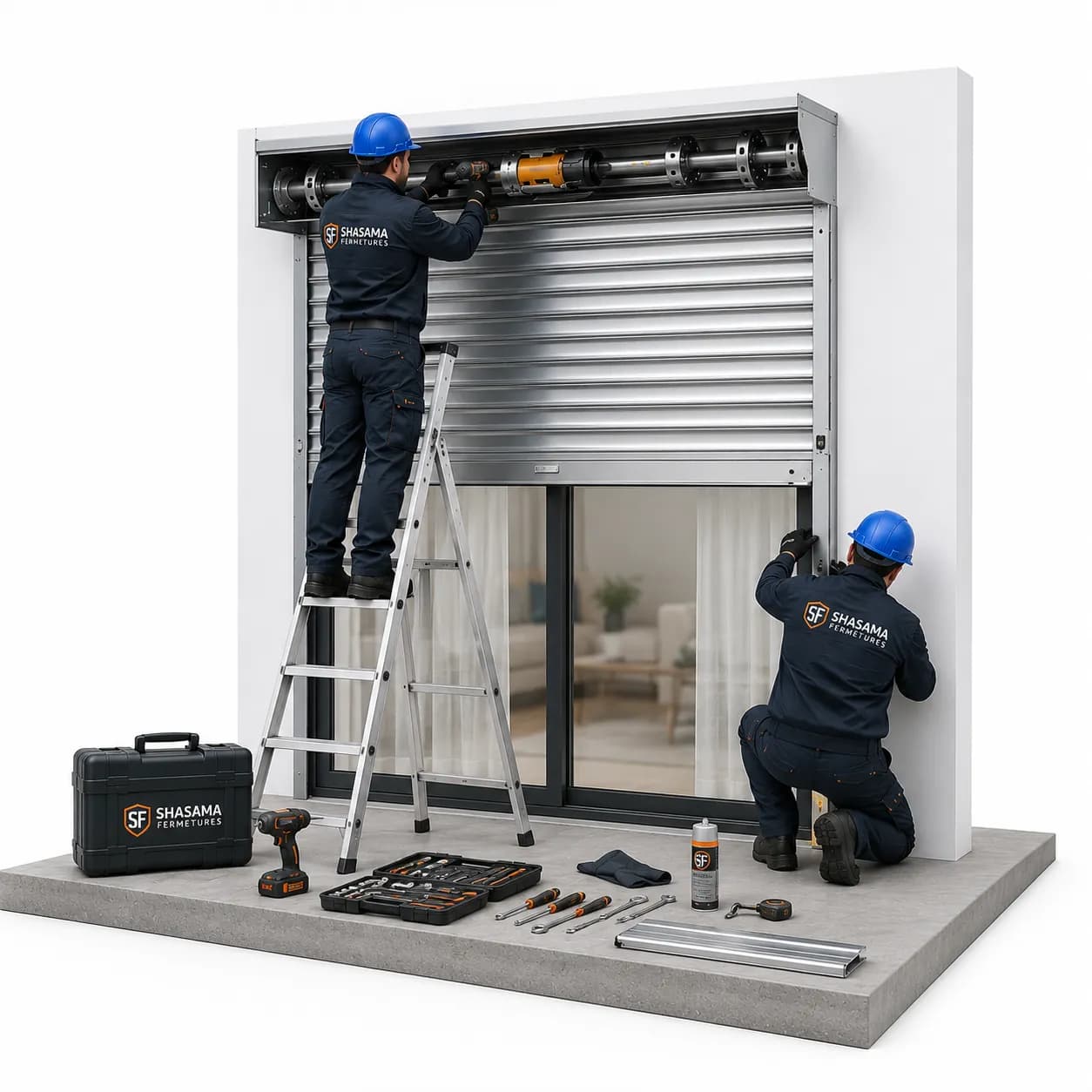
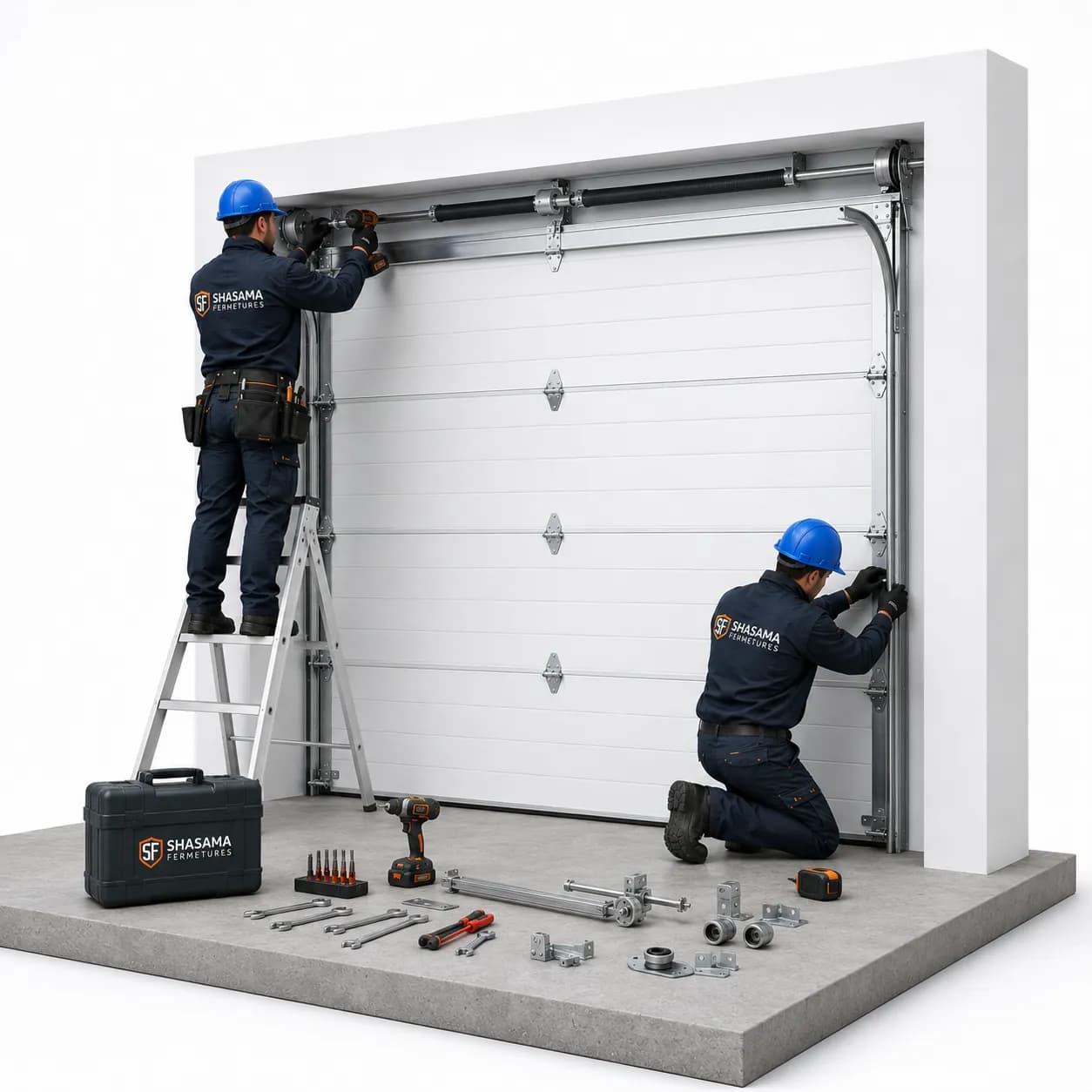
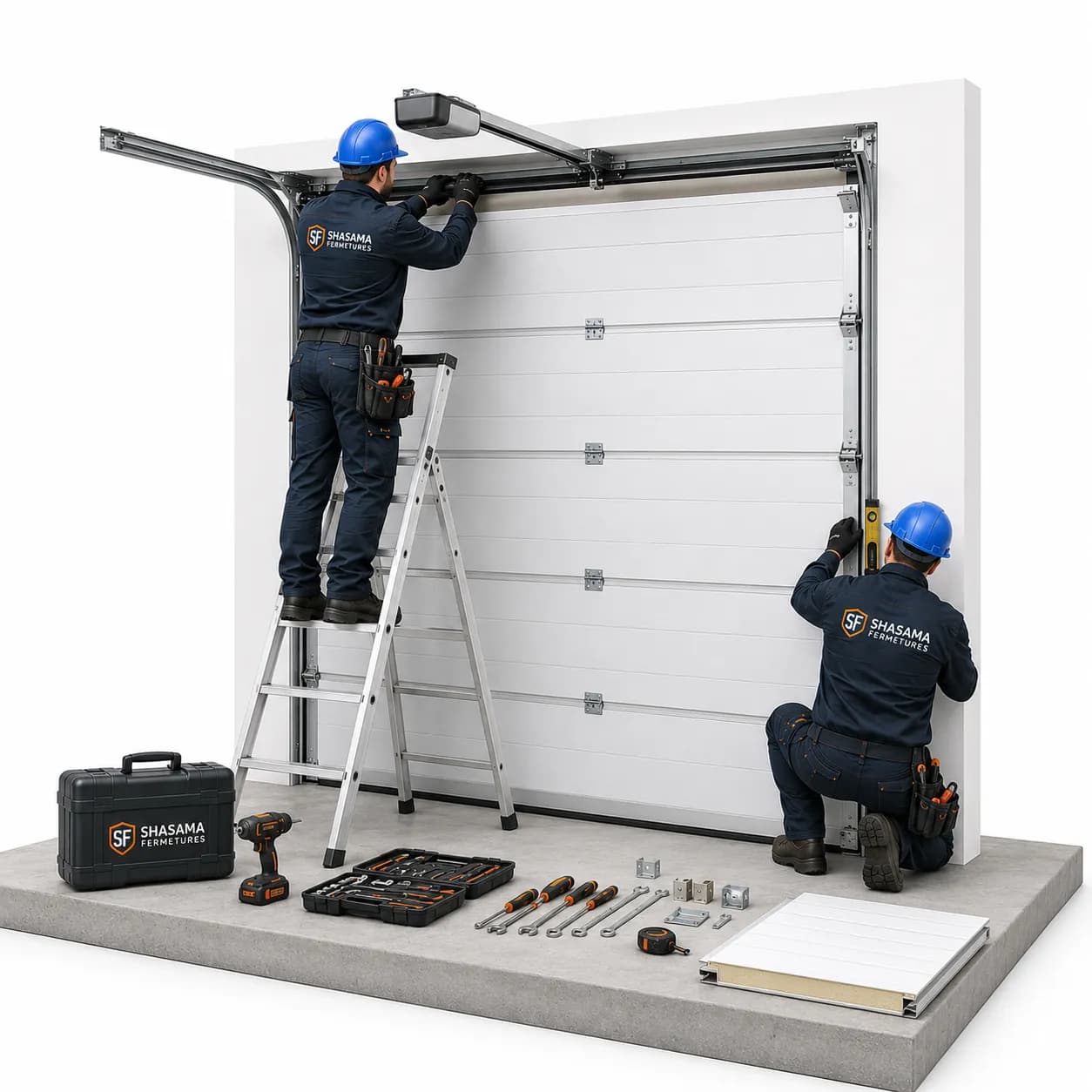
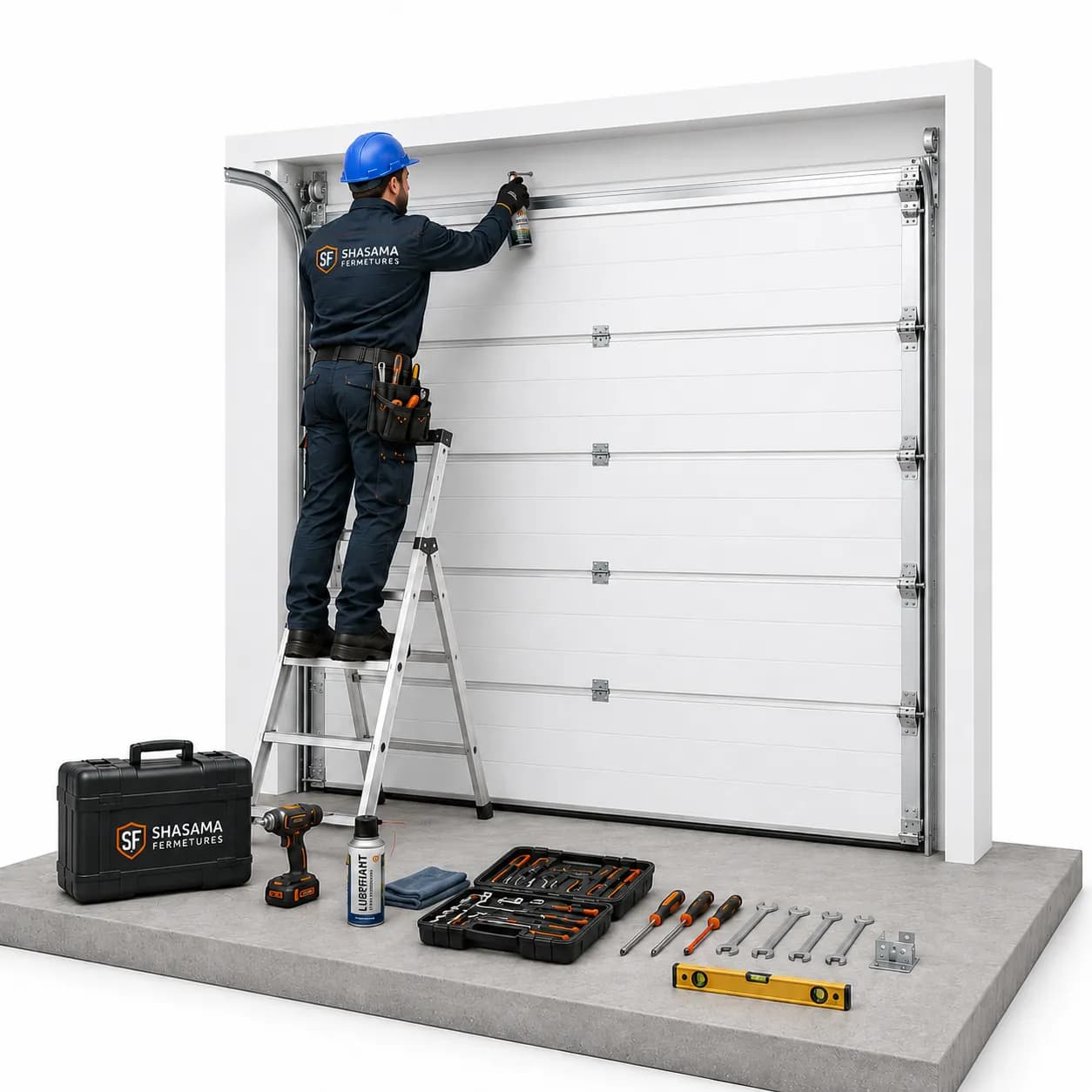
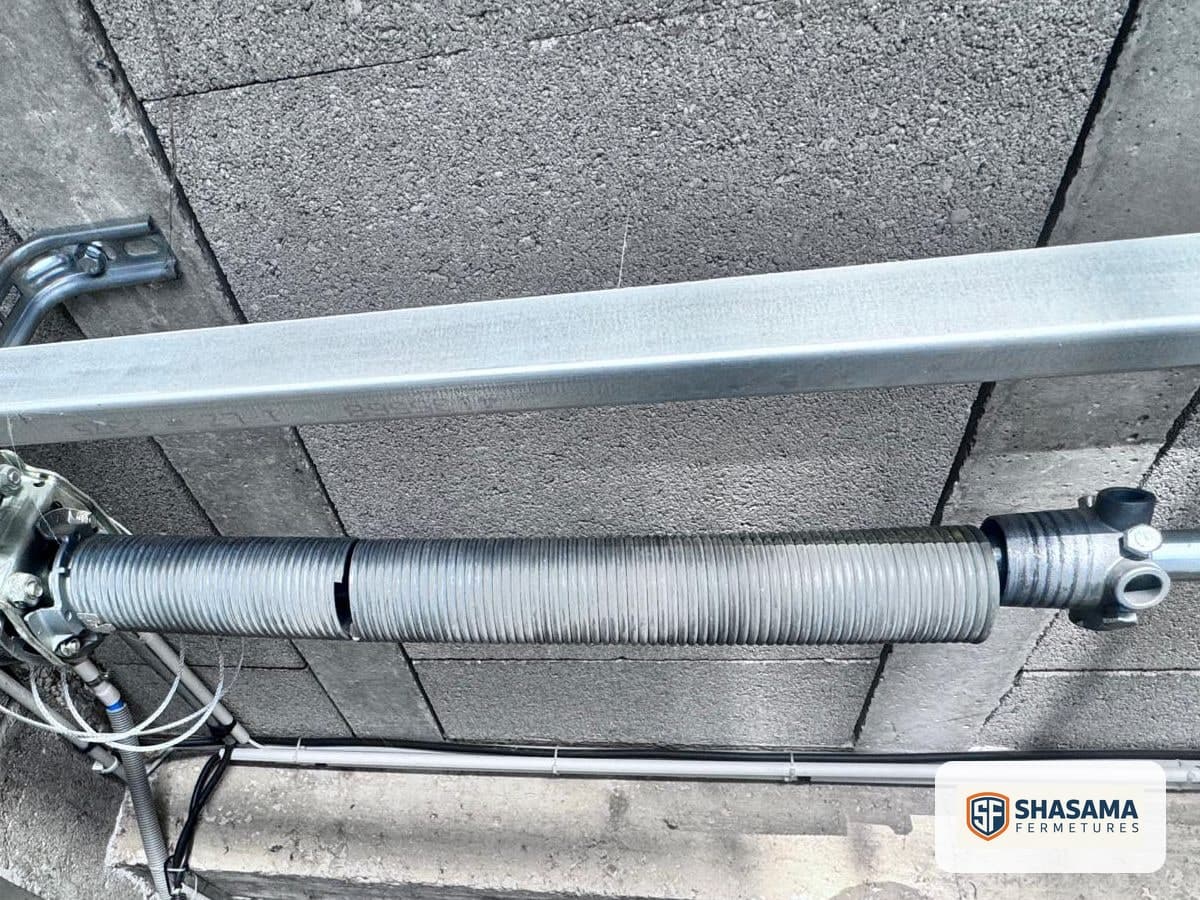
A broken spring on a sectional garage door shows as a loud bang, a gap between two coils or a door that is suddenly too heavy. Stop using the controls, do not open or close the door by hand and do not release the motor: it can drop suddenly. Across Île-de-France, our technicians always replace both springs together and check the cables and drums.
Broken garage door spring: how to recognise it
On a sectional garage door, the springs carry most of the weight of the door. The motor, or your hand, only guides a movement that is already balanced. When a spring fails, that balance is gone and the door behaves differently from one day to the next.
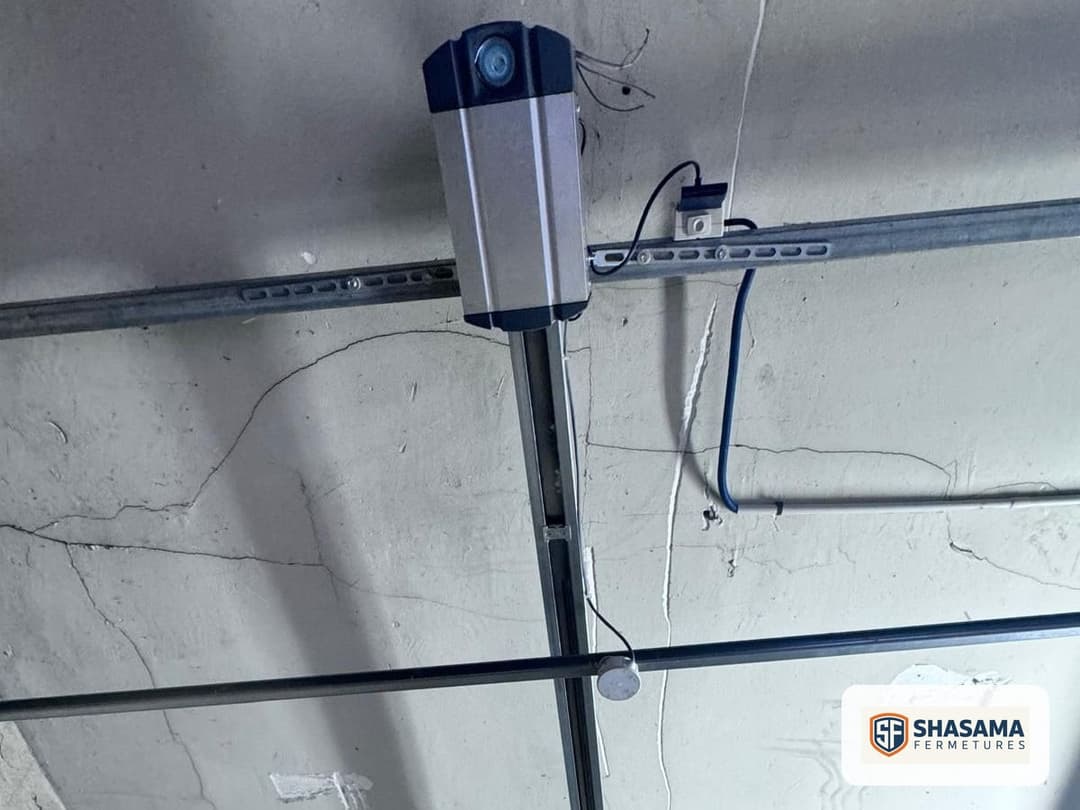
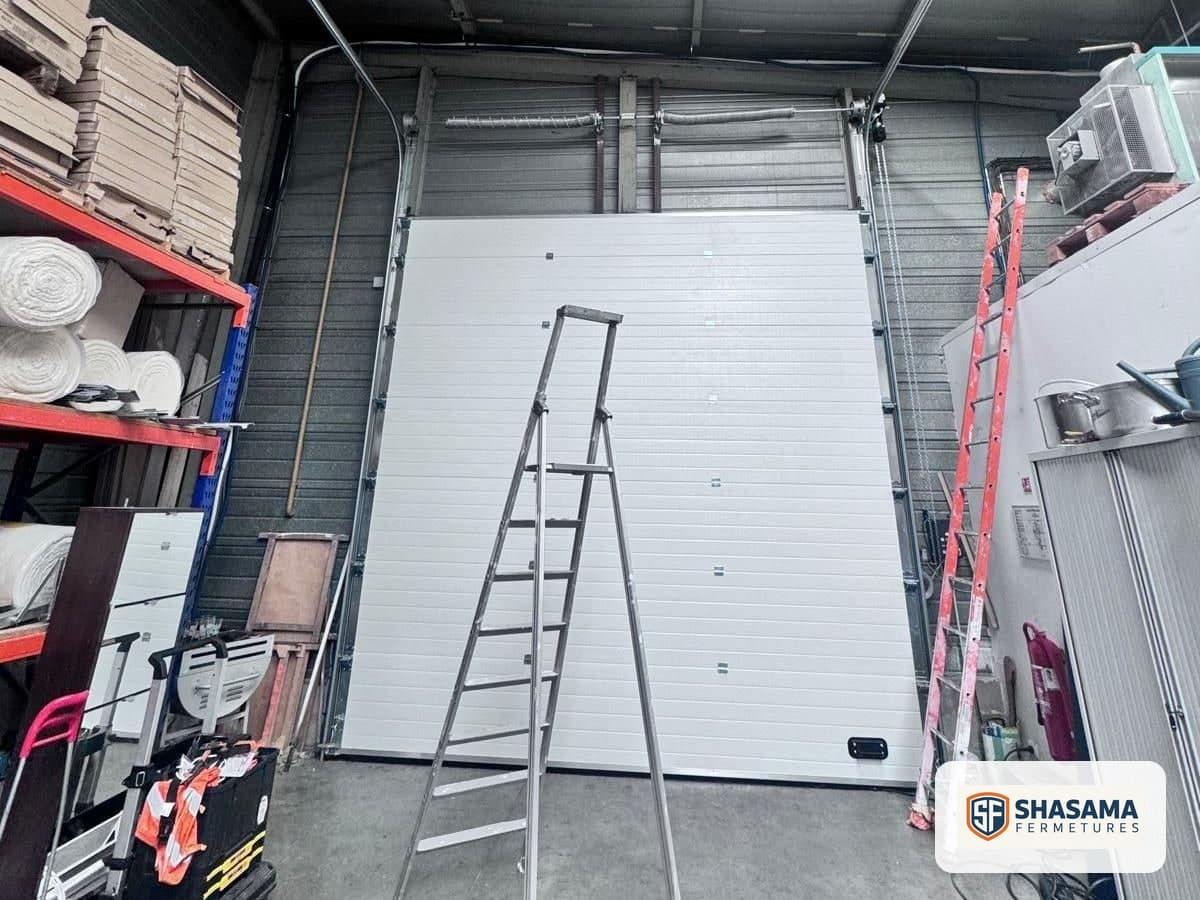
There are two set-ups. Torsion springs sit on a horizontal shaft just above the door, with a cable drum at each end. Extension springs are stretched along the horizontal tracks on each side, under the ceiling. In both cases, look from the floor, without a stepladder and without touching anything.
| What you notice | What it often means | What you do |
|---|---|---|
| A loud bang, with the door at rest or moving | What it often meansA torsion spring has snapped | What you doStop using the controls, watch from a distance |
| A clear gap between two coils on the shaft | What it often meansThe torsion spring has split in two | What you doPhoto from the floor, area kept clear |
| The motor strains, stops after a few centimetres or no longer lifts the door | What it often meansThe door has become too heavy for the opener | What you doDo not keep trying |
| The door rises or lowers unevenly | What it often meansA spring or cable has failed on one side | What you doStop at once, nobody under the door |
| A cable hangs loose or has wound unevenly on its drum | What it often meansSlack cable, often caused by a broken spring | What you doDo not put the cable back yourself |
| A side spring has come loose or stretched unevenly | What it often meansAn extension spring is broken or worn out | What you doKeep the door still |
Garage door stuck with a broken spring: can you open or close it?
No, neither by hand nor with the motor. Without its spring, the door becomes too heavy for the opener and can drop as soon as it is released. A door that is stopped properly can be repaired safely; a door that someone has tried to force can drop, come off its tracks or break its second spring.
Stop using the controls
Let go of the button, put the remotes away and tell your family or garage neighbours. Every new attempt makes the motor work on a door it is not designed to lift on its own.
Leave the door where it is
If it is closed, it stays closed. If it is open or halfway, it is not pulled down by hand and nobody passes underneath, on foot or by car.
Switch the motor off at the breaker
If the garage circuit breaker is labelled and within reach, switch it off so a forgotten remote cannot set the door moving. Do not open any control box.
Take photos from a distance
One photo of the shaft above the door, one of each side and one of the whole door are enough for the technician to prepare the parts.
Call a professional
Describe where the door is and what you heard or saw. If the door has stayed open, say so. Jobs involving a door left open are given priority, subject to our availability.
Some doors have a safety catch, described by Novoferm, that stops the door from dropping when a cable or spring breaks. If it has tripped, the door may seem jammed: that is the device doing its job. The door stays put until the technician arrives.
How do you tension a sectional door spring? Why we advise against it
Online tutorials describe the procedure: winding bars in the spring head, a number of turns to count, adjustment a quarter turn at a time. On paper it looks simple. In a garage, the energy stored in a torsion spring is enough to rip a bar out of your hands or throw a part.
Manufacturers leave no doubt. The Novoferm iso70 torsion spring sectional door instructions, in French, state that replacing the torsion spring shaft may only be carried out by a competent person within the meaning of standards EN 12604 and EN 12453, and warn that tensioning or releasing the springs can release considerable forces. The same instructions require the door to be secured against any uncontrolled movement before a cable or spring is replaced.
Beyond the risk of injury, a spring that is the wrong size or wrongly tensioned leaves the door out of balance: it rises on its own, drops, wears its cables and strains the opener. The right spring depends on the weight and height of the door, and on its winding direction, left or right.
Each manufacturer has its own spring references: the springs of a Hörmann, Novoferm, Tubauto, Normstahl or Wayne Dalton door are not swapped at random. The brand and model of the door guide the choice, and on an old door whose original springs can no longer be found, the technician looks for an equivalent spring or suggests replacing the whole assembly.
Hörmann and Novoferm are among the garage door brands we repair most often.
| You can | The technician takes care of |
|---|---|
| Stop using the controls and switch off the labelled breaker | Locking the door before any work on the mechanism |
| Look and take photos from the floor | Releasing the tension of the intact spring and removing the assembly |
| Note the brand from a label you can read without climbing | Identifying the spring references and winding directions |
| Keep people and vehicles away | Refitting, tensioning and balancing, then testing the door |
Broken sectional door spring: replacement and repair
A broken spring cannot be welded or re-tensioned: it is replaced. The door itself is kept: the work restores the balancing system while keeping the panels, tracks and opener, provided they are sound. Here is the usual sequence, as we carry it out on a sectional garage door.
On site, replacing a pair of torsion springs takes about 1 hour 30 minutes; for extension springs, allow about 1 hour. Common springs are sometimes in stock, but precise measurements are often needed to order the exact reference before the work. Replacement at the first visit is therefore not guaranteed.
Secure the door
The door is locked in place before any work on the shaft and springs at the top.
Remove the old assembly
The tension of the spring that is still intact is released, then the existing springs are removed along with whatever must come off to reach them.
Check the parts around the springs
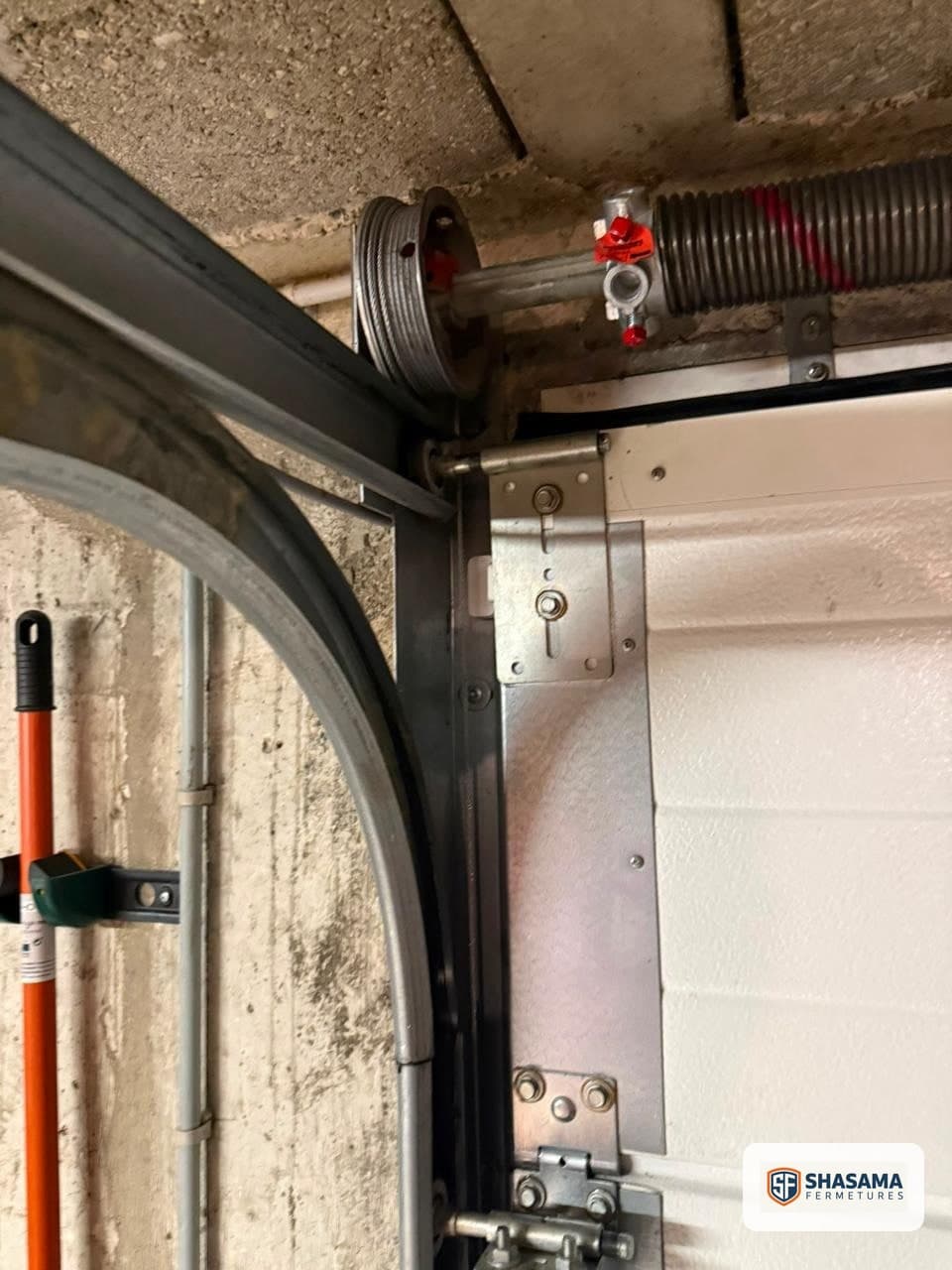
Drums, cables and fixing points are checked. Damaged cables are always replaced at the same time as the springs. A damaged drum is also replaced during the same work.
Fit and adjust
The shaft and new springs are refitted, then the tension is set to bring the door back into balance.
Test
Several opening and closing cycles, by hand and then with the motor, confirm the result before the door is handed back.
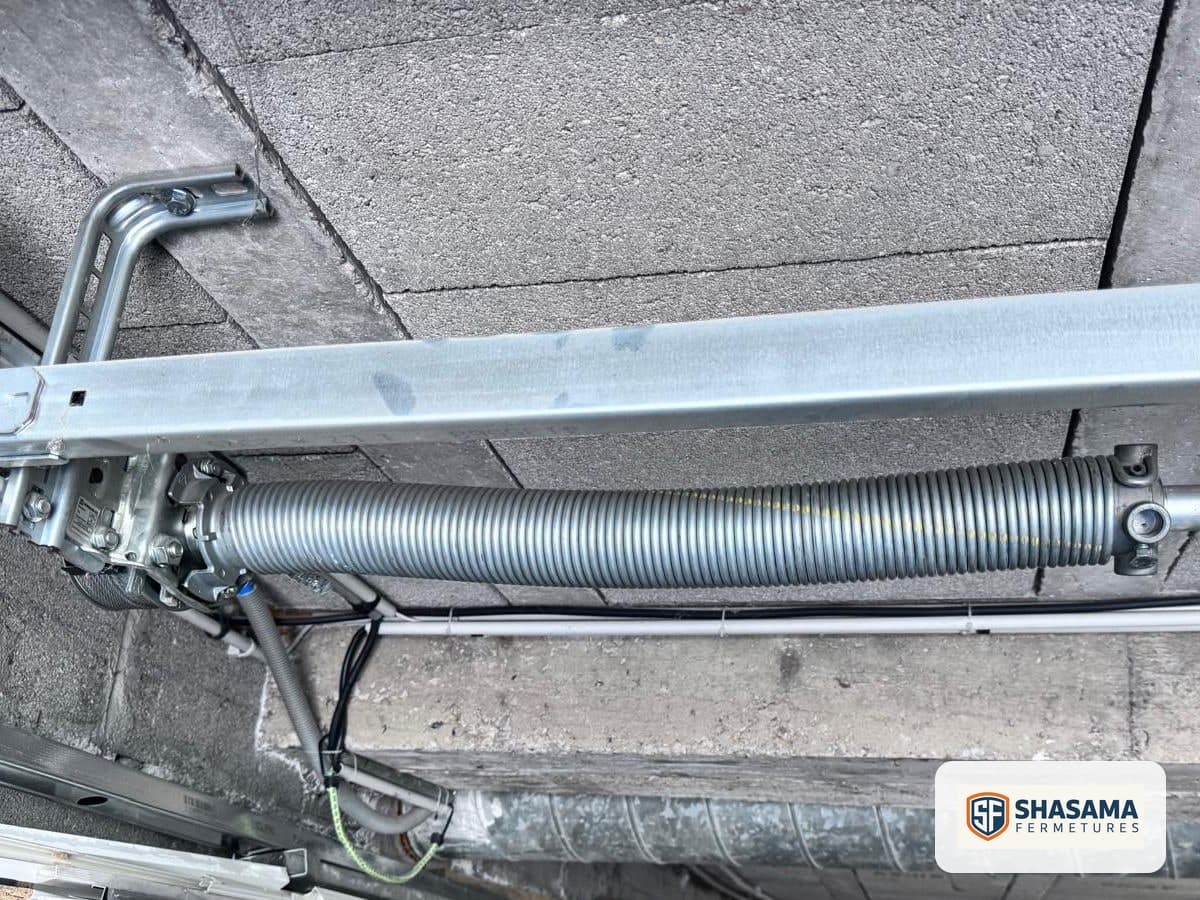
We always replace both springs together, even when only one has broken: they are the same age, have done the same work, and the second one is often close to the end of its life. A new pair keeps the door evenly balanced and avoids a second visit soon afterwards.
We fit original springs or professional quality equivalents. The standard models we fit last about 10,000 to 20,000 cycles; we also offer high endurance versions for intensive use, such as car park doors.
The cable often goes with the spring. On a sectional car park door in Montreuil, the existing cable and spring were removed and replaced together. To check the balance, the technician then moves the door with the motor released: the Novoferm sectional door checklist, in French, says a well adjusted door lifted to half height stays in place without excessive effort.
Replace the springs or replace the garage door?
In the vast majority of cases, a broken spring is solved by a targeted garage door repair. When we replaced the springs of a sectional door in Saint-Maur-des-Fossés, the panels, tracks and main existing parts were kept.
- Springs only: the door is straight, the panels are sound, the tracks are not bent.
- Springs and cables: a cable is frayed, slack or has come off its drum.
- Springs and nearby parts: a drum, bearing or fixing was damaged by the break.
- New door: bent panels, tracks twisted after the door dropped, or parts no longer available for an old model.
The diagnosis decides, and the quote (devis, in France) is given before any repair. When replacement is needed, fitting a new garage door renews the whole assembly, shaft and springs included: this is what our sectional garage door replacement in Claye-Souilly shows, with photos following the work at the top, on the shaft and torsion springs.
Broken spring in Île-de-France: house, apartment car park or door to replace
A spring breaks the same way everywhere; what changes is the garage. Our work on sectional garage doors across Île-de-France shows the most common situations, from a private house garage to a shared car park. We work in all eight departments of the region: Paris (75), Seine-et-Marne (77), Yvelines (78), Essonne (91), Hauts-de-Seine (92), Seine-Saint-Denis (93), Val-de-Marne (94) and Val-d'Oise (95).
| Situation | What it changes for the visit | Example job |
|---|---|---|
| Private garage | What it changes for the visitThe owner gives access; the door stays still until the pair is replaced | Example jobCréteil (94) and Saint-Maur-des-Fossés (94), torsion springs replaced |
| Apartment building car park | What it changes for the visitThe syndic or property manager holding the maintenance contract is told first; access by badge or at agreed times | Example jobMontreuil (93), cable and spring replaced together |
| Door to replace | What it changes for the visitOld door, or one damaged by the break: the whole door is replaced, shaft and springs included | Example jobClaye-Souilly (77), new sectional door |
| Motorised door under a maintenance plan | What it changes for the visitThe tension of both springs is checked during the visit, before they break | Example jobSèvres (92), full service and refurbishment |
For a house as for a private lock-up garage, the garage door repair is prepared from your photos, and the work starts by locking the door in place, before anything is done to the shaft and springs.
Preparing the call: what saves time
Describing the door precisely helps prepare the parts, without guaranteeing replacement at the first visit. Gather what you can see without climbing:
- Where the door is: closed, open, halfway or crooked.
- The type of springs: on a shaft above the door, or along the side tracks.
- How many springs are broken and the state of the cables on each side.
- Whether there is an opener, and the brand printed on the motor or the door.
- Photos taken from the floor, with the door still.
- Access details: house, lock-up garage, shared car park with a badge or set hours.
In an apartment building, an automatic car park door falls under specific rules: article R134-58 of the French Construction and Housing Code requires owners of residential buildings fitted with automatic garage doors to have them maintained and inspected under written contracts, with a maintenance logbook. Tell the syndic, the building's managing agent, or the property manager first.
For a house or a lock-up garage, our garage door emergency repair team works seven days a week across Paris and Île-de-France. Send your photos with the quote request form to prepare the visit.
Preventing the next broken spring
A spring is a wear part: it is designed for a given number of operations. The Novoferm iso70 door instructions, in French, for example set the replacement of the torsion spring shaft and cables at about 25,000 openings and closings: a door used several times a day gets there much sooner than the door of a holiday home. You cannot stop it ageing, but you can stop it breaking without warning.
Why garage door springs break
The most common cause is fatigue: winding and unwinding at every operation, the steel eventually snaps, often cleanly between two coils. Poor maintenance speeds this up: the same Novoferm instructions ask for the torsion springs to be oiled about every 5,000 operations and for the door to be checked at least every six months.
- Have the spring tension, cables and rollers checked during a garage door maintenance visit.
- Report a door that becomes heavy, noisy or no longer stops at the same point: it is often a spring wearing out.
- Never make up for a weak spring by setting the motor to push harder.
- Keep the instructions and the door rating plate: they help to find the right springs.