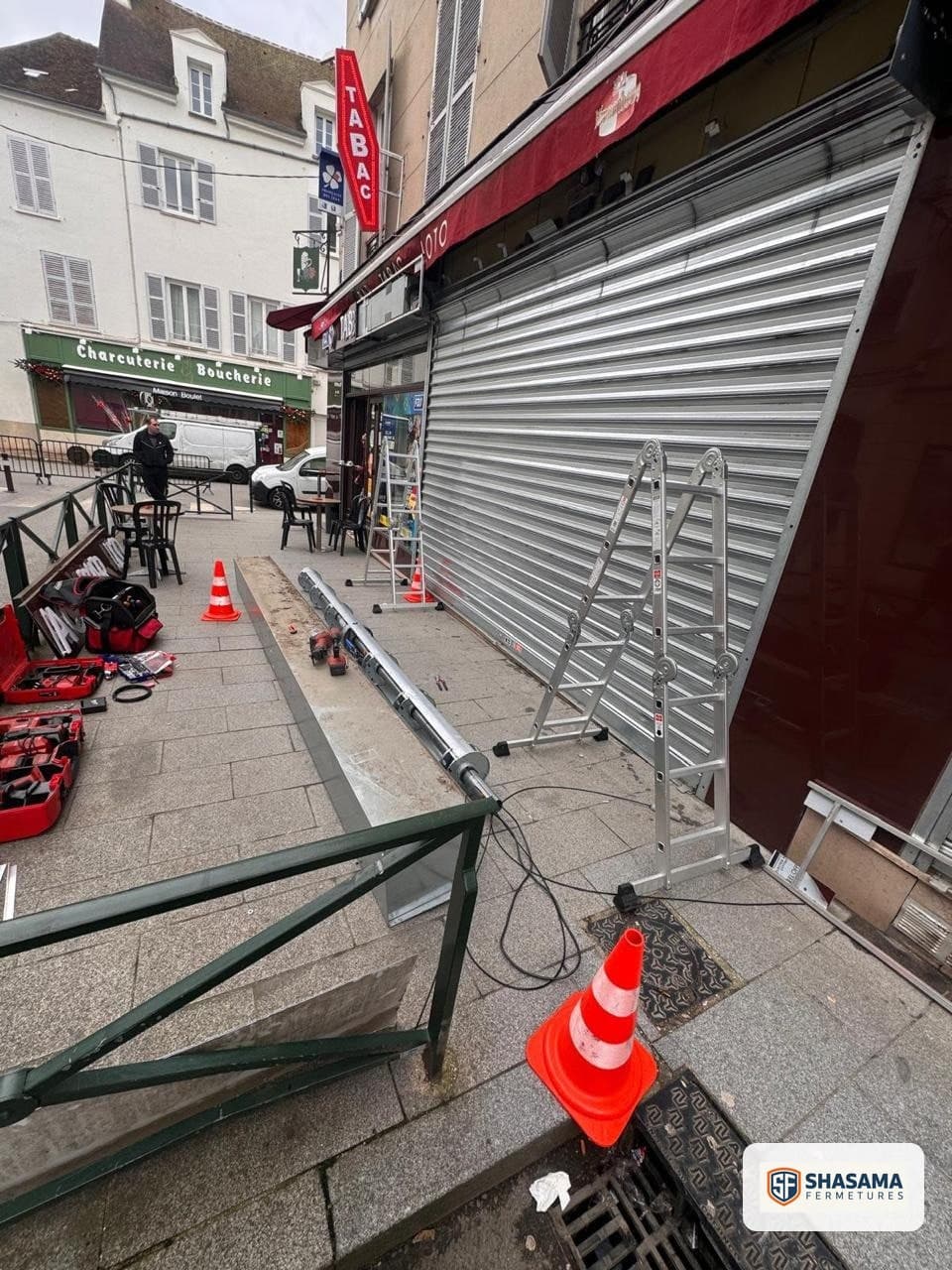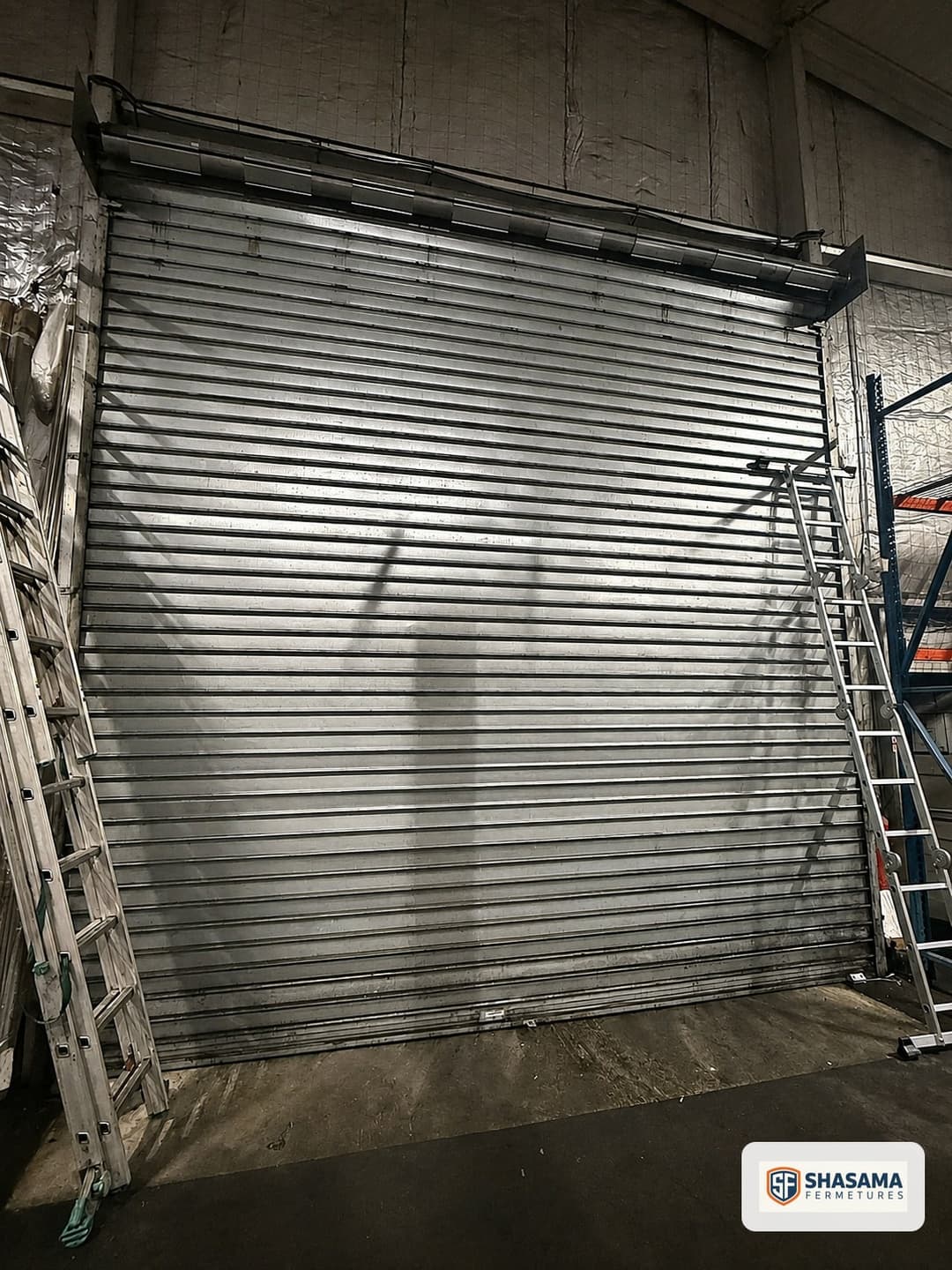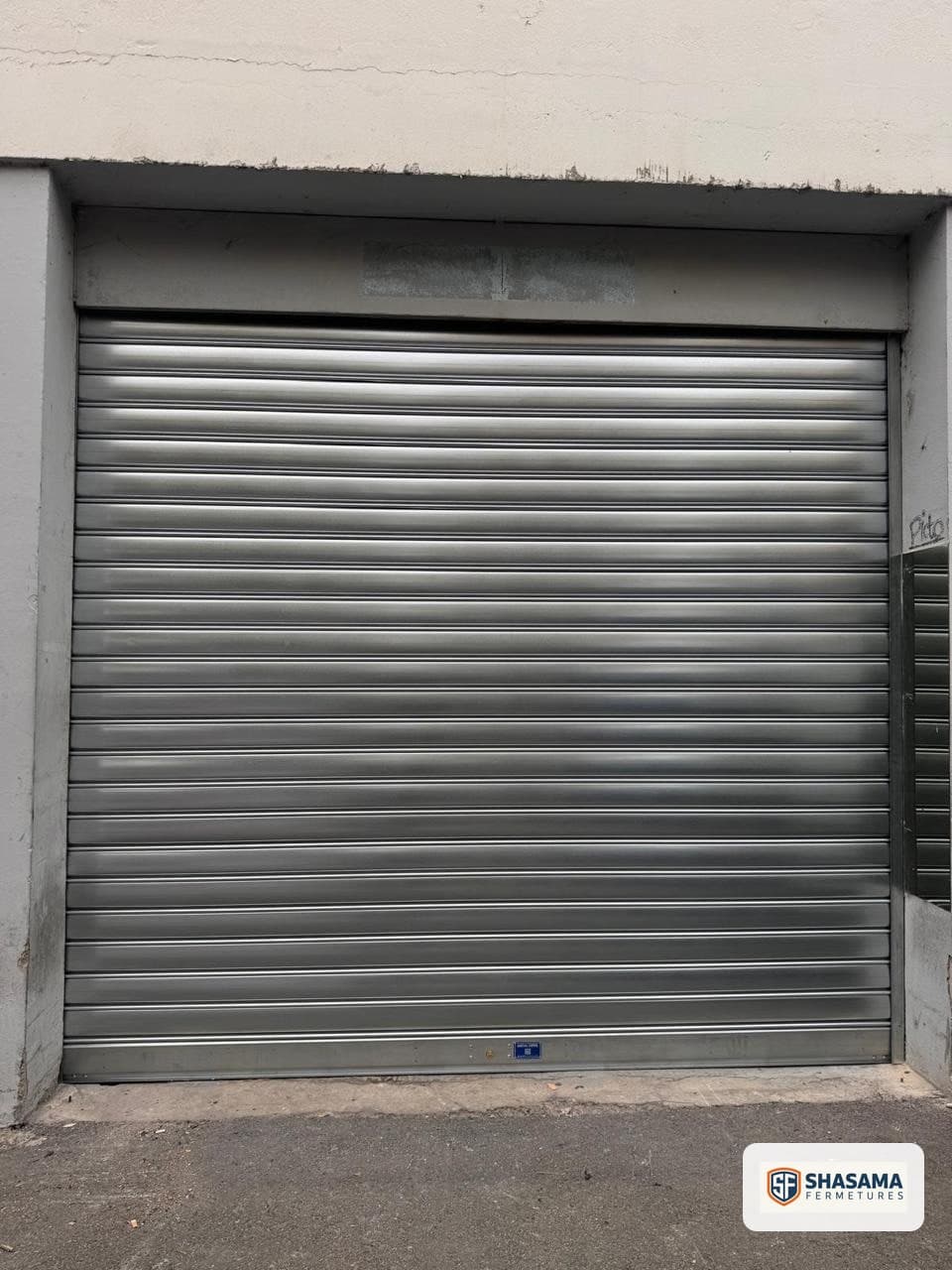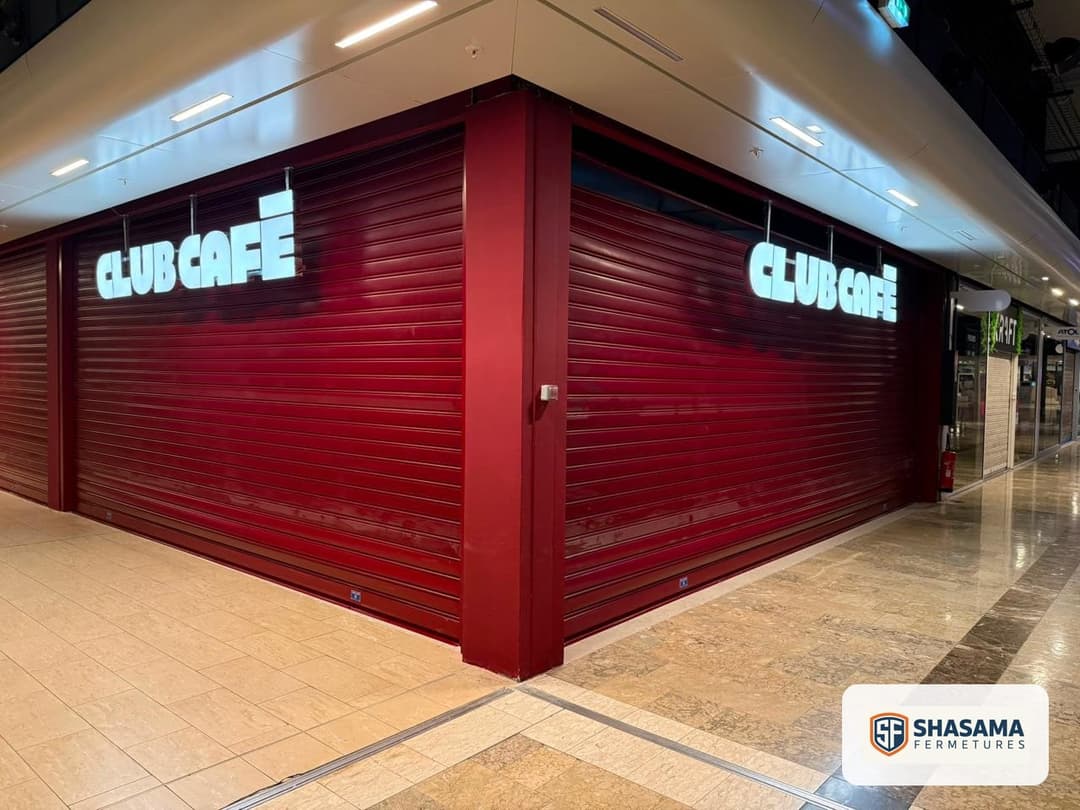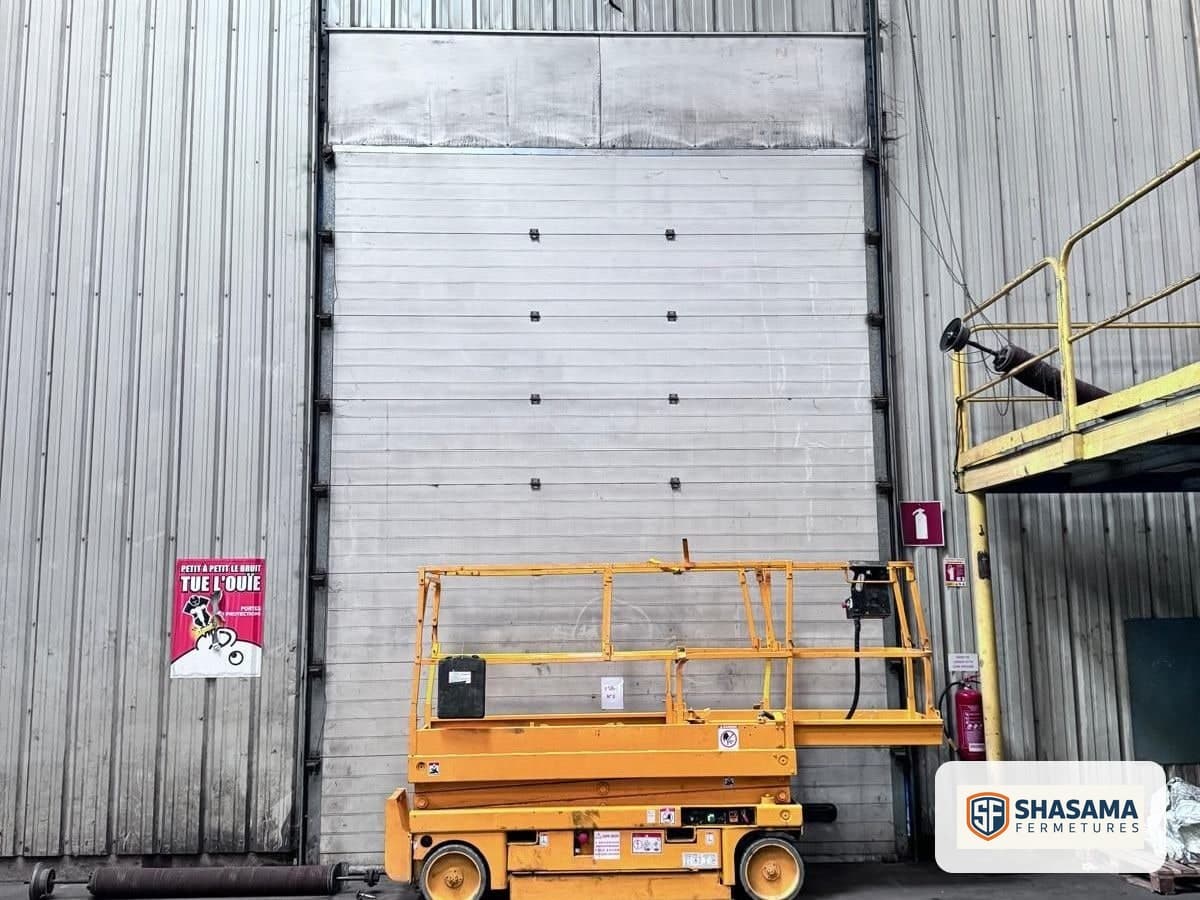

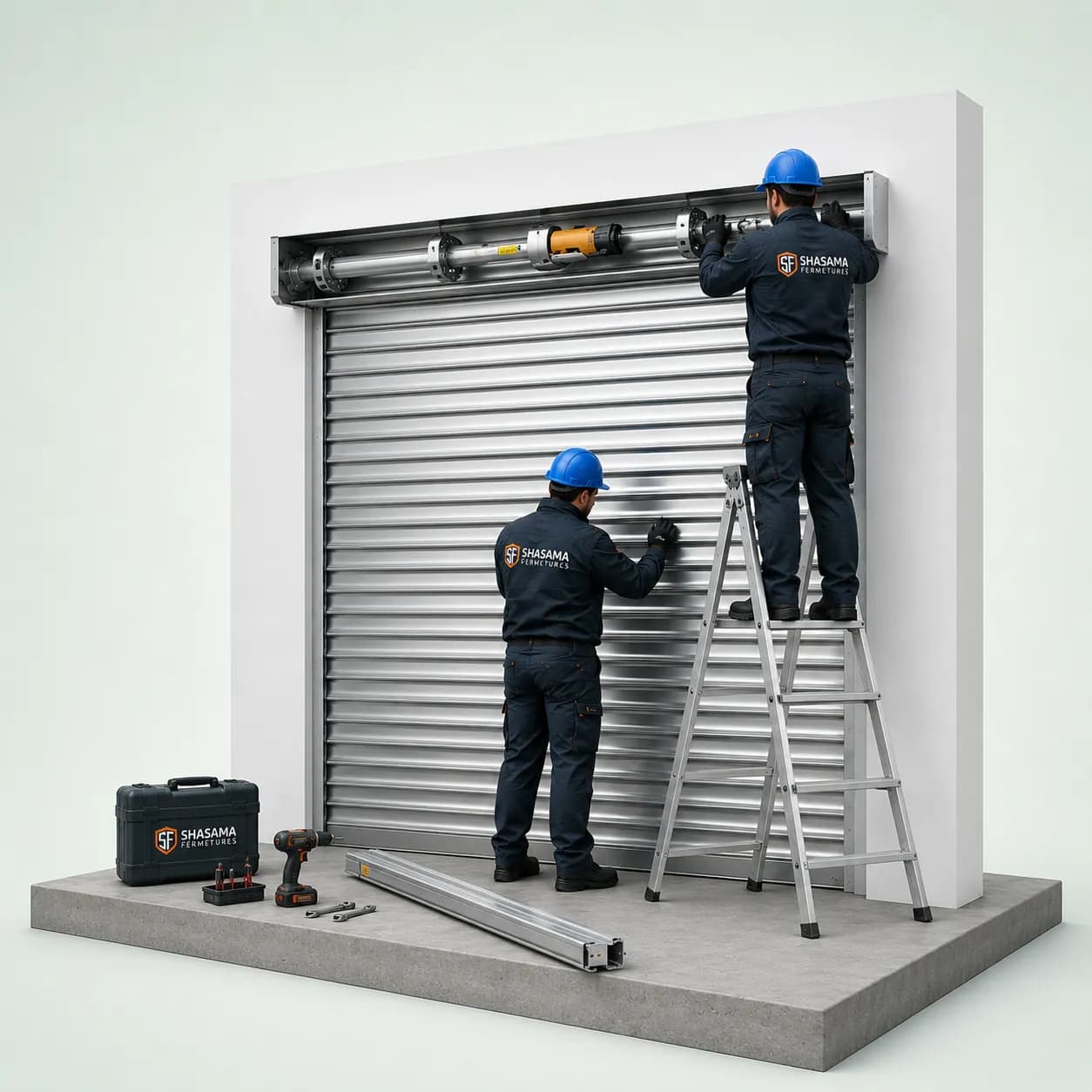
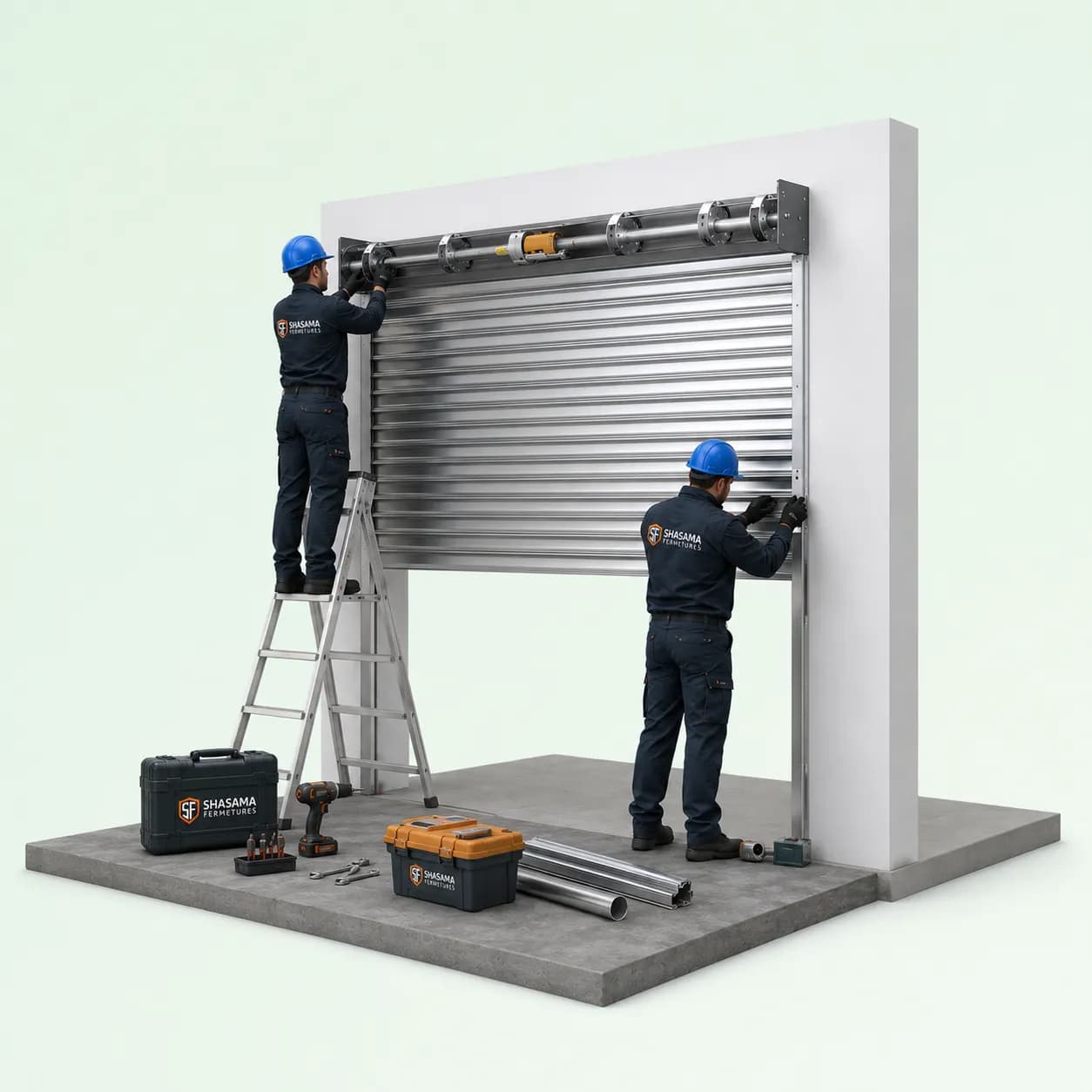
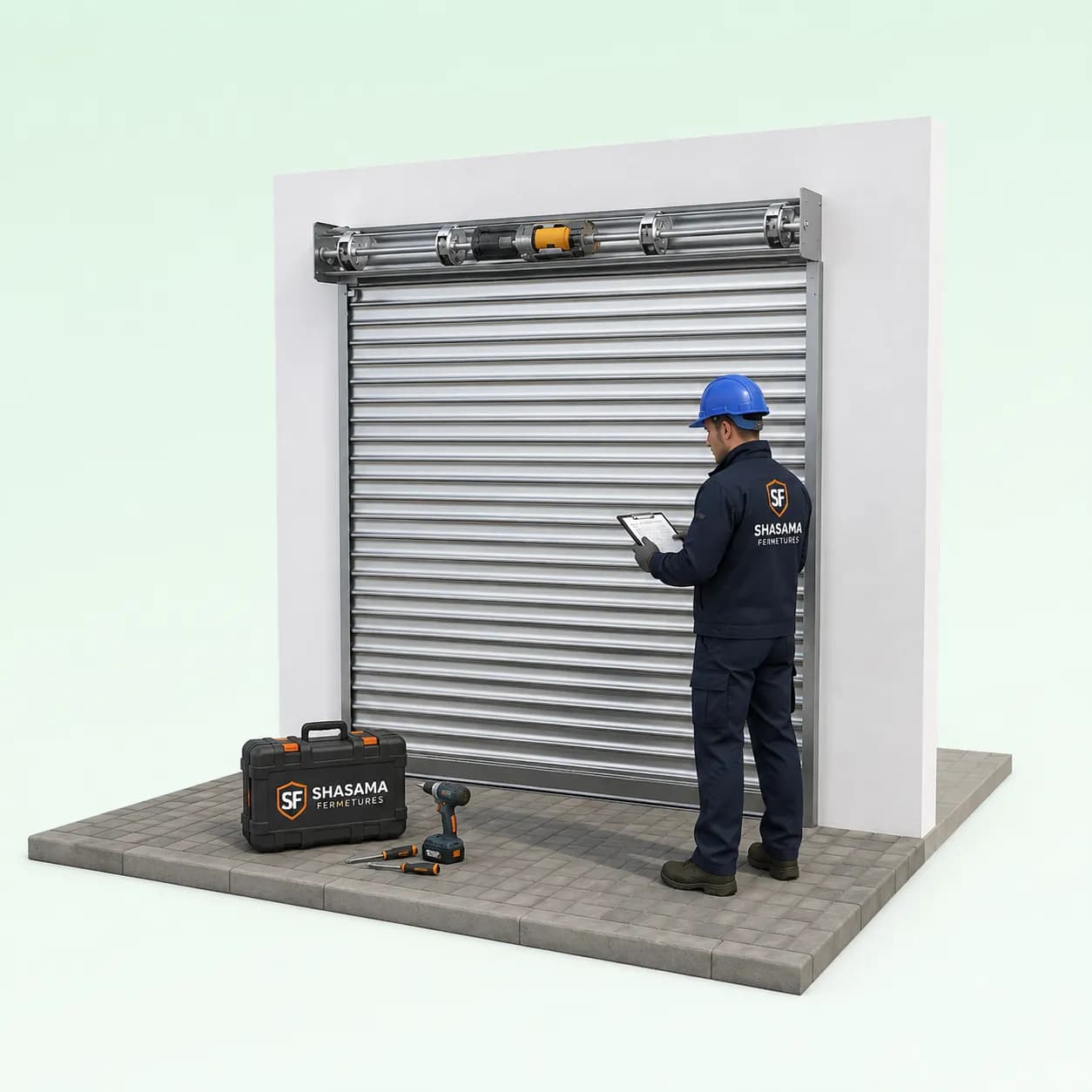
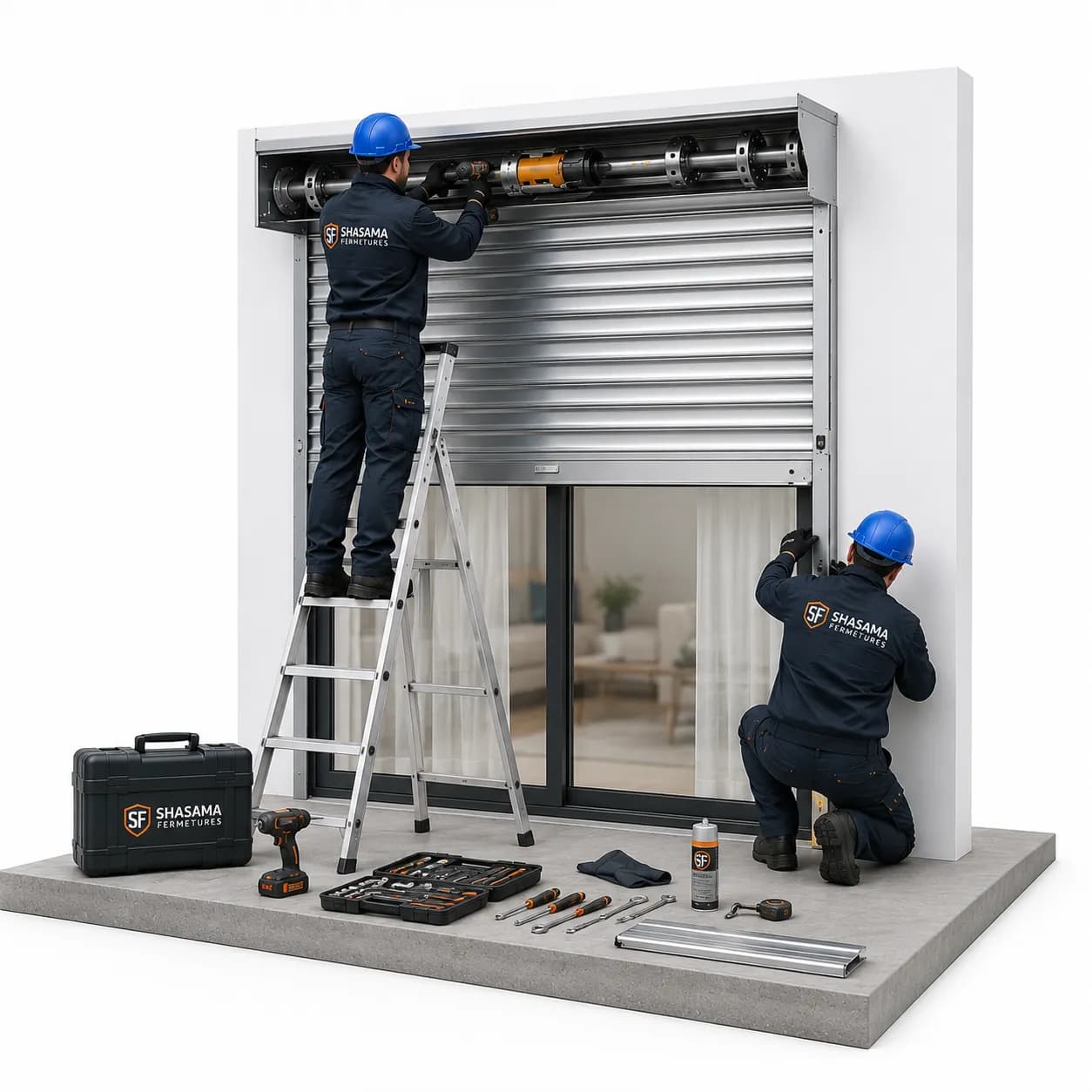
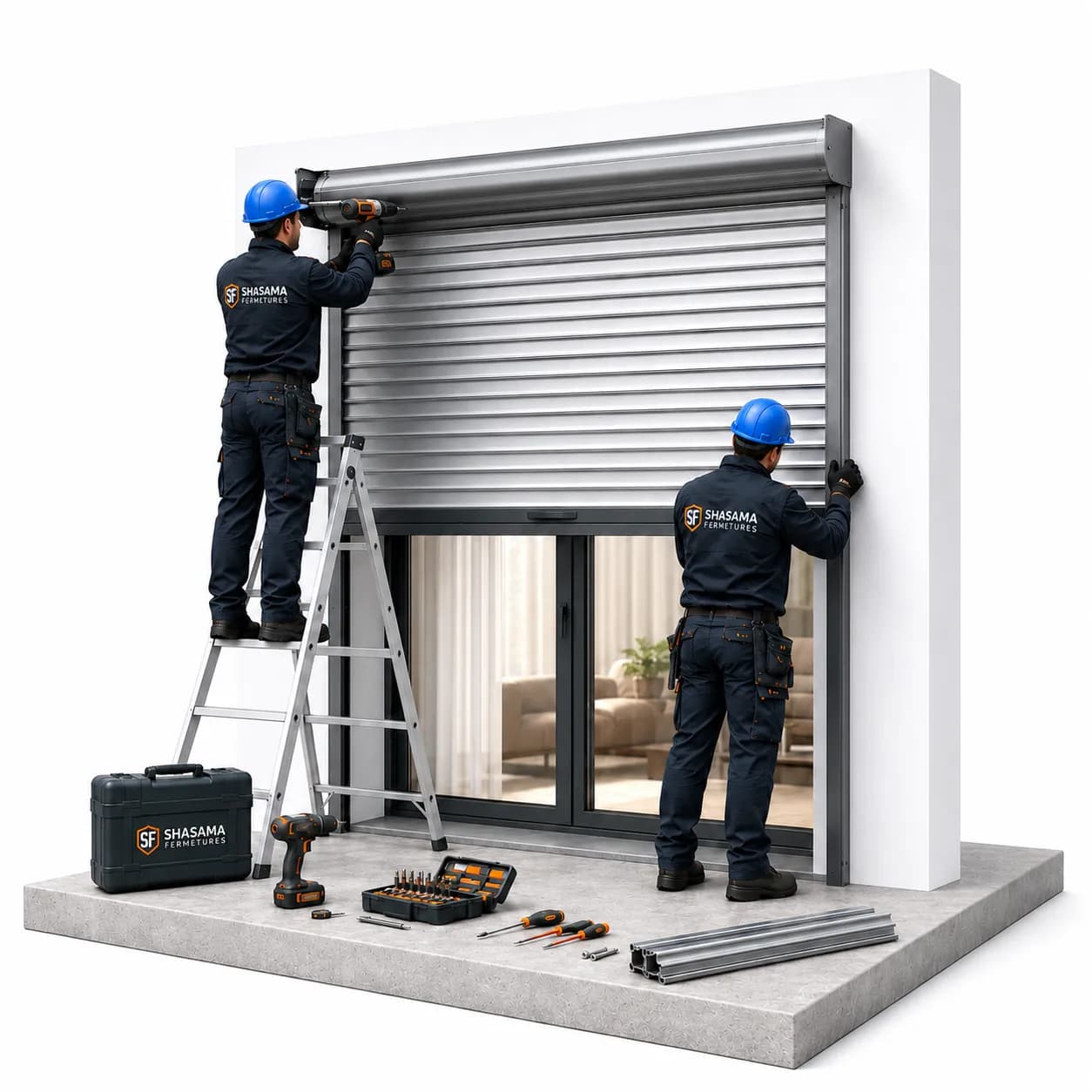
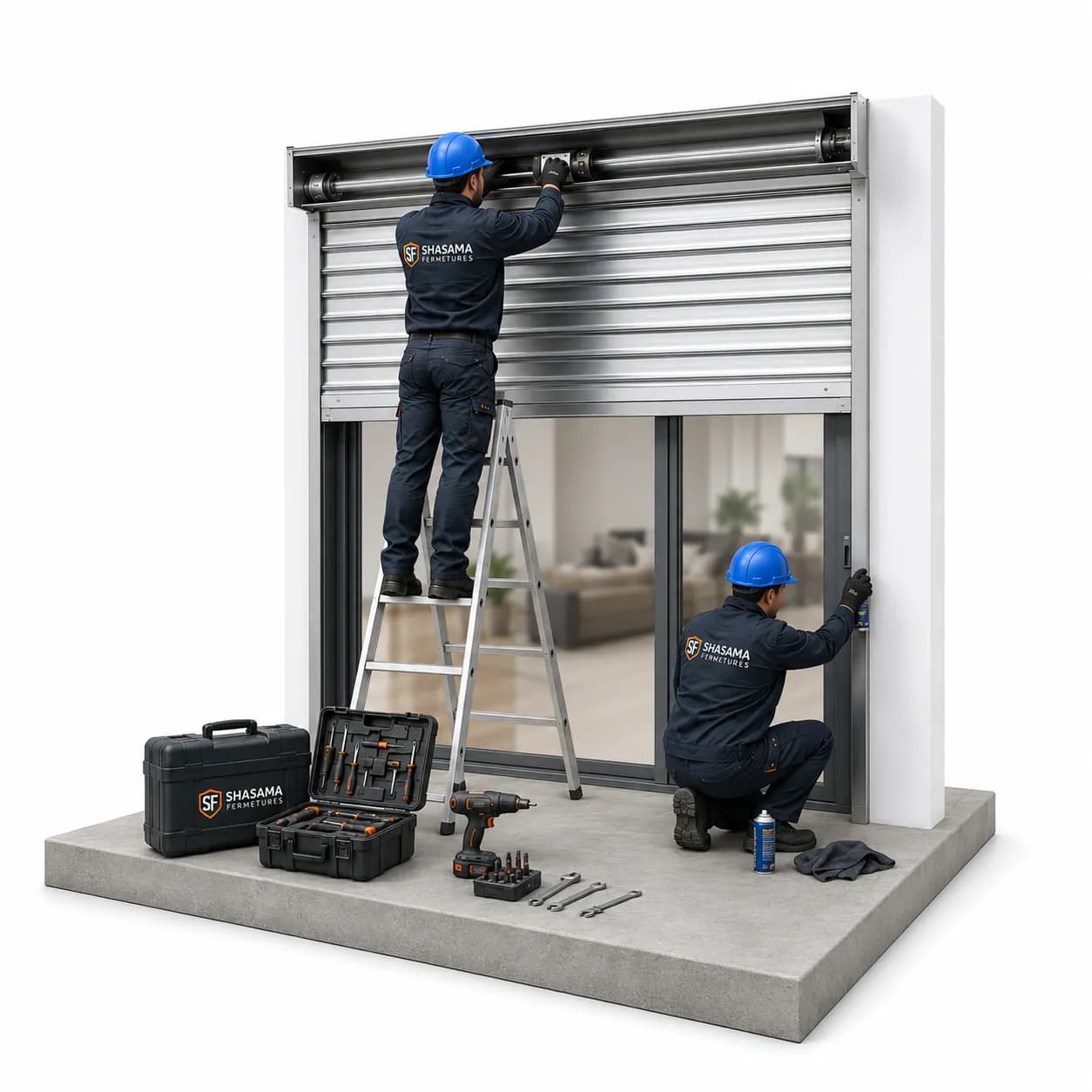
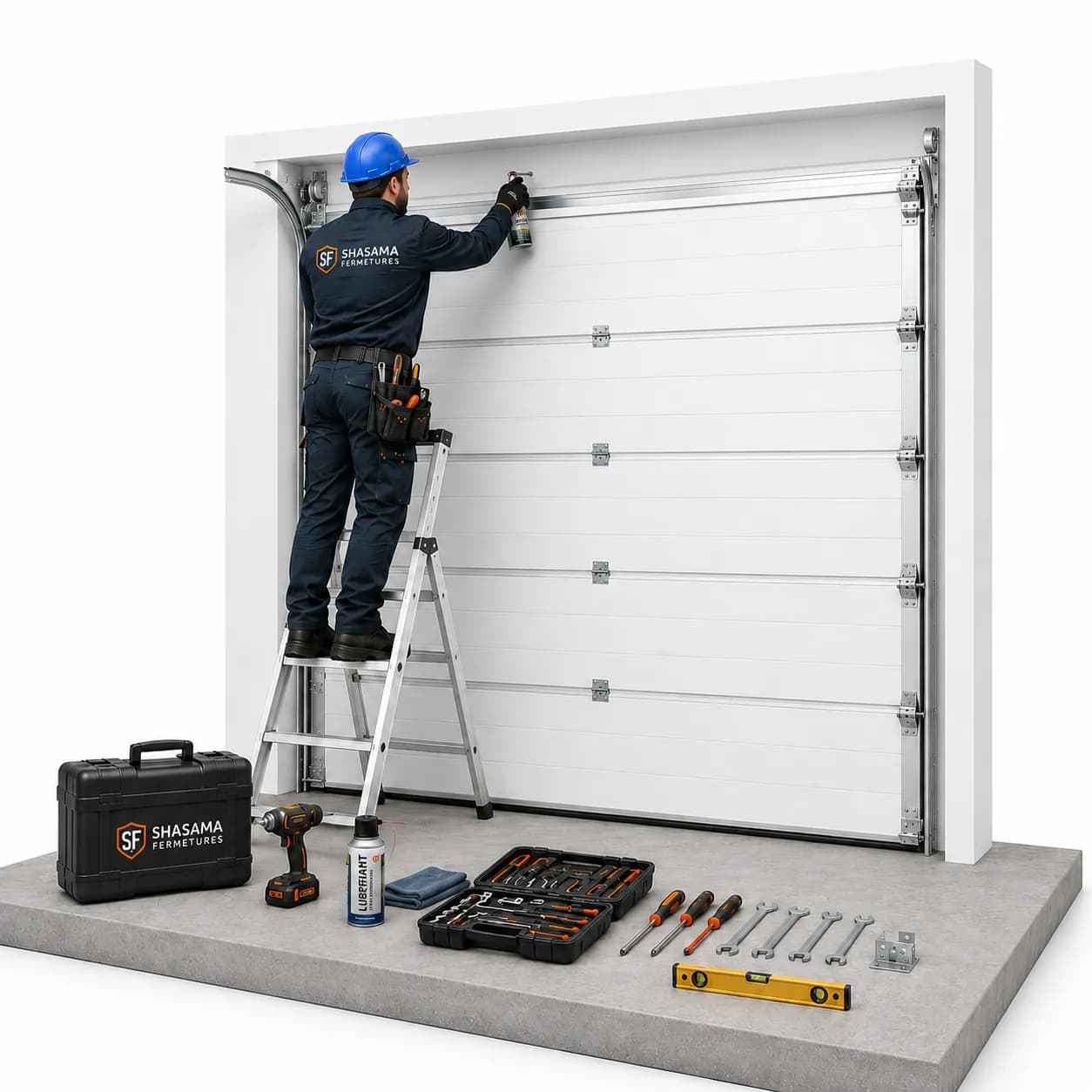
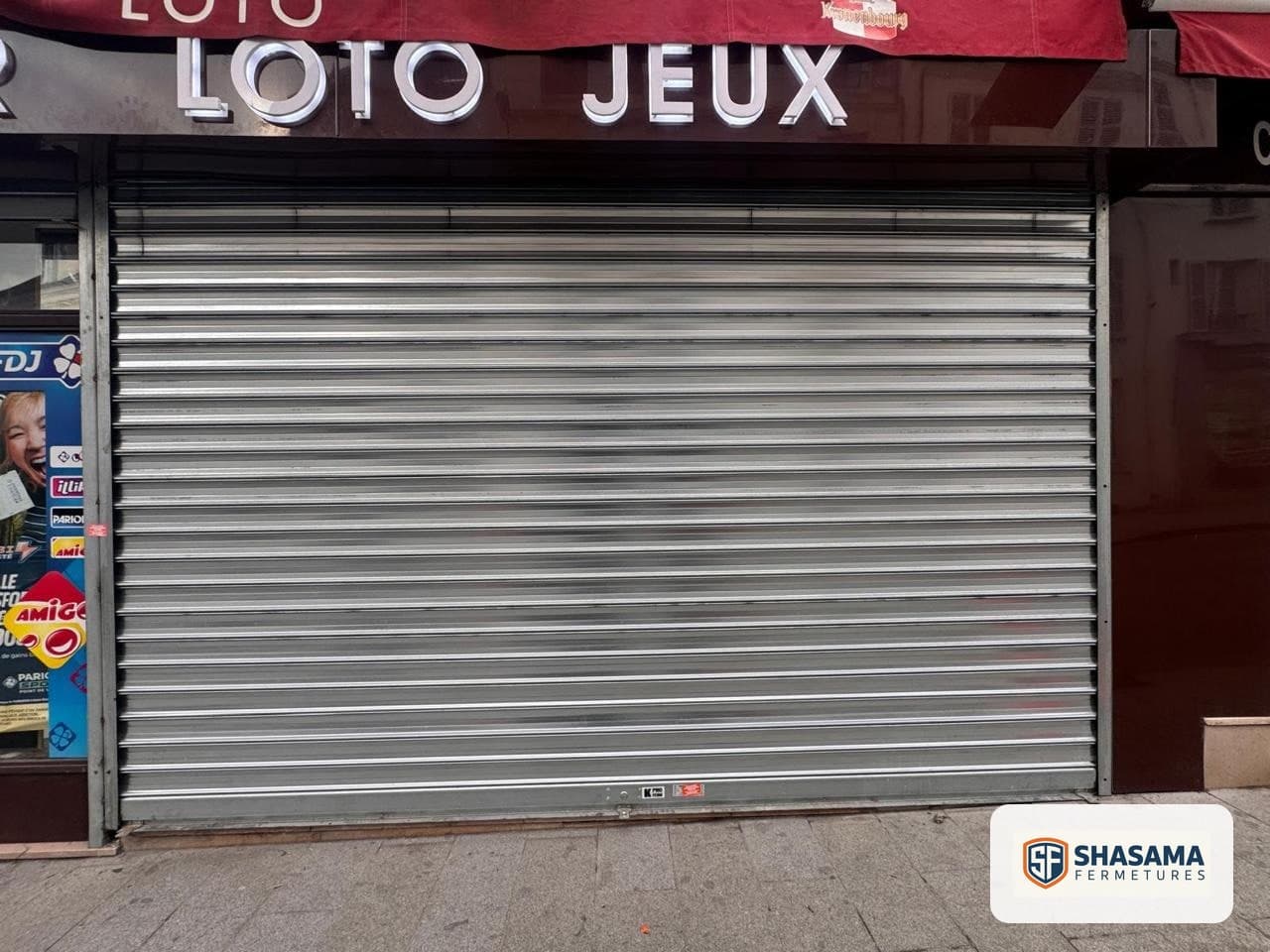
If your metal shutter is stuck, stop forcing it and check only the controls, power supply and visible obstacles from a safe position. An uneven, damaged or suspended curtain means you should stop and call a technician. To open without electricity, use only the emergency mechanism specified in the instructions, after isolating the power supply.
Stuck shutter: signs that mean you must stop
Manual release does not fix a mechanical jam. The Nice RONDO instructions warn that an open shutter can fall if its springs or balance are faulty. An impact, attempted break-in, drop or sudden loud noise means you should stop before another attempt.
Checks you can make without dismantling
Look before operating
From beside the opening, inspect the curtain, guide rails and floor. Remove only a loose object outside the potential fall zone. Do not pull a slat, straighten a guide or look for the motor behind the housing.
Check the visible power supply
Check whether the premises have lost power and whether the identified shutter circuit breaker has tripped. Do not open any box or carry out electrical tests. Repeated tripping, a burning smell or a damaged cable means you should stop.
Compare existing controls
Check the remote battery as its instructions describe. If the curtain looks intact and the area is clear, try another familiar control without repeated attempts. Turn the key switch normally, without forcing a lock or changing the receiver.
Look at accessible safety devices
If photocells are fitted, check that nothing blocks their beam. Wipe only an accessible surface with a dry cloth while the shutter is stopped. Do not move the cells or bypass a safety device.
Allow cooling or stop
After repeated operation, a thermal cut-out may stop the motor. Follow the cooling guidance in its instructions without repeated attempts. If ice is holding the slats or guides, do not force the shutter and ask a technician for advice.
La Toulousaine's shutter guidance also covers checking controls and power. A fault that persists after these observations needs an inspection on site. A silent motor is not proof that the motor has failed.
Why the shutter will not rise or close
The position, sounds and circumstances help guide an inspection but cannot identify a failed part remotely. A technician must confirm the possible causes.
| Symptom | Possible causes | Check without dismantling | When to call |
|---|---|---|---|
| Stuck closed | Possible causesEngaged lock, control fault, balancing system or motor | Check without dismantlingObserve the lock and familiar controls | When to callStiff lock, heavy curtain or no movement |
| Stuck open | Possible causesObstacle, active safety device, control fault or limit switch | Check without dismantlingObserve the threshold and fitted photocells | When to callCannot close or stops repeatedly |
| Stuck halfway | Possible causesGuidance, balance or activated safety device | Check without dismantlingKeep people away and note its position | When to callImmediately, without releasing the motor |
| Motor runs, curtain stays still | Possible causesActive release or failed mechanical connection | Check without dismantlingNote the sound without repeating the command | When to callWithout dismantling or improvised re-engagement |
| Silent motor | Possible causesPower, control, thermal cut-out or fault | Check without dismantlingCheck the outage and identified circuit breaker | When to callTripping, smell or persistent failure |
| Remote has no effect | Possible causesBattery, transmitter or radio reception | Check without dismantlingCheck the battery and an existing control | When to callIf the other controls also fail |
| Power cut | Possible causesNo electrical supply | Check without dismantlingCheck the outage and emergency instructions | When to callNo identified emergency drive or any resistance |
| Slats displaced or out of guides | Possible causesDistorted guides, impact or mechanical fault | Check without dismantlingObserve from a distance and isolate power | When to callImmediately, without pushing slats back |
| Noise, rubbing or jerking | Possible causesWear, guidance or drive fault | Check without dismantlingNote when the noise occurs, then stop | When to callBefore another cycle |
| Manual shutter suddenly very heavy | Possible causesPossibly a broken balancing spring | Check without dismantlingStop without asking others to help lift it | When to callImmediately, without touching the shaft |
| Stiff manual lock or bolt | Possible causesJammed lock, loaded bolt or distortion | Check without dismantlingObserve the bolt position | When to callIf the key or bolt resists |
| After impact or attempted break-in | Possible causesDamaged slats, guides, lock or supports | Check without dismantlingPhotograph from a safe position | When to callBefore any further movement |
Opening without power: which emergency mechanism is fitted?
A key does not prove there is a manual release. An electrical key switch operates the motor; a release box acts on a dedicated mechanism. The SIMU combined key switch and release box combines these functions for compatible central motors. Do not search for a random screw, cable or handle.
| Arrangement | Possible emergency mechanism | Limit to observe |
|---|---|---|
| Central motor on a balanced shaft | Possible emergency mechanismRelease handle or keyed release box, if fitted | Limit to observeUse the specified release only with an intact, balanced shutter |
| Tubular motor inside the shaft | Possible emergency mechanismEmergency crank on an equipped variant | Limit to observeDrive the motor manually without pulling the curtain |
| External motor or winch arrangement | Possible emergency mechanismChain, crank or winch depending on the installation | Limit to observeFollow the device instructions rather than guessing from its appearance |
| Manual shutter with springs and lock | Possible emergency mechanismNormal operation after normal unlocking | Limit to observeStop if it resists or becomes unusually heavy |
| External keyed box | Possible emergency mechanismElectrical control, release or combined box | Limit to observeIdentify its exact function in the instructions before acting |
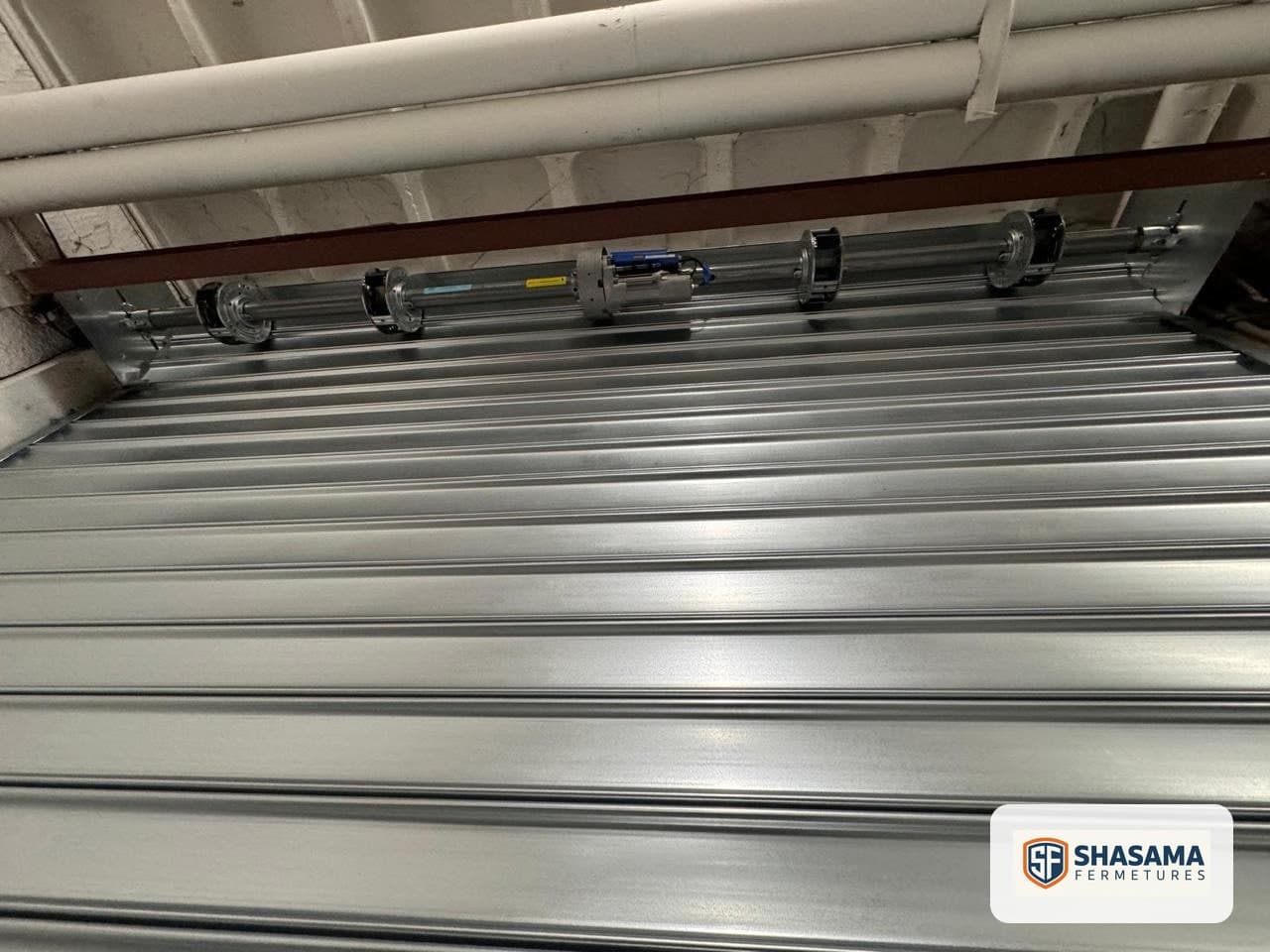
Identify the permitted emergency control
Find the shutter and motor instructions. Check that the device is intended for the user, accessible without dismantling and suitable for the current position. Without instructions or safe access, call a technician.
Isolate power and clear the area
Isolate the power at the accessible, identified device. Tell everyone present so that nobody restores power. Keep the opening clear and stay outside the curtain's path. A shutter stuck halfway remains a reason to call.
Follow only the instructions
Use the specified handle, key, chain or crank in the sequence given for that model. No direction of rotation or amount of force applies to every shutter. Stop if resistance, noise or imbalance appears.
Restore the specified operating condition
Follow the instructions for returning the emergency device to its normal position and restoring power. If you cannot confirm normal operation, leave the shutter out of service. Do not run repeated cycles to try to clear the fault.
The SIMU T8S and T8S DMI instructions restrict emergency operation to equipped variants. Do not adjust limit switches, the brake or any safety brake to overcome a stop. If a fall protection device has operated, have the installation inspected.
Shop cannot open or close: prepare the technician call
If the shop remains open, keep people away from the shutter and request professional securing of the entrance. Do not leave an unstable curtain above a passage. After an attempted break-in, photograph damage without handling it and retain supporting documents. Evidence for a police complaint can include photographs and invoices.
Contact your insurer about reporting procedures and your policy cover. Insurance for business premises in France may cover theft or forced entry depending on the policy. A shutter fault does not automatically mean repair costs will be reimbursed.
- Say whether the shutter is closed, open or halfway, level or uneven.
- Explain whether it is manual or motorised and which control has stopped responding.
- Describe the sound, the last normal movement and the checks already attempted.
- Mention any power cut, impact, attempted break-in or circuit breaker trip.
- Prepare an overall view, a detail of the fault and an accessible label, without climbing or opening the housing.
- Find the instructions and motor reference if available, then explain how the premises can be accessed.
For work in Paris and Île-de-France, contact Shasama Fermetures through the metal shutter emergency repair service. Describe the symptoms on 01 87 66 40 33; an inspection on site determines the parts and work needed.
After the blockage: targeted repair and prevention
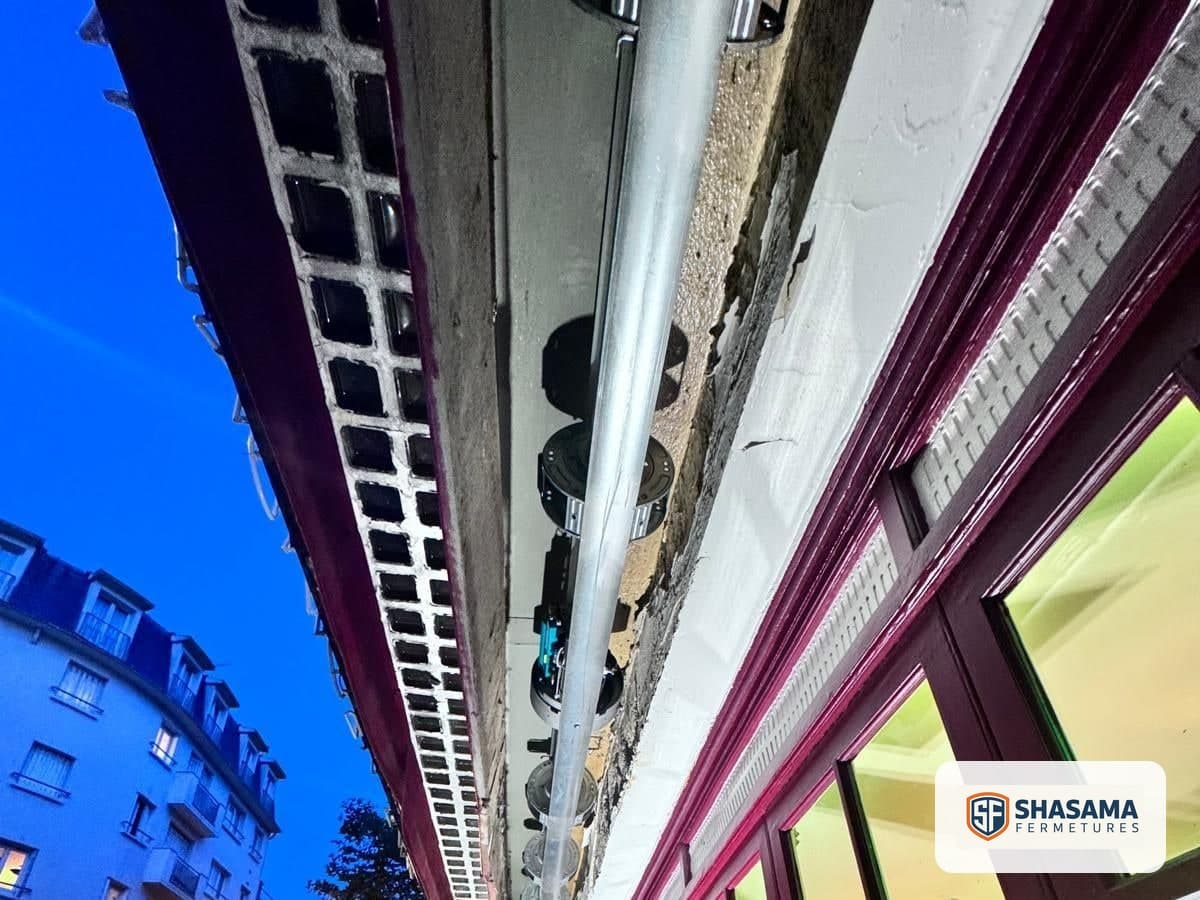
The shaft and curtain replacement on a failed shutter shows a job with a new shaft and bobbins and a replacement curtain. This work is not the answer to every fault. Inspecting the installation helps determine whether shutter repair or a new shutter installation is appropriate. The curtain type, including a solid-slat metal shutter, does not identify the parts needed.
Once the shutter is back in service, ask for a demonstration of its particular emergency mechanism. Report any new rubbing or stopping promptly. Metal shutter maintenance provides checks of guidance, balance and safety devices. A shutter motorisation project should also consider operation during a power cut.
To choose your area, see metal shutter services by Paris arrondissement, then services in Paris 11e or Paris 20e. These area pages are in French.